Bilingual Disability ID Cards UK: Dual Language Cards for Multilingual Accessibility, Communication, and Inclusivity
Last Updated: 22 December 2025
Table of Contents
The United Kingdom is a diverse place, home to people from all over the world who speak many different languages. In fact, more than 300 languages are spoken here every day, from homes to schools and workplaces. It's completely understandable if English isn't your first language, or if you or a loved one finds it harder to communicate in English, especially when living with a disability. Everyday situations—like visiting a doctor, travelling on public transport, or asking for help in a shop—can feel overwhelming when language barriers add to the challenges of a disability or health condition.
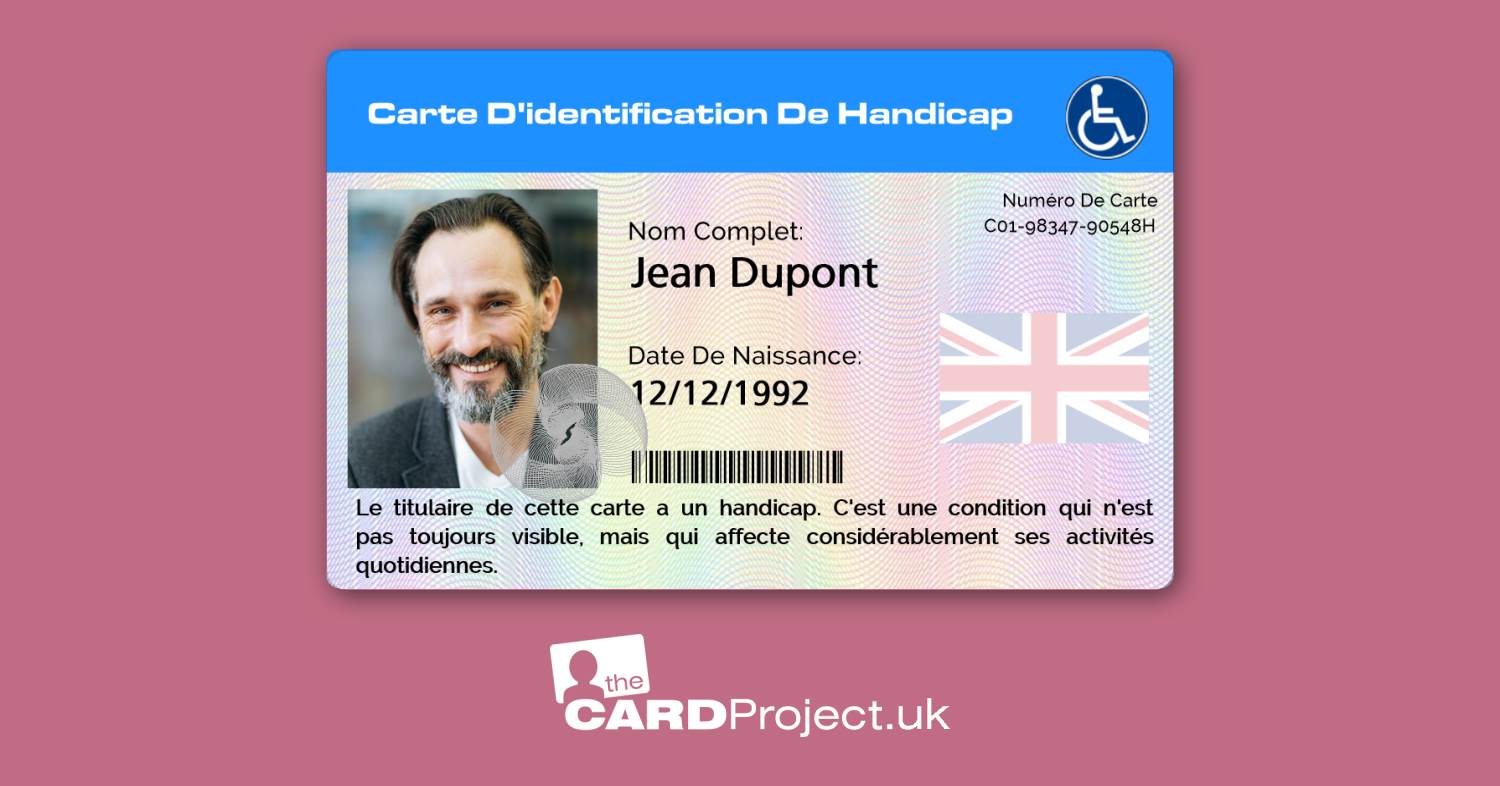
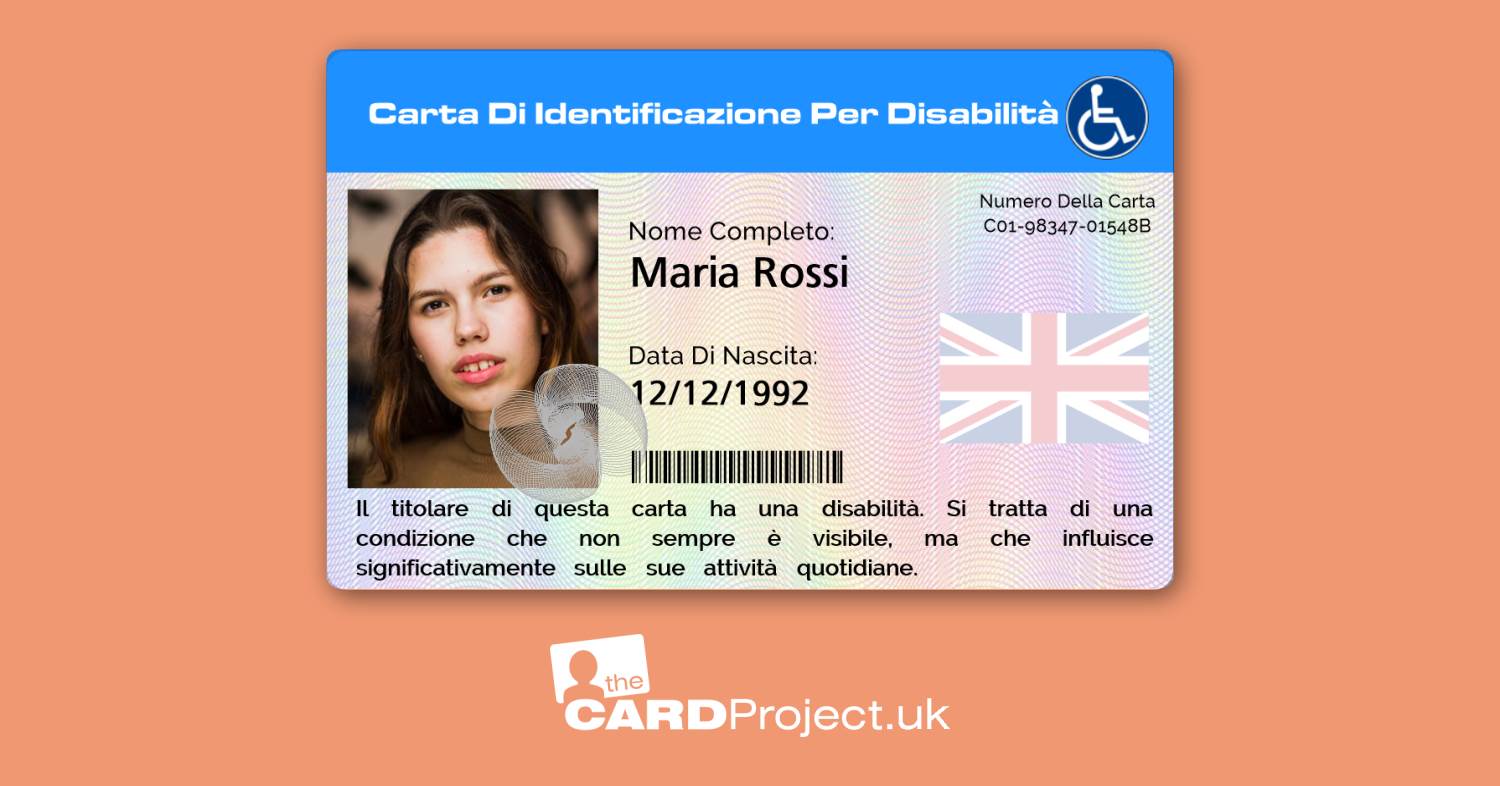
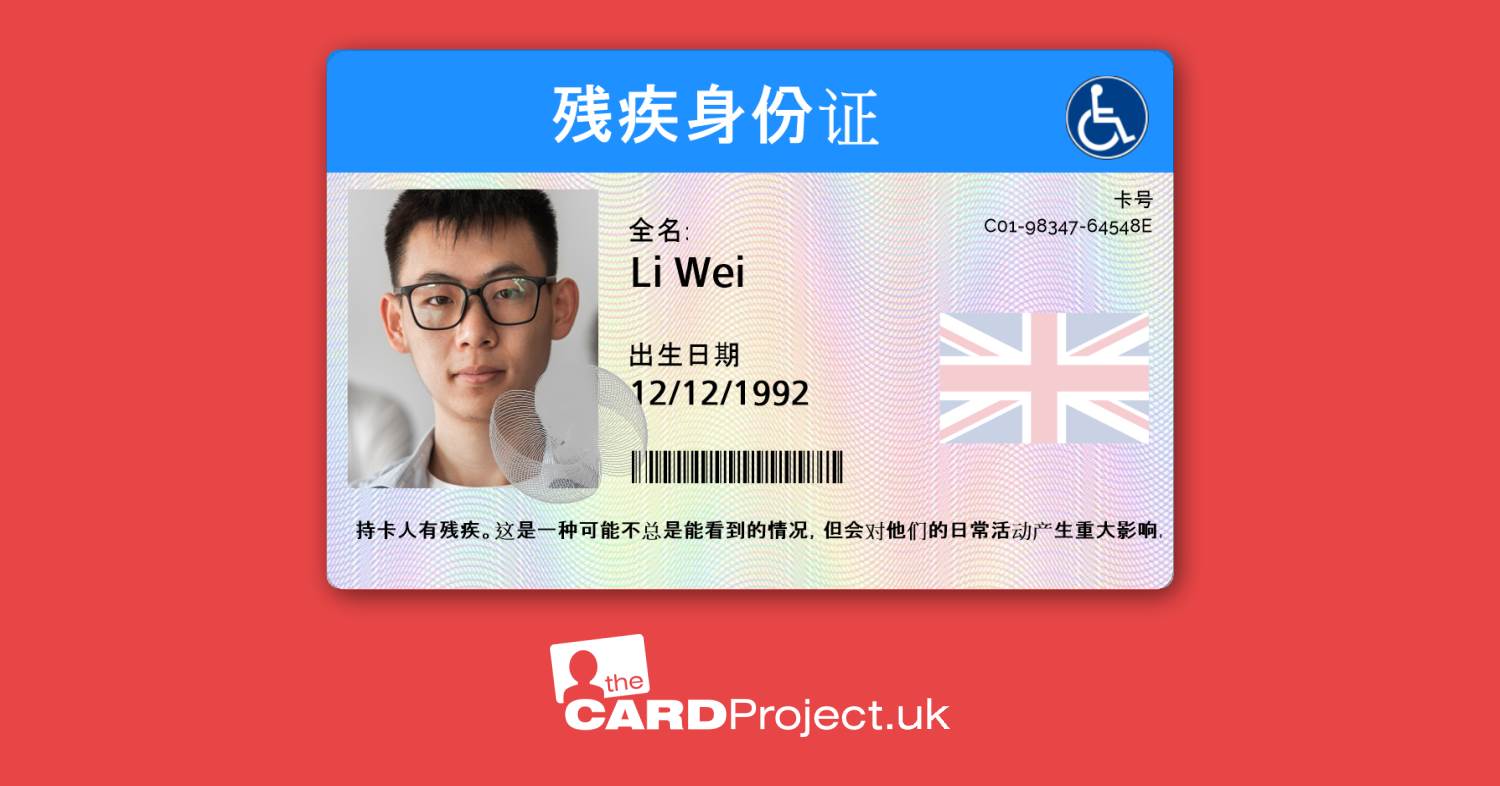
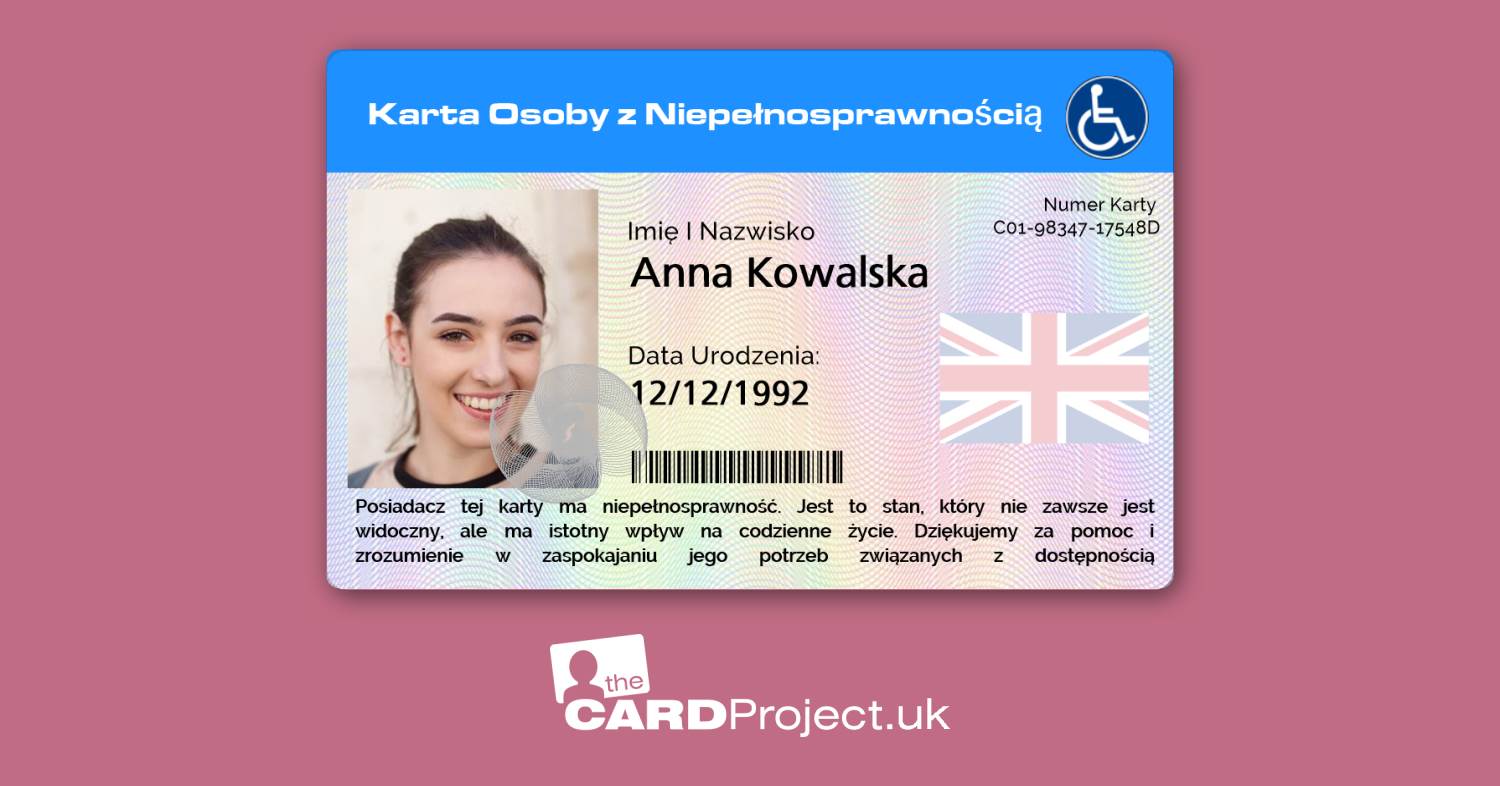
That's where our bilingual disability ID cards (also known as dual language or multilingual disability cards) come in. These simple, wallet-sized cards are personalised just for you. They include key details about your disability, condition, or specific access needs, printed clearly in both English and your chosen second language. This helps ensure that others—whether it's a healthcare professional, transport staff, or someone in an emergency—can quickly understand how best to support you, without you having to explain everything from scratch.
If you're looking for a disability card suited to non-English speakers in the UK, a multilingual option for hidden disabilities, or a bilingual card to help recent immigrants or long-term residents from diverse communities, we're here to help. At The Card Project UK, we focus on creating high-quality, eco-friendly cards that are easy to carry and use. They're made from biodegradable materials right here in the UK, and thousands of people already rely on them to feel more confident and independent in daily life.
We know how important it is to feel understood and supported, particularly on tougher days. These cards aren't an official government requirement, but they're a practical tool many find reassuring. They promote better communication, reduce misunderstandings, and help build a more inclusive society where everyone's needs are respected. Whether you have a visible or hidden disability, are a parent supporting a child, or care for someone else, a dual language card can make those interactions a little smoother and less stressful.
Why Multilingual Options Matter in the UK Today
Living in a multicultural country like ours brings so many strengths, but it can also mean extra hurdles for those with disabilities if language gets in the way. For example:
-
Families where a parent or child speaks a home language more comfortably may worry about emergencies or medical appointments.
-
New arrivals to the UK, or those who've been here for years but prefer their native language, often face added anxiety in public settings.
-
Hidden conditions—like autism, chronic pain, anxiety, or hearing impairments—can be hard enough to communicate without a language difference.
Our bilingual cards address this directly by putting vital information in two languages side by side. This not only helps the cardholder but also assists responders in providing the right support quickly and respectfully. Many users tell us it gives them peace of mind, knowing they have something reliable to show when words are difficult.
We're proud to offer these cards as part of our wider range of personalised disability ID solutions, all designed with real-life needs in mind. If this sounds like it could make a difference for you or someone you care about, read on to learn more about how they work and the options available.
Who Are Dual Language Disability ID Cards For?
It's quite common in the UK for people living with a disability to also navigate language differences in daily life. Whether English is a second language for you, or for someone you care about, explaining a health condition or access need can feel daunting—especially in stressful moments like a medical appointment or an emergency. Our dual language disability ID cards are created specifically for those situations, helping to make communication clearer and quicker when words might be hard to find or understand.
These cards are for anyone in the UK who has a disability—visible or hidden—and would benefit from having key information available in both English and another language. According to recent census figures, around 1.6 million people in the UK have a main language other than English, and many of them also live with disabilities or long-term health conditions. The cards are designed to support this overlap, giving people a simple way to share what matters most without relying solely on spoken English.
People These Cards Can Help Most
Here are some of the main groups who often find bilingual disability cards particularly useful:
-
New arrivals to the UK, including immigrants and refugees: Many people come from countries such as Romania, Poland, India, Pakistan, Nigeria, or Arabic-speaking regions. When you're still building confidence with English, a card in your home language can make all the difference during doctor visits, on public transport, or when dealing with local services in busy cities like London, Birmingham, Manchester, or Glasgow. It helps ensure that staff or emergency responders understand your needs straight away, reducing worry during those first months or years of settling in.
-
Families from multicultural backgrounds and their caregivers: In many households, older relatives may have joined family members in the UK later in life and feel most comfortable speaking languages like Punjabi, Urdu, Gujarati, Bengali, Mandarin, or Cantonese. Parents or adult children often order cards for them, knowing that if they're out alone or become unwell, the card can speak for them. This brings real peace of mind, especially for caregivers who can't always be there in person.
-
Long-term residents with limited or preferred use of English: Even if someone has lived in the UK for decades, they might speak languages such as Portuguese, Spanish, Italian, French, Greek, or Yiddish at home and find English trickier under pressure. For those with hidden disabilities—like anxiety, autism, hearing loss, chronic pain, or dementia—the card provides a discreet way to explain needs without having to start a conversation from scratch every time.
-
Anyone with a visible or hidden disability who faces communication challenges: This includes people with physical conditions such as mobility difficulties, epilepsy, or visual impairments, as well as neurodiverse individuals with ADHD, dyslexia, or those who are non-verbal. The cards are especially helpful in situations where anxiety makes speaking harder, or when fatigue from a condition affects clear communication. They're also popular with parents of children who have additional needs and might struggle to explain things themselves.
It's worth remembering that these cards are voluntary tools—not official government identification like a Blue Badge or PIP letter. You don't need to provide medical proof or a diagnosis to order one; they're available to anyone who feels they would benefit. This keeps things straightforward and respectful of your privacy.
If you recognise yourself, a family member, or someone you support in any of these descriptions, a bilingual disability ID card could offer that extra layer of confidence and security. Many users tell us it helps them feel more in control and less isolated in a country as diverse as ours. In the next section, we'll look at exactly how these cards can make a practical difference in everyday life.
How Can a Bilingual Disability ID Card Help You?
It's completely understandable to worry about how you'll get the right support if English isn't your strongest language, especially when you're dealing with a disability or health condition. Situations that might feel straightforward for others can quickly become stressful if there's a misunderstanding. A bilingual disability ID card offers a straightforward solution: it puts the most important information about your needs right there in writing, in both English and your chosen language. This means you can simply show the card instead of trying to explain everything under pressure.
Many people tell us that carrying one of these cards takes away a lot of that anxiety. It doesn't solve every challenge, but it does make communication much clearer in key moments, helping you feel more in control and supported. Let's look at some of the main ways these cards can make a practical difference in everyday life.
In Emergencies: Getting Help Quickly When It Matters Most
Emergencies can happen to anyone, anywhere—at home, on the street, or while out and about. When every second counts, paramedics or police need to understand your condition straight away. A dual language card can include vital details like "I have epilepsy—please do not restrain me during a seizure" or "I am diabetic and may need glucose if unconscious," printed clearly in both languages. This helps responders provide the correct care without delay or guesswork.
In the NHS system, where staff work under pressure, this kind of quick information can be invaluable. People who've used the cards in real crises—such as sudden falls, asthma attacks, or heart-related episodes—often say it made them feel safer knowing they had something reliable to rely on. It's especially reassuring for families, giving them confidence that their loved one can get appropriate help even if they're alone.
In Healthcare Appointments: Making Visits Smoother and Less Daunting
Going to the GP, a hospital clinic, a dentist, or a specialist can already feel overwhelming. Add in language differences, and it's easy to miss important details or feel unheard. Showing a bilingual card at the start of an appointment lets you share needs like "I have hearing loss—please speak clearly and face me" or "I am autistic and find bright lights difficult—dimming them would help." Staff can then adjust right away, perhaps by writing things down or arranging extra time.
This not only reduces misunderstandings but also helps you access the reasonable adjustments you're entitled to under the Equality Act 2010. For many new to the UK healthcare system, the card acts as a gentle prompt for receptionists or doctors, leading to more respectful and effective care. Parents of children with additional needs often say it helps ensure their child gets the support they deserve without repeated explanations.
In Everyday Situations: Building Confidence for Daily Independence
The cards really come into their own in routine moments that add up to a big part of life. Here are some common examples where users find them helpful:
-
Public transport: On buses, trains, or the Tube, you can show the card to drivers or staff for priority seating, assistance boarding, or extra time. Phrases like "I have mobility issues—please wait while I sit down" make it easier to get the help you need without feeling awkward.
-
Shopping and running errands: In supermarkets, pharmacies, or high-street shops, the card can explain needs such as "I have low vision—please read the price or ingredients for me" or "I experience chronic pain—queues are difficult, may I go ahead?" This often leads to quicker, kinder assistance from staff.
-
Government services and appointments: At Jobcentres, benefits assessments, council offices, or housing appointments, presenting the card helps clarify requirements upfront. It can include details like "I need written communication due to processing difficulties," making the process less stressful and more accurate.
-
Community and social settings: Whether at a community centre, place of worship, library, or local event, the card supports easier interactions. It can help reduce feelings of isolation by bridging small gaps, allowing you to join in more comfortably.
Many cardholders say these small moments build up to greater independence—they rely less on family members to translate or accompany them everywhere, and apps aren't always practical in noisy or urgent situations.
Promoting Wider Inclusivity and Peace of Mind
In a diverse country like the UK, tools that support better understanding help everyone. These bilingual cards build on schemes like the Hidden Disabilities Sunflower lanyard by adding that crucial language layer, encouraging empathy from strangers, staff, and services alike. They can play a part in reducing the extra barriers that disabled people from migrant backgrounds sometimes face.
Families and caregivers often share how much calmer they feel knowing their loved one has a way to communicate needs anywhere—from busy city centres to quieter towns and villages. It's about fostering a society where differences are respected, and everyone can move through the world with a bit more ease and dignity.
Overall, a bilingual disability ID card is a small item with a big impact: it empowers you to advocate for yourself more effectively, reduces daily stress, and helps others support you properly. If this resonates with your experiences, the next sections cover the languages available and the features that make our cards stand out.
Available Languages for Your Multilingual Disability Card
Choosing the right language for your bilingual disability ID card is important—it ensures the information is clear and useful for you, your family, or anyone helping you. We base our language options on official UK data from the Office for National Statistics (ONS), particularly the most recent census figures from 2021, which show the main non-English languages spoken across England and Wales. These reflect the diverse communities in the UK, from long-established groups to more recent arrivals. We also listen to feedback from our customers to make sure we're covering the needs that matter most.
Our cards always include English on one side, paired with your chosen second language on the other or alongside it. This setup makes it easy for others to understand quickly, no matter the situation. Here's a closer look at the languages we currently offer, along with some context about why they're popular choices.
Our Current Bilingual Language Options
-
Polish / English: Polish remains one of the most widely spoken non-English languages in the UK, with over 600,000 people listing it as their main language according to the 2021 census. It's especially common in many cities and towns due to strong Polish communities that have grown over the years. Many families find this option helpful for everyday interactions and healthcare.
-
Romanian / English: One of the fastest-growing languages in recent times, Romanian jumped significantly in the census data, now spoken as a main language by around 472,000 people. This reflects the increasing Romanian community across the UK, particularly in urban areas. A card in Romanian can provide real reassurance for newer arrivals navigating services or emergencies.
-
Punjabi / English: Punjabi is a key language for many South Asian families, with nearly 291,000 speakers noting it as their main language. It's widely used in households across the Midlands, London, and beyond, often by older generations. This pairing helps bridge generations and ensures clear communication when English might not be the preferred language at home.
-
Urdu / English: Closely linked to Pakistani communities, Urdu has around 270,000 main speakers in the UK. It's essential in many multicultural neighbourhoods and family settings. Users often choose this for its role in daily life, making the card a practical tool for appointments or public interactions.
-
Portuguese / English: Portuguese has seen steady growth, supporting Brazilian, Portuguese, and Goan communities. It's now among the top languages, reflecting vibrant groups in various parts of the country. This option is great for those who feel more comfortable expressing needs in Portuguese.
-
Arabic / English: Spoken by diverse communities from the Middle East and North Africa, Arabic serves a significant number of families. It's particularly useful in cities with larger Arab populations, helping with quick understanding in medical or emergency settings.
-
Bengali / English: A vital language for Bangladeshi and Sylheti-speaking communities, especially in areas like East London. Bengali supports strong cultural ties and is chosen by many for its familiarity in family and community contexts.
-
Spanish / English: Increasingly popular with Latin American and Spanish residents, as well as European migrants. Spanish speakers are spread across the UK, and this card helps in a wide range of situations, from travel assistance to healthcare.
-
Mandarin / English: Ideal for mainland Chinese communities and growing student or professional groups. As Mandarin usage expands, this option provides clear support for those who primarily use it at home or in social circles.
-
Cantonese / English: Often preferred by Hong Kong Chinese and older diaspora members. It remains important in established communities, offering comfort for those who find Cantonese easier for expressing complex needs.
-
French / English: Common among migrants from France, Africa, and other French-speaking regions. This pairing assists in diverse settings, including families with ties to multiple countries.
-
Italian / English: Supporting long-standing Italian communities and newer expatriates. Italian speakers appreciate the clarity this brings to interactions in the UK.
We regularly review our list to keep it aligned with changing demographics and customer requests. For instance, languages like Gujarati have strong historical presence in some areas, and we're always open to adding more as needs evolve.
If Your Language Isn't Listed
It's completely fine if none of these quite match what you need—we understand that everyone's situation is unique. We happily create custom bilingual or multilingual disability cards for other languages. Just get in touch with us through our website or by phone, and we'll discuss your requirements. There's no extra complication; we aim to make it straightforward so you get a card that truly works for you.
We're committed to inclusivity and continually expanding our options to better serve the UK's rich mix of communities. Having the right language on your card can make those moments of communication feel much less worrying, giving you and your loved ones greater peace of mind.
Key Features That Set Our Dual Language Cards Apart
When you're choosing a bilingual disability ID card, you want something straightforward, durable, and easy to carry every day. We've designed our cards with exactly those priorities in mind, keeping things simple while making sure they provide clear, helpful information when you need it most. Many customers appreciate how reliable and discreet they are—small enough to fit in a wallet but noticeable enough to make a difference in the right moment.
Here's what makes our dual language cards practical and trustworthy choices for thousands of people across the UK.
Clear and Professional Design with Your Personal Details
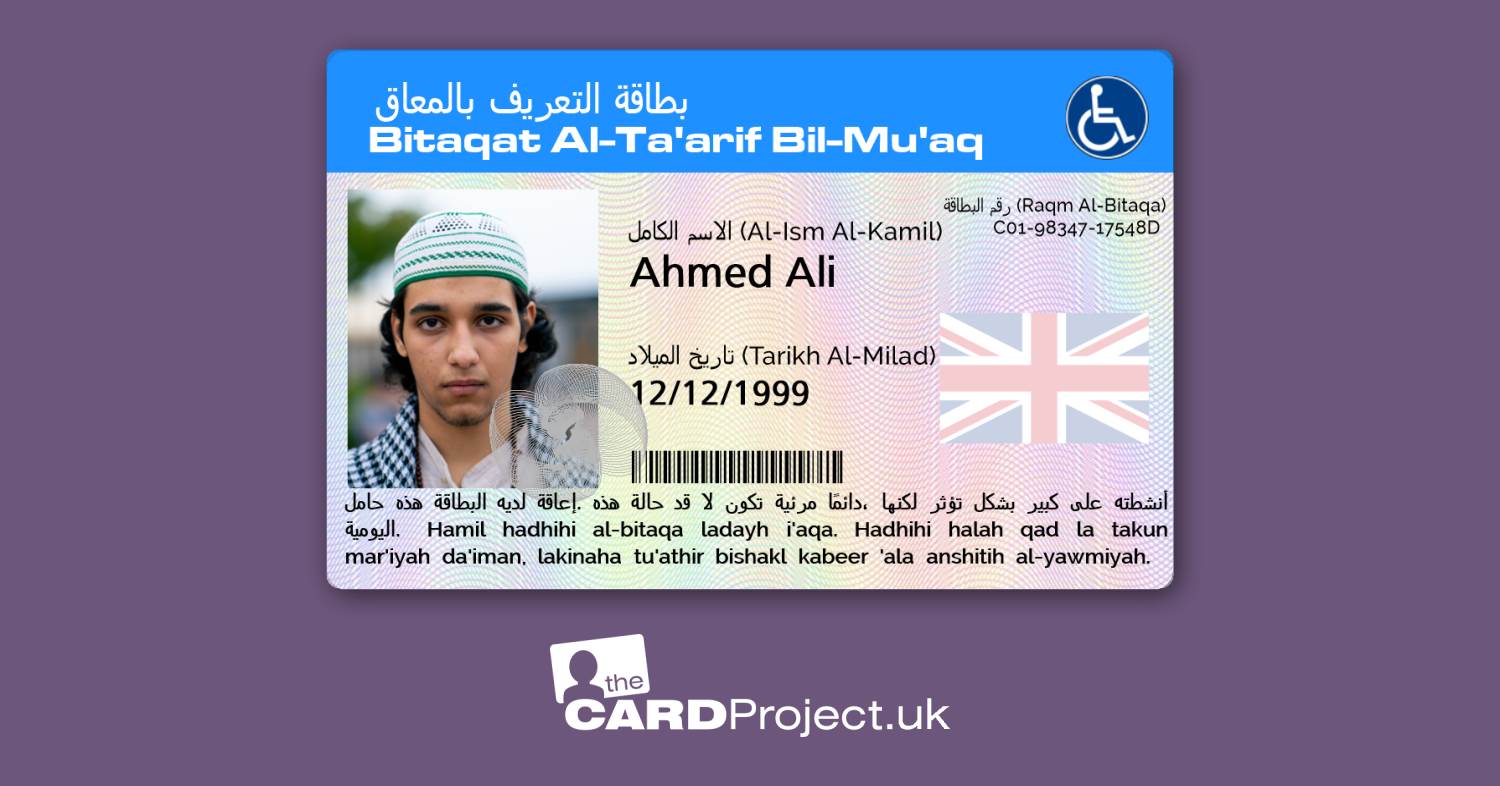
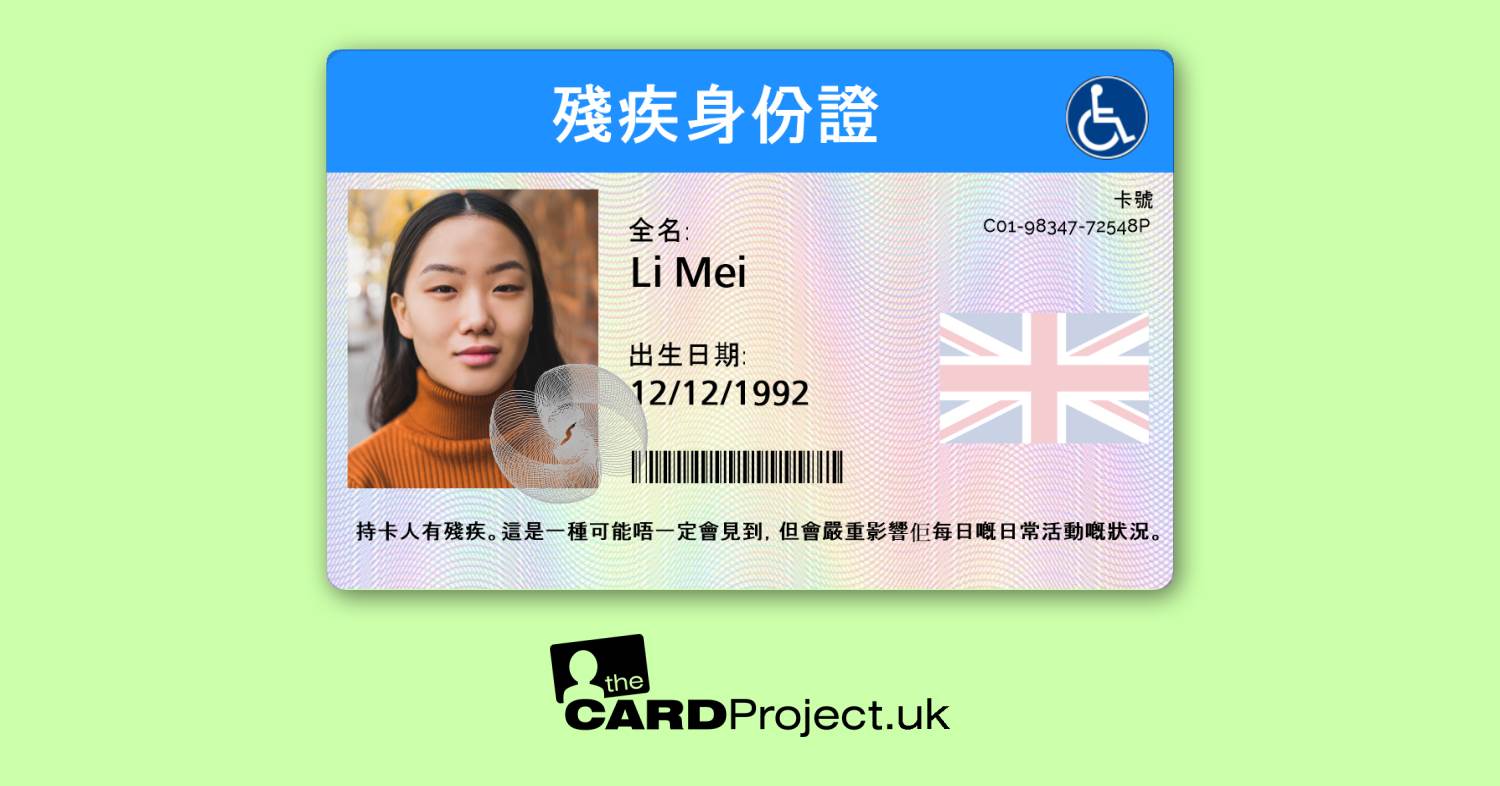
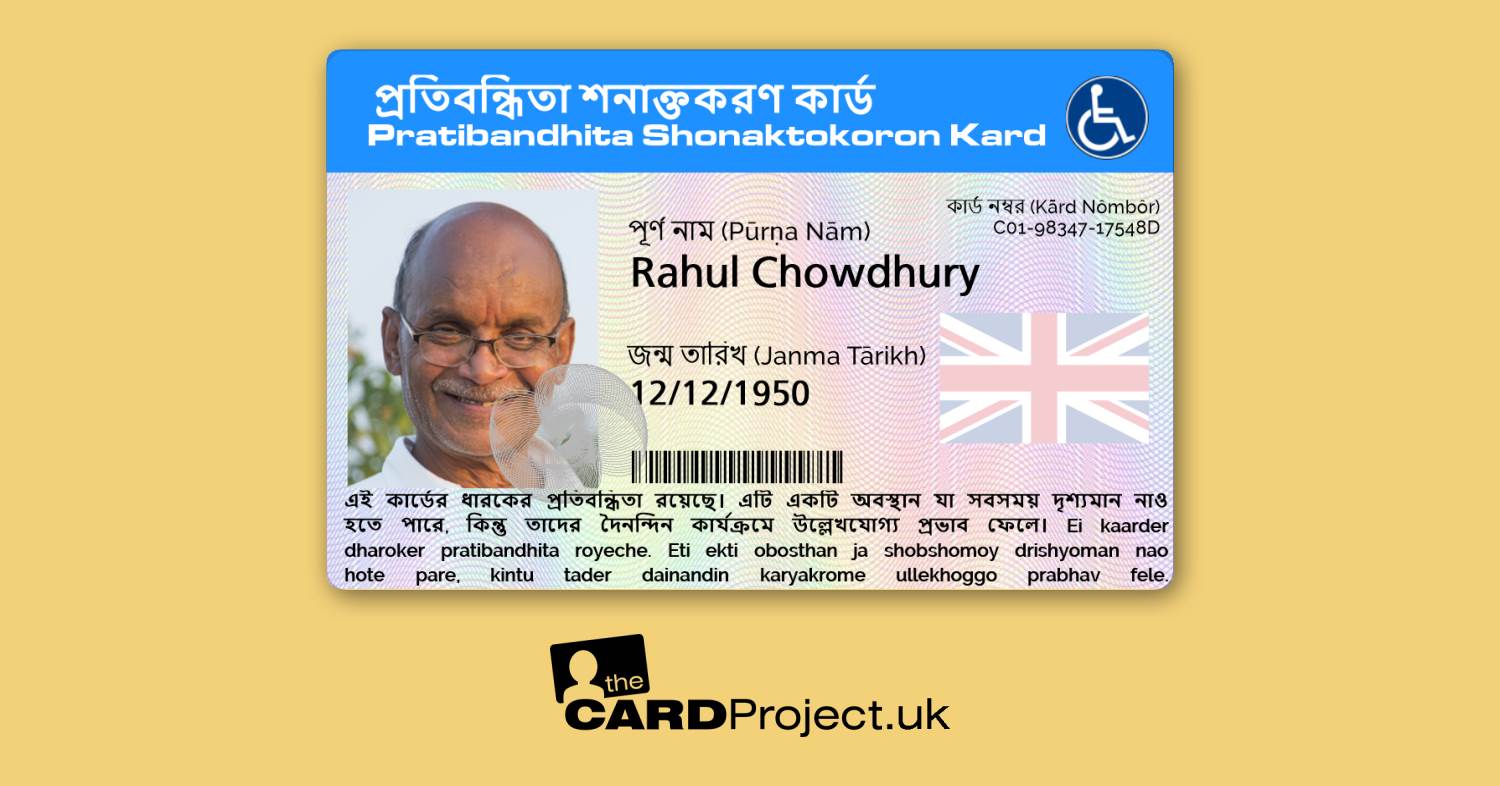
Each card includes space for the essentials you provide when ordering:
-
Your own photo, which you upload during the simple online process.
-
Your full name and date of birth, added exactly as you specify.
This personal touch helps with quick identification while keeping the card feeling like it's truly yours. The layout is clean and professional, with the international disability symbol prominently displayed so others recognise it straight away. We use a standard, reassuring message on the card that explains the holder has a disability or condition that may not always be visible but can significantly affect day-to-day activities. It politely asks for assistance and consideration, which many users find strikes just the right balance—informative without sharing more than necessary.
Fixed, Thoughtful Text in Both Languages
To keep things consistent and clear, the main text on the card is fixed and carefully worded. On one side, you'll see the message in English, and on the other (or alongside, depending on the language layout), it's translated accurately into your chosen second language.
This approach means everyone gets the same helpful wording that's been refined based on customer feedback over the years. It covers hidden disabilities well, explaining that support is appreciated, without needing complicated custom phrases. For many families and individuals, this ready-made text is exactly what they need—it communicates the key points calmly and effectively.
Compact, Durable, and Eco-Friendly
Just like a bank card, our cards measure 86mm x 54mm with rounded corners, so they slide easily into any wallet, purse, or card holder. They're always with you without being bulky or awkward.
We print them on biodegradable plastic that's tough enough for everyday use—it won't fade, scratch easily, or bend permanently. At the same time, it's kinder to the environment, breaking down naturally when its time comes. The high-quality printing ensures colours stay bright and text remains sharp for years.
Straightforward Privacy and Security
We only use the details you provide: your photo, name, and date of birth, plus a unique card number for our records. Nothing else is required or stored unnecessarily. There's no need to share addresses, medical history, or anything sensitive—the focus is purely on helping others understand and assist in the moment.
Affordable and Easy to Order
Our cards start at £7.99 each, plus standard UK postage. Delivery is quick and reliable, usually arriving within a few working days after your order is placed.
The ordering process is completely straightforward—no medical evidence needed, no complicated forms. You just upload your photo, enter the name and date of birth, choose your language pair, and we're ready to produce it right here in the UK.
These thoughtful details add up to a card that's practical, respectful, and built to give you quiet confidence wherever you go. Whether it's for yourself, a child, or someone you care for, it's a small item that can make everyday interactions a little easier and less worrying.
Frequently Asked Questions (FAQs) About Bilingual Disability ID Cards
It's natural to have questions when you're considering a bilingual disability ID card—especially if it's your first time ordering one or you're doing it for someone you care for. We've put together answers to the most common things people ask us, based on what customers often want to know. This should help clear up any uncertainties and give you confidence about how the cards work in real life.
Are these cards officially recognised or accepted everywhere?
No, these are not official government-issued cards, and there's no legal requirement to have one. They're private, voluntary tools created to help with communication, especially around hidden disabilities and language differences. They're not a replacement for official entitlements like a Blue Badge, PIP letter, or EHCP.
That said, many people find that staff in shops, on public transport, or in services respond positively when shown the card—particularly because it features the widely recognised international disability symbol and a polite, clear message. Acceptance is always at the discretion of the person you're dealing with, but the card often encourages understanding and small adjustments, like extra time or priority assistance.
Do I need to provide medical proof or a diagnosis to order a card?
Not at all—no medical evidence, doctor's letter, or diagnosis is required. We trust that you know your own needs best, or those of the person you're ordering for. The process is completely self-identified and straightforward.
This keeps things simple and respectful of your privacy. Many parents, caregivers, and individuals appreciate that there's no paperwork or waiting involved—you can order whenever you're ready.
Are these cards official or recognised by the government?
No, these are not official government-issued cards, and they're not legally required or a replacement for things like a Blue Badge, PIP entitlement, passport, or an EHCP for children. They're private, voluntary tools designed to help with everyday communication, particularly for hidden disabilities and language differences.
Many people find them useful alongside other schemes, such as the Hidden Disabilities Sunflower lanyard, but they're not formally linked to any national programme. Staff in shops, transport, or services may recognise the international disability symbol and respond helpfully, but acceptance is always at their discretion.
How is my privacy protected?
We take privacy seriously and only use the minimum information needed. You provide just your photo, name, and date of birth—nothing else is required or stored. There's no space for medical diagnoses, addresses, or any sensitive personal details unless they're part of the standard message.
The card itself only shows what you've approved: your personal identifiers and the general statement about having a disability. This approach respects your right to share only what's necessary for getting the right support in the moment.
Can I add custom text or specific instructions about my condition?
At the moment, we use the same carefully worded message for all cards to ensure accuracy in translation and consistency. This standard text has been chosen because it effectively explains hidden disabilities in a polite, straightforward way that most people find helpful.
We don't offer custom phrases or additional instructions on the card itself. Many customers tell us the fixed message covers what they need, especially when combined with showing the card and speaking or gesturing if possible.
What if I need more than two languages?
Our cards are bilingual only—English plus one other language from our list. We don't currently offer tri-lingual or additional language options on a single card, as it would make the layout too crowded and harder to read quickly.
If family members speak different languages, the easiest approach is often to order separate cards for each person, choosing the most suitable language pair for them.
How long does it take to receive my card, and what if something goes wrong?
Once you've placed your order and uploaded your photo, we aim to print and dispatch within a few working days. Delivery across the UK is quick and reliable, usually arriving shortly after that.
If there's any issue with the photo quality or details, we'll get in touch straight away to sort it out—no fuss. We're here to make the process as smooth as possible.
Can I order for someone else, like a child or relative?
Yes, absolutely—many orders come from parents, caregivers, or family members ordering on behalf of a loved one. You just need a suitable photo and the correct name and date of birth.
It's a popular choice for supporting children with additional needs or older relatives who might find the ordering process trickier themselves.
How to Order Your Dual Language Disability ID Card Today
Ordering a bilingual disability ID card is easy to do and doesn't take much time at all. We’ve made the process as simple as possible so you can get your card quickly, without any complicated steps or unnecessary paperwork. Many customers—whether ordering for themselves, a child, or a relative—tell us how easy it was, and they're often surprised at how soon the card arrives.
Here's a step-by-step guide to help you through it.
Step 1: Visit Our Website
Start by heading to The Card Project UK website. Our range of Duo Disability ID Cards can be found here
Everything is done online, so you can browse and order from home at a time that suits you. There's no need to register an account upfront—just go straight to the product page when you're ready.
Step 2: Choose Your Language Pair
Once you're on the card page, select the second language. We offer popular options like Polish, Romanian, Punjabi, Urdu, Arabic, and many others (as covered earlier).
Step 3: Add Your Personal Details and Photo
Next, enter the full name and date of birth exactly as you want them to appear on the card.
You'll also upload a clear photo of the person the card is for. A recent passport-style headshot works best—facing forward, with a plain background if possible. The photo should be sharp so we can print it clearly.
Step 4: Review and Complete Payment
You'll see a preview of how the finished card will look, with your details and the standard message in both languages.
Everything is fixed in terms of the main text, so what you see is what you'll get. Once you're happy, add to your basket and go to checkout.
Payment is secure and simple—cards start at £7.99 each, plus standard UK postage. We accept the usual debit/credit cards and other common methods.
Step 5: Sit Back and Wait for Delivery
After your order is confirmed, we print and aim to dispatch within 24 hours Monday to Friday . Delivery is quick and tracked where possible, usually arriving shortly afterwards anywhere in the UK.
As soon as it's on its way, you'll get confirmation, giving you peace of mind.
That's all there is to it—no medical forms, no waiting for approval, just a few minutes online and your card is on its way.
If you're ready to make everyday interactions a little easier and less worrying—for yourself or someone you care about—why not place your order today? Thousands of people across the UK already carry one of our bilingual cards, and many say it's given them that extra bit of confidence they were looking for.
© 2024 The Card Project Uk Ltd
VAT: 453 2087 06
|