Exploring the Benefits of the US Disability Identification Card
The US Disability Identification Card by The Card Project UK
Navigating daily life can sometimes be challenging, and for people living with a disability, there can be extra hurdles. Many disabilities are not immediately visible, which can lead to misunderstandings or the need to explain personal medical information to strangers, which is something not everyone is comfortable with. In these situations, finding a simple and discreet way to communicate your needs can make a world of difference.
This is the idea behind the US Disability Identification Card from The Card Project UK. It is a straightforward photo ID card that you can carry in your wallet or purse. The purpose of the card is to identify you as a person who has a disability. It's designed to be a practical tool that you can show when you need to, helping to bridge a communication gap without you having to say a word.
It is very important to understand that this card is not an official government-issued document. It's not like a driver's license or a state ID, and it doesn't grant you any legal rights or benefits. Instead, you can think of it as a personal tool created to help make certain interactions in your day-to-day life a little bit easier. This article will look at how this card works and the ways in which it can be a helpful resource for the people who choose to carry it.
Understanding the US Disability Identification Card
At first glance, the US Disability Identification Card looks and feels like any other standard ID you might carry. It’s the same size as a credit card, so it fits easily into a wallet or a small cardholder. It is also made from a biodegradable plastic, so it is a more environmentally conscious choice. The card’s main purpose is to act as a clear and simple form of identification for someone with a disability.
While it is not an official government document, it is designed to look familiar. This is intentional. When something looks professional and recognisable, people are often more likely to accept it without question. This can be very helpful in situations where you need to communicate your needs quickly.
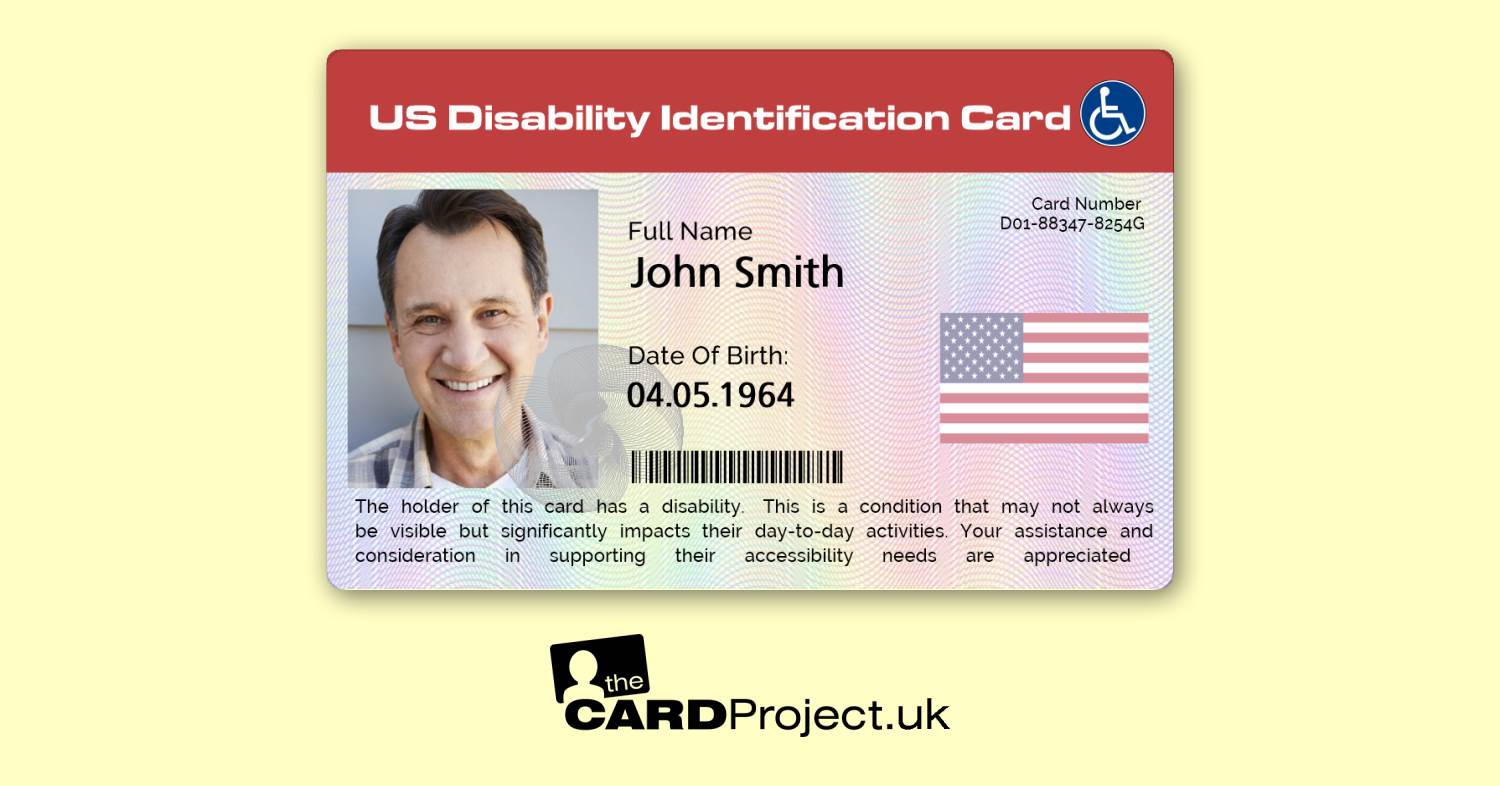
Let’s look at the information the card holds. The front of the card has the most important details:
-
Your Photo: This clearly links the card to you, the holder.
-
Your Name and Date of Birth: These are standard details for any identification card.
-
A Statement of Disability: This is the core feature of the card. It clearly states that the holder has a disability. This removes the need for you to explain yourself verbally, which can be particularly useful if your disability affects your speech, if you are feeling anxious, or if you simply prefer not to discuss your personal medical history.
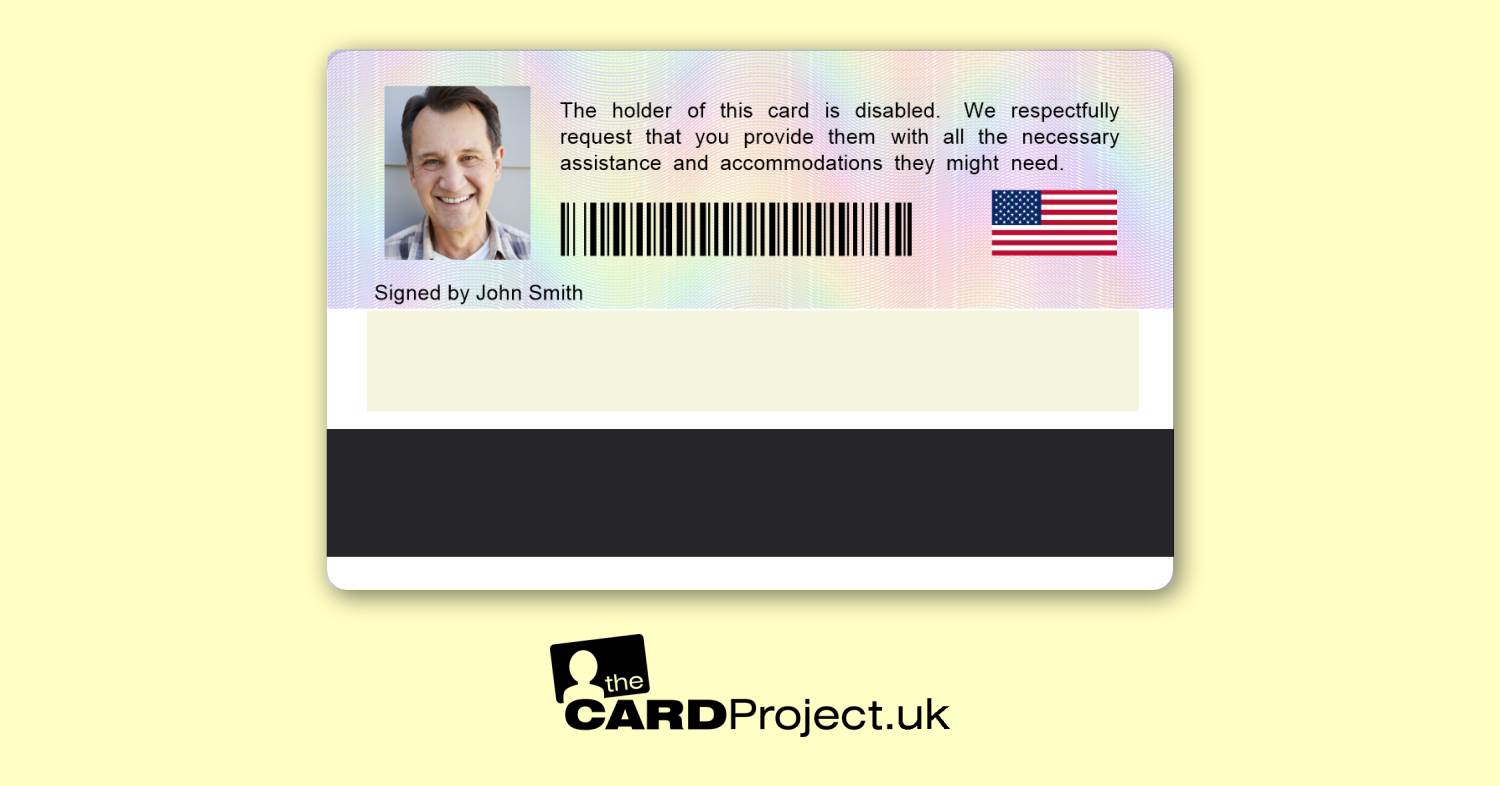
The back of the card has features that add to its familiar feel. There is a magnetic strip and a signature strip, just like you would find on a bank card or a driver's license. There is also a second, smaller copy of your photo, which is a common feature on many forms of official ID. All of these small details are designed to work together to create a card that is straightforward, professional, and easy for others to understand at a glance.
Not Official, Yet Incredibly Useful
It’s crucial to be clear about what this card is and what it is not. The US Disability Identification Card is not issued by any government agency, whether at the federal or state level. This means you cannot use it as a primary form of ID to do things like board an airplane, vote, or prove your age. It is not a substitute for a driver's license, a state ID card, or a passport.
So, if it’s not official, how is it useful? Its value is not in legal authority, but in its power as a communication tool in everyday life. For many people, one of the biggest challenges of living with a disability, especially a non-visible one, is having to explain it to others. This can be tiring, frustrating, and can feel like an invasion of privacy. The card is designed to help with exactly these situations.
Think about being in a crowded public space, like a busy store or an airport. If you have a condition that makes standing for long periods difficult or painful, you might need to use a priority seating area or ask for assistance. Explaining your condition to a member of staff or a stranger can be awkward. Simply showing them the card can communicate your need quickly and discreetly, without you having to go into personal detail.
It can also be a vital aid for people who find verbal communication challenging. This could be for many reasons, including autism, anxiety, a hearing impairment, or the effects of a stroke. In a noisy café or at a ticket counter, trying to get your message across can be stressful. The card can act as a bridge, letting the other person know that you have a disability and may need a bit more time, patience, or a different way of communicating. It quietly asks for understanding, allowing you to advocate for yourself without a word.
How the US Disability Identification Card Helps
The real value of a tool like this is seen in the small, everyday moments where it can make a real difference. It is designed to help with a range of challenges, from making communication easier to helping a person feel more confident when they are out in the community.
Easing Communication Gaps
One of the main ways the card helps is by bridging communication gaps. For someone with a non-visible disability, such as chronic pain, anxiety, or autism, it can be draining to constantly have to explain their situation to others. The card does the explaining for them. When presented, it non-verbally tells others that the holder has a disability, which can be incredibly useful in high-stress situations or in noisy, crowded places where talking is difficult.
In an emergency, this can be even more important. If a person is unable to speak or becomes disoriented due to their condition, the card can provide immediate information to first responders or members of the public. It can quickly signal that there is an underlying medical reason for the person's distress, guiding them to provide the right kind of help and understanding.
Enhancing Social Inclusion
The card can also play a part in helping people feel more included in society. Having a simple and formal way to identify your disability can give you more confidence to go to places and do things that you might otherwise avoid. It's a tool that can help you assert your needs in a quiet and dignified way.
This could be in a public place, at work, or at college. For example, it might help you ask for a small accommodation, like being allowed to sit down while waiting in a long queue, or needing access to a quiet space if you feel overwhelmed. These small adjustments can be the difference between being able to participate in an activity and having to stay home. The card helps to start these conversations, making it easier to get the support you need to be a part of your community.
Promoting Awareness and Understanding
On a wider scale, the use of these cards can help to promote a greater awareness of disability in general. Every time a card is used, it’s a quiet reminder that not all disabilities are visible. It can gently challenge people's assumptions about what disability looks like and encourage them to be more patient and inclusive.
It serves as a small but constant educational tool. The security guard who sees the card, the person behind the ticket counter, the cashier at the grocery store—each interaction is an opportunity for a small shift in perspective. It helps to normalise the fact that people have different needs and that a little bit of understanding can go a long way in making society more accessible for everyone.
A Commitment to Sustainability and Quality
When you get an ID card, you expect it to be durable enough to last for a long time in your wallet. But it's also worth thinking about what happens to it when you no longer need it. Most cards, like bank cards and standard driver's licenses, are made from PVC plastic. Once thrown away, these cards can sit in a landfill for hundreds of years without breaking down.
With this in mind, the US Disability Identification Card is made differently. It is produced from a type of plastic that is biodegradable. This means that while the card is strong and sturdy enough for everyday use, it is designed to break down naturally over time once it is disposed of. It's a small choice that contributes to reducing the amount of permanent plastic waste in the environment.
Being eco-friendly doesn't mean the quality is any lower. The card is still designed to be a professional and reliable tool. The printing is clear, the finish is professional, and it is built to withstand the normal wear and tear of being carried around in a purse or pocket. The goal is to provide a product that is both high in quality for the person who needs it and responsible in its impact on the planet.
A Step Towards a More Inclusive Future
When all is said and done, the US Disability Identification Card is a very simple tool. In itself, it’s just a piece of biodegradable plastic with a photo and some text. Its real value lies in what it represents: a straightforward way for a person to communicate their needs and a step towards a world that is a little more understanding.
The card is not meant to be a replacement for official government documents, and it doesn't grant any special privileges. Its purpose is much more personal. It’s designed to be a useful aid for individuals who would find it helpful to have a discreet and clear way to identify themselves as having a disability. This is particularly important because so many disabilities are not immediately visible to others.
One key aspect of this card is that you do not need to provide any medical letters or proof of your disability to obtain one. This is a conscious decision, based on trust and the understanding that each individual knows their own situation best. Not everyone has access to a formal diagnosis, and some people may not feel comfortable with the labels that can come with them. This approach allows the card to be accessible to anyone who feels it would benefit them, putting the control firmly in their hands.
Building a truly inclusive and accessible society is a complex job with no easy answers. A simple ID card won't solve everything, but it can be a helpful tool for some people. It's a practical item that can reduce a bit of the daily stress and self-advocacy that living with a disability can involve. For anyone who thinks this card might be a useful addition to their wallet, they are available from The Card Project UK.
© 2024 The Card Project Uk Ltd
VAT: 453 2087 06
|