How Menu Request Cards Simplify Dining Out After Weight Loss Surgery
How Menu Request Cards Simplify Dining Out After Weight Loss Surgery
Dining out after weight loss surgery can feel a bit daunting at first. Portion sizes are often huge, and explaining your needs to waiting staff every single time gets tiring. That's where Menu Request Cards from us here at The Card Project UK come in. You simply hand one over to your waiter, and it does the talking for you – quietly and clearly – so you can get on with enjoying the meal and the company.
How Our Cards Take the Stress Out of Ordering
The main advantage is how much easier they make those restaurant conversations. No more repeating the same explanation or worrying about how to phrase it. The card covers the key points, and staff usually respond well once they understand.
-
They save you from awkward explanations: You pass the card to the waiter, and it politely explains that you've had weight loss surgery and need things like smaller portions, simpler dishes, or access to the children's menu. This keeps everything private and quick, especially helpful in noisy or busy places where a longer chat might feel uncomfortable. Many customers tell us it removes that little knot of anxiety before ordering.
-
They're always with you when you need them: Sized just like a bank card, they slide straight into your wallet or purse next to your debit card or driving licence. You don't have to remember to pack anything extra – they're there whenever you go out, whether it's a quick lunch or a family celebration. After a while, reaching for the card becomes second nature.
What Menu Request Cards Actually Look Like
Our cards are built to last. They're printed on durable, biodegradable plastic that's kind to the environment and tough enough for everyday carry. The text is clear and easy to read.
We offer two versions to suit different people:
-
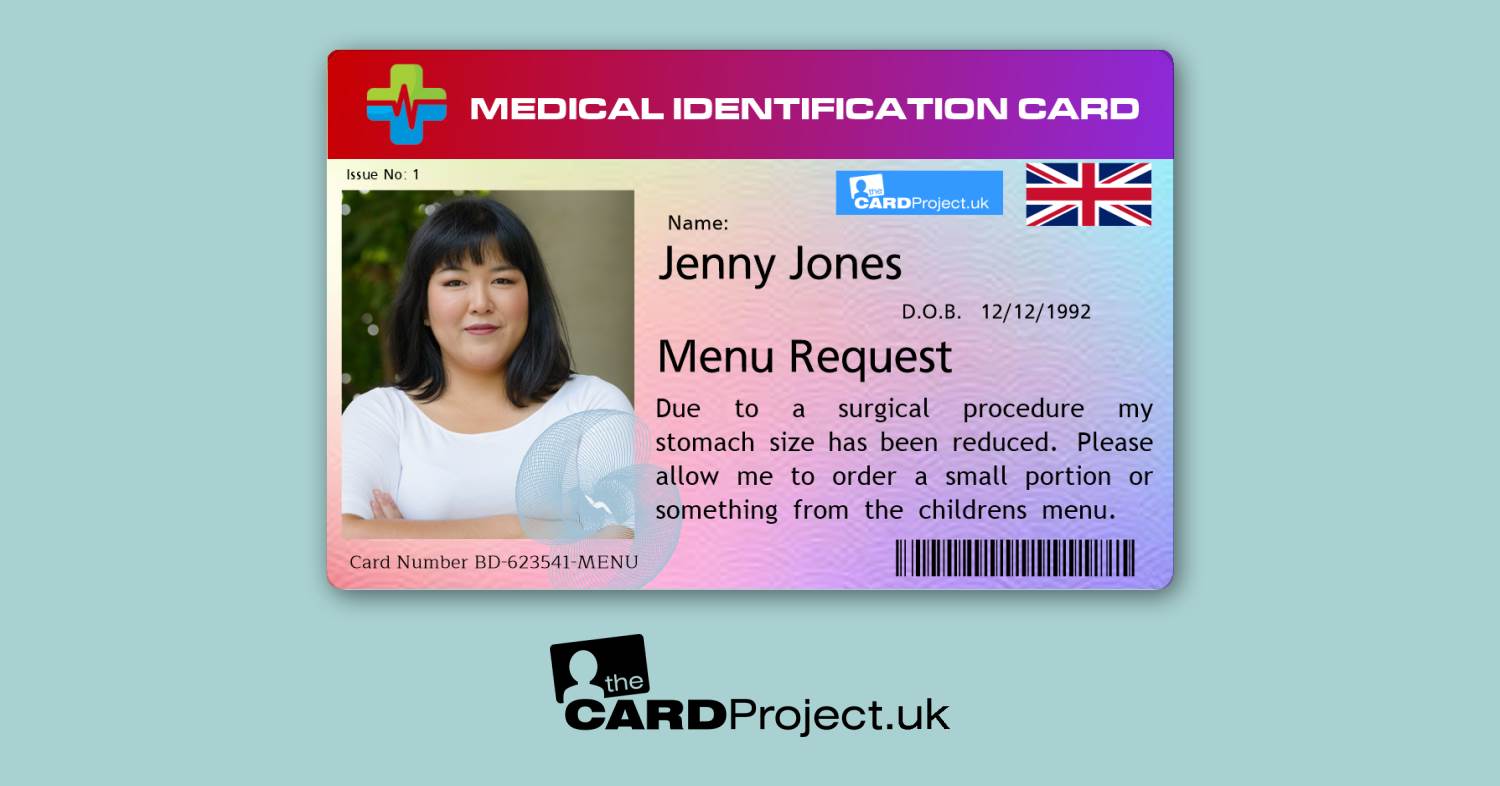
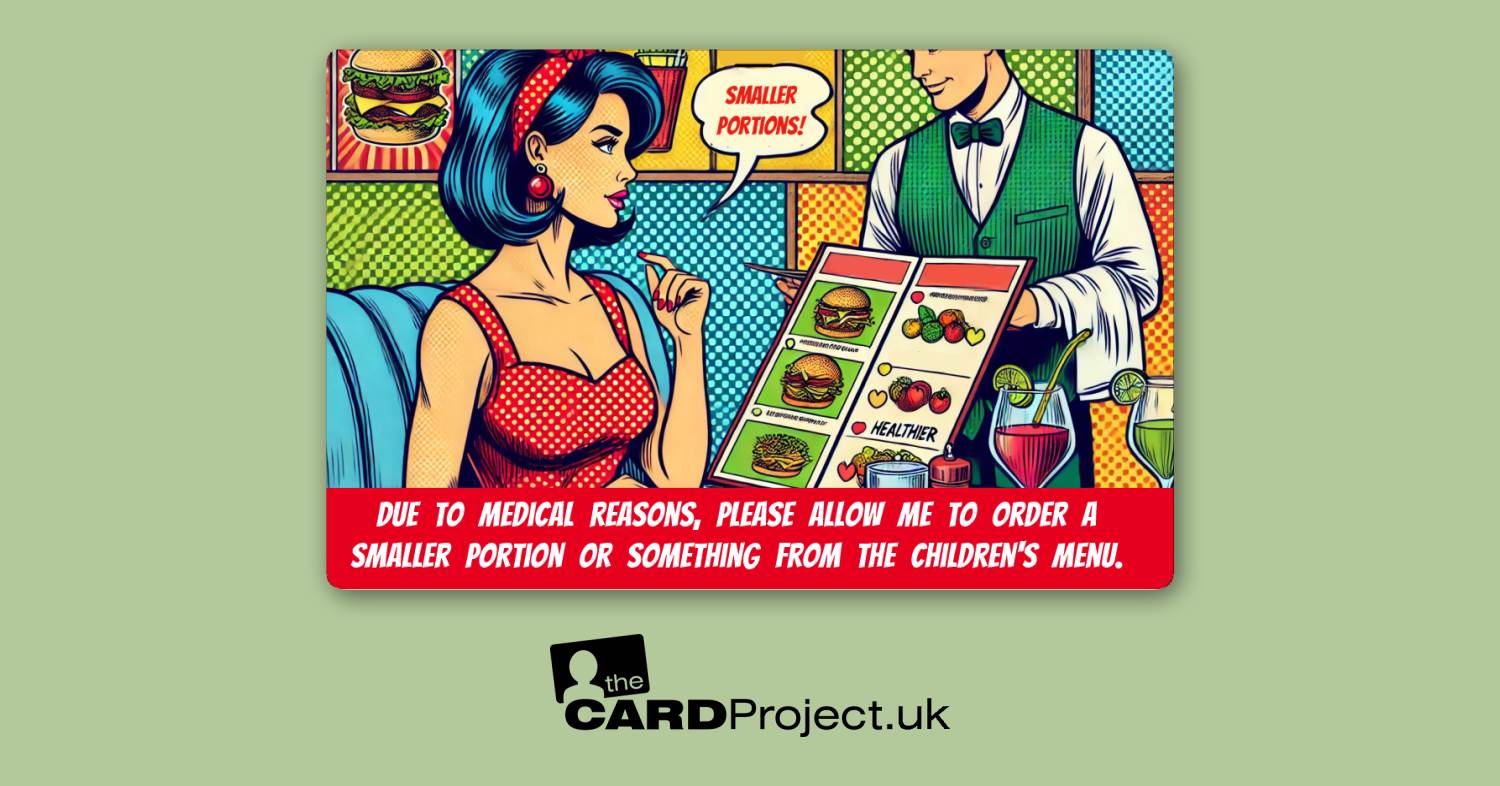
Standard awareness cards – ready to use straight away: These have a general, polite message explaining common post-surgery needs. They're perfect if you want something simple and effective without any personal details. People often choose these first because they're discreet and get the job done every time.
-
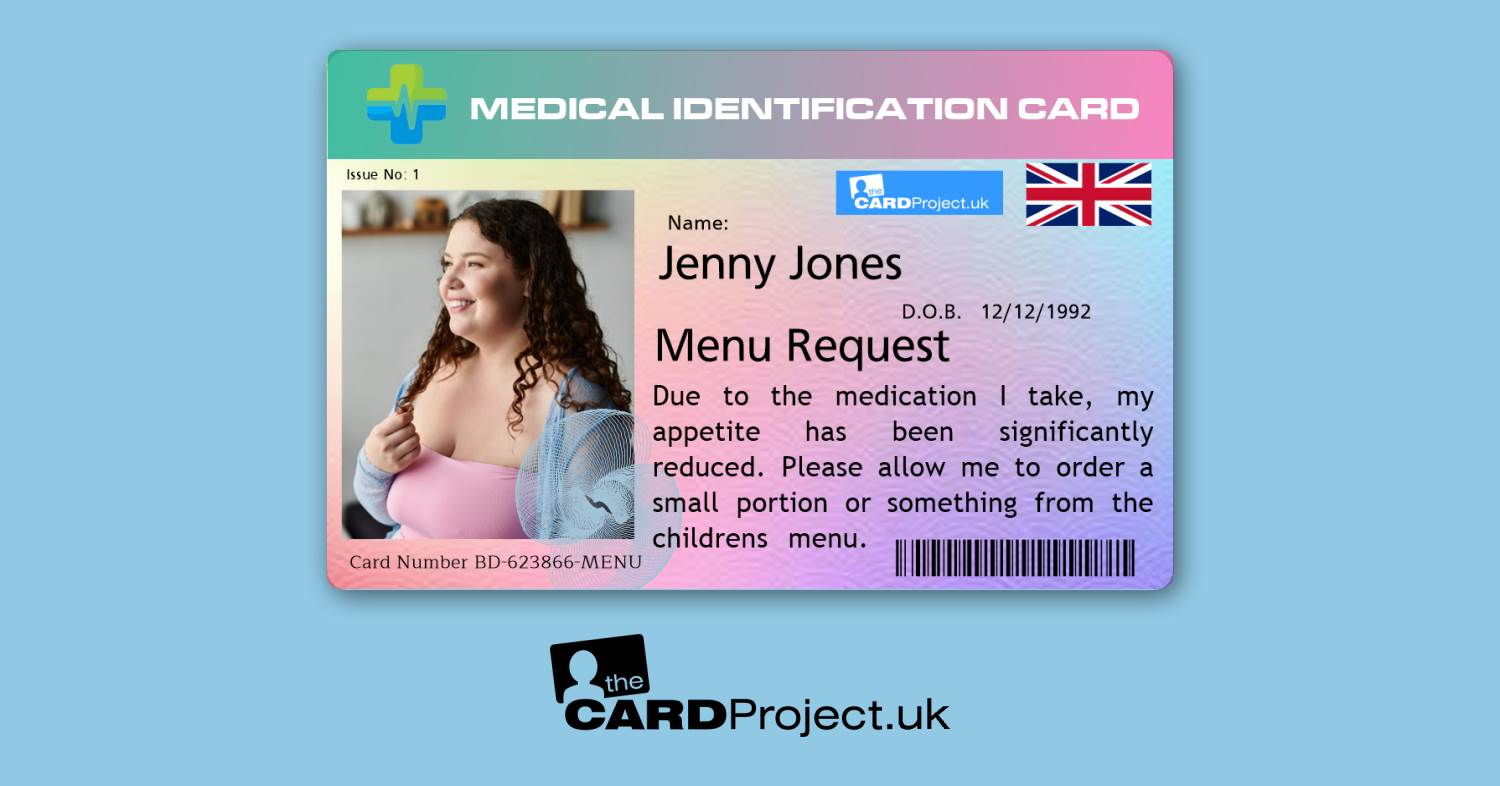
Personalised cards – with your name or photo: Adding your name (or even a small photo) makes the card feel a bit more friendly when you hand it over. Some customers like this because it helps build familiarity if they visit the same places regularly. It still keeps medical details brief while making the request feel more personal. The personalised cards also look more official which can often feel empowering.
A Quick Look at Weight Loss Surgery
Weight loss surgery, often called bariatric surgery, changes how your digestive system works to help manage weight over the long term. It’s not a quick fix or just about willpower; the operation physically alters how much you can eat or how your body absorbs food. Different procedures bring their own changes to everyday eating, especially when you’re out at a restaurant.
The Main Types of Weight Loss Surgery
Here’s a simple overview of common procedures and what they mean for dining out:
-
Procedures that mainly restrict portion size:
Operations like gastric sleeve or adjustable gastric band make your stomach much smaller. You feel full after just a few bites, which is great for weight loss but can make a standard adult portion in a restaurant feel overwhelming. Many people leave most of the plate or feel uncomfortable if they eat too much, so asking for smaller helpings or children’s menu options becomes a regular need.
-
Surgeries that affect nutrient absorption:
Gastric bypass, for example, bypasses part of the small intestine, so your body takes in fewer calories and nutrients. This can speed up weight loss but raises the risk of “dumping syndrome” if you eat sugary or very fatty foods—symptoms like nausea, sweating, or cramps can happen quickly. Choosing simpler, lower-sugar dishes matters, and being able to quietly flag your needs to staff helps avoid awkward situations.
-
Combined procedures:
Operations like Roux-en-Y gastric bypass shrink the stomach and reroute the intestines. The results can be impressive, but they require lifelong adjustments to diet and supplements. Normal menu items often don’t fit these new guidelines, so having a discreet way to ask for modifications makes social meals far less stressful.
No matter which surgery you’ve had, eating smaller, better-suited portions is essential for comfort and health. Restaurant menus aren’t usually designed with post-surgery needs in mind, which is exactly why tools like Menu Request Cards make dining out simpler and more comfortable.
The Real Challenges of Dining Out After Surgery
Eating out should be simple – good food, good company, no washing up. After weight loss surgery, it can feel more complicated. Portions often exceed what you can manage, conversations with staff can feel awkward, and the whole experience may leave you self-conscious.
Common Hurdles
These are the issues most people face after bariatric surgery, and why Menu Request Cards can help:
-
Portions that are too large:
Restaurant servings are designed for the average adult, often far bigger than you can comfortably eat. Eating too much can make you unwell, while leaving food can feel wasteful or embarrassing. Some people avoid certain dishes entirely, limiting choice and enjoyment.
-
Explaining yourself every time:
Repeatedly telling staff about your surgery, dietary limits, or food sensitivities can feel personal and tiring. Busy nights or inattentive staff make these conversations stressful, turning a simple order into an uncomfortable situation.
-
Social pressures:
Meals out often involve celebrations or catch-ups, with an unspoken expectation to eat “normally.” You may worry about asking for changes or eating less, which can create anxiety and prevent you from fully relaxing and enjoying the occasion.
Recognising these challenges is the first step to managing them. Tools like Menu Request Cards don’t change restaurant menus, but they make your needs clear quickly and discreetly, removing much of the stress from ordering.
Putting Menu Request Cards into Action
Using a Menu Request Card is easy and fits seamlessly into your routine. Most people find that after a few uses, it feels completely natural.
How to Use the Card
-
Keep it handy:
Slide the card into your wallet or purse alongside your bank cards or driving licence. It’s the same size, so it doesn’t take extra space, and you’ll always have it when needed.
-
Hand it over when ordering:
Give the card to the waiter or waitress as you place your order. A simple line like “This explains my dietary needs, thanks” is enough. The card politely sets out that you’ve had weight loss surgery and may need smaller portions, simpler dishes, or children’s menu options, keeping the interaction brief and professional.
What to Expect
-
Staff usually respond positively:
Many servers suggest suitable dishes, offer half-portions, or allow ordering from the children’s menu without fuss. Clear information helps them get your order right the first time. If any questions arise, they’re usually practical and quick rather than personal.
-
Choosing standard or personalised cards:
Standard cards work well for occasional diners who prefer discretion. Personalised cards, with your name or a small photo, add a friendly touch and can feel warmer at restaurants you visit often. Both types effectively communicate your needs.
Over time, using the card reduces anxiety about dining out. Meals become smoother and more enjoyable, with less stress about explaining your requirements each time. Many people say they wish they’d started using one sooner.
Key Advantages of Having a Menu Request Card
A Menu Request Card may seem like a small item, but it can make dining out much easier and more enjoyable after weight loss surgery. The benefits add up, turning outings that once felt stressful into smoother, more confident experiences.
How the Cards Help
-
Keeps things private:
You don’t need to explain your surgery or medical history to every waiter. Handing over the card communicates your needs clearly and discreetly, which is especially useful in busy restaurants or public spaces.
-
Boosts confidence:
Having a reliable, simple tool reduces anxiety about ordering. Many people find they start accepting invitations they might have avoided before, reclaiming social meals without constant worry.
-
Smooths the ordering process:
Staff understand your needs immediately and can suggest appropriate dishes or adjust portions without repeated questions. Orders arrive correctly, the meal flows better, and awkward adjustments are minimised, benefiting both you and the restaurant team.
-
Raises awareness quietly:
Each use helps staff become more familiar with post-surgery needs in a non-confrontational way. Over time, this subtle education can make life easier for others in similar situations.
In short, the card is a practical, low-effort tool that fits in your wallet and takes the stress out of dining out. Many customers describe it as one of the most helpful additions to their post-surgery routine.
Easing into New Eating Routines
Life after weight loss surgery isn’t just about meals at home—it’s about managing food in every situation, especially when eating out. Menu Request Cards make that transition easier by giving you a simple, polite way to communicate your needs.
How the Cards Support Everyday Eating
-
Making restaurant menus work for you:
Standard dishes are often too large or rich after surgery. The card lets you request smaller portions, order a starter as your main, or swap sides without a long explanation. This keeps your choices flexible while staying within your dietary limits.
-
Staying included in social meals:
Whether it’s coffee with friends or a family gathering, shared meals are social moments. The card handles your order quietly, so you can focus on the conversation instead of your restrictions.
-
Blending in seamlessly:
Restaurants are designed for standard portions, which can make post-surgery meals awkward. Using the card discreetly helps you feel more like everyone else, making dining out less stressful and supporting your new eating habits.
Building a Flexible Lifestyle
Menu Request Cards aren’t just a convenience—they help you live confidently after surgery. They remove anxiety around ordering, letting you say yes to invitations, try new places, and enjoy meals with others without fuss.
Small, practical steps like this can make a big difference in your day-to-day life.
Last Updated: December 2025
© 2024 The Card Project Uk Ltd
VAT: 453 2087 06
|