How Universities Store Student ID Data and Protect Privacy
It’s completely understandable to feel a bit uneasy about how much information an organisation holds about you, and a university is no exception. That little plastic card you carry—your student ID—is much more than just a photo; it’s a key to your campus life and a link to a whole lot of your personal data. You have a right to know exactly what’s being collected, why it’s needed, and how universities in the UK are working hard to keep it all safe and sound.
This guide is here to walk you through the whole process, from the moment your photo is taken to how your data is secured and what your rights are under UK privacy law. We’ll break down the technical stuff and the legal jargon into simple, clear steps so you can feel confident and educated about your personal information while you study.
Table of Contents
What Data Universities Collect for Student IDs
Your student ID card is designed to serve as a central piece of identification that connects you to all the services and resources the university offers. To make this work, universities have to collect a handful of personal details, which generally fall into three categories.
Personal Identification Details
This is the most basic information needed to confirm who you are and that you’re a genuine student. This data is usually collected during your enrolment process and is stored in the main Student Records System (sometimes called an SRS).
-
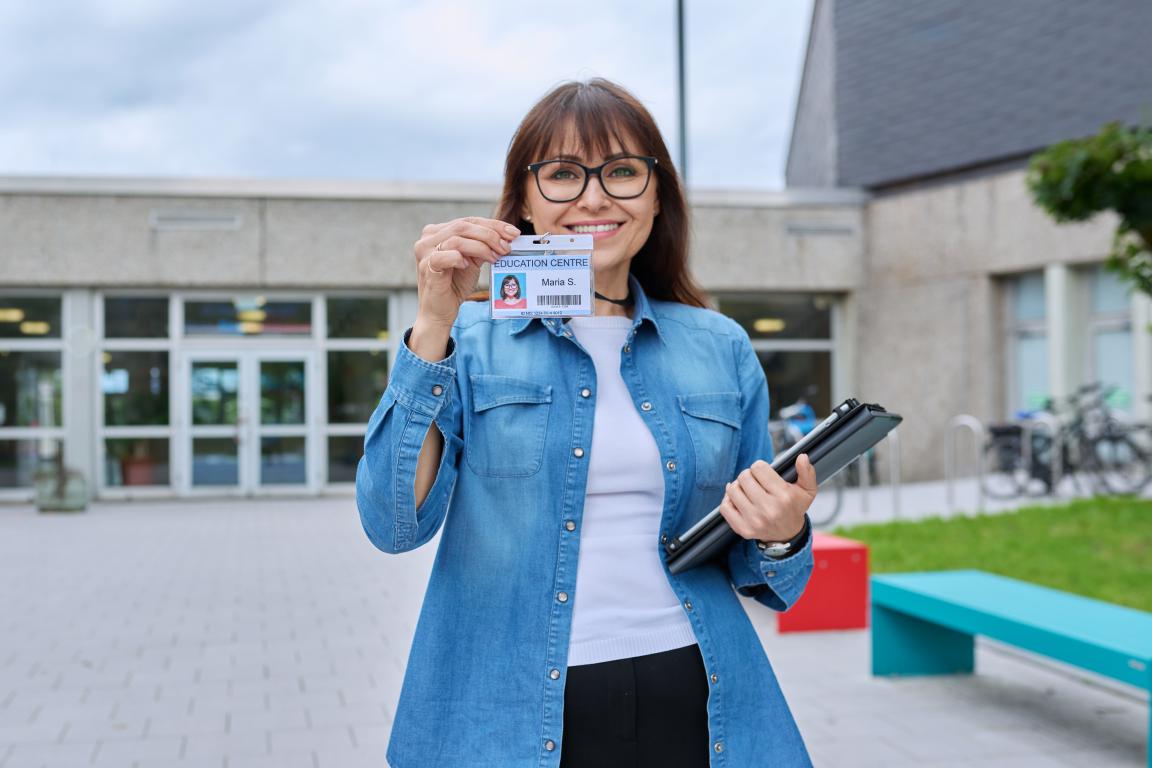
Name and Photo: Your full name and photograph are the main identifiers displayed on the card itself, allowing staff to visually confirm your identity for exams, collections, or security checks.
-
Unique ID Number: This is the most crucial piece of data. Your Student ID number is a unique reference that links your card to your entire digital record in the university's systems.
-
Course and Status: This includes your course name, department, year of study, and whether you’re an undergraduate (UG), postgraduate taught (PGT), or doctoral (PhD) student. This helps services like the library or your department grant you the right access levels.
-
Contact Information: Details like your university email address and sometimes the home or term-time address you provided on your application are part of your record, even if they aren’t printed on the card.
Access and Activity Records
Modern student ID cards often contain a chip or a magnetic strip, making them 'smart IDs.' Every time you tap or swipe your card to use a service, the system records that event. This record of activity is logged alongside your unique ID number, but it’s essential for running the campus smoothly and safely.
-
Building Entry: Using your card to enter secure buildings like labs, student accommodation, or out-of-hours library access creates an entry log. This is primarily for security, safety, and managing building capacity.
-
Library Use: The card functions as your library card, recording what books you borrow and when you return them.
-
Attendance Monitoring: Many universities use your ID card to record your attendance at lectures, seminars, or labs by having you scan it at the door. This is often a requirement for student visas (for international students) and helps the university check in on students who might be struggling or missing too many sessions.
-
Printing and Payments: If you use your ID card to pay for printing credits, top up a catering account, or use vending machines, the transaction details are logged.
Optional Additional Data
In some cases, your university record may hold additional, non-mandatory information that is still tied to your student ID number.
-
Club and Society Memberships: Your Students’ Union (often a separate legal entity) will typically link your student ID number to your membership records so you can access SU events or facilities.
-
Special Permissions: This could include permissions for out-of-hours lab access, a sports centre membership, or a record of any reasonable adjustments agreed upon with the Disability Resource Centre.
How Student ID Data Is Stored
Storing all this data securely isn’t as simple as sticking it in a locked filing cabinet (though sometimes that happens too!). Universities use a mix of physical and high-tech digital methods, underpinned by rigorous security protocols.
Digital Records
The vast majority of your data is held in digital systems, which allows for instant access and greater security control.
-
Centralised Databases: Your core personal and academic data is kept in one or a few integrated, central databases (like the main Student Records System) that manage everything from enrolment to graduation. This system is the 'single source of truth' for your university life.
-
Access Control Systems: The system that monitors door-taps, library check-outs, and attendance is a separate, highly specialised one. It logs the time, date, and location of the scan, but it links back to your main ID number.
-
University-Provided Storage: Your data isn't stored in random places. Staff are instructed to use University-provided, centrally-managed storage like secure internal network drives (H: or I: drives) or secure cloud services like OneDrive for Business. This ensures the data is replicated across multiple secure data centres.
Physical Records
Even in a digital world, some paper records might exist, especially relating to application forms, formal correspondence, or internal departmental notes.
-
Secure Filing: Universities have internal policies stipulating that all paper-based personal data must be kept in locked cabinets or secure rooms.
-
Backup Copies: Paperwork is often retained as per legal record-keeping requirements, though digital copies are always the primary format.
Security Measures
Security isn’t just about having a strong firewall; it’s about a comprehensive strategy that protects the data at every stage.
-
Encryption: The most vital technical safeguard is encryption. Data is scrambled both when it’s stored (data at rest) on university servers and when it’s being sent between systems (data in transit). This means if an unauthorised person were to gain access to the raw data, they wouldn't be able to read it.
-
Role-Based Access Control (RBAC): This is a critical organisational measure. It means access to student data is given only to staff who need it to do their specific job, a concept called 'least privilege.' For example, a sports centre staff member might only see your photo and ID number to verify your membership, but they won’t see your academic results or health records.
-
Patch Management and Updates: IT systems are regularly updated and patched to fix security flaws, preventing hackers from exploiting known weaknesses. This is a continuous effort to stay ahead of cyber threats.
-
Physical Security: Data on devices must also be protected. University-owned laptops and mobile devices that hold confidential information are typically required to be encrypted.
Privacy Rules and Regulations
You can’t just rely on a university’s good intentions; the handling of your data is governed by strict laws and policies that give you, the student, legal rights.
UK Data Protection Law (GDPR & DPA 2018)
In the UK, the rules for processing personal data are set by the UK General Data Protection Regulation (UK GDPR) and the Data Protection Act 2018 (DPA 2018). These laws are the foundation for everything the university does with your information.
-
Lawful, Fair, and Transparent: Universities must have a valid legal reason (a 'lawful basis') for collecting and using your data, and they must be completely open and honest (transparent) about how they use it.
-
Purpose Limitation and Data Minimisation: They can only collect data for specified, explicit, and legitimate purposes (like granting you access to the library) and can't just keep hold of it indefinitely. They must also ensure the data they collect is limited to what is necessary—they shouldn't gather data just in case they might need it one day.
-
Security and Accountability: The law requires universities to take 'appropriate technical and organisational measures' to secure your data and be able to demonstrate that they comply with the rules (accountability).
University Policies
The law provides the framework, but each university must create its own detailed policies to make sure it follows the rules in practice.
-
Internal Rules for Handling ID Data: These policies define how long different types of data (like attendance logs or financial records) are kept before they are securely deleted (storage limitation). They also dictate proper data handling procedures, such as ensuring confidential data isn’t visible on computer screens or sent to the wrong person.
-
Staff Training: The human element is crucial. Staff who handle personal data receive regular training on data protection and how to recognise and report a data breach immediately.
Student Rights
As an individual whose personal data is being processed, you have several powerful rights under UK data protection law.
-
Right to Access (Subject Access Request): You can ask the university to provide you with a copy of all the personal data they hold about you. This includes electronic data like emails and log files.
-
Right to Rectification: If you notice that any of your information (like your address or course details) is inaccurate or incomplete, you have the right to get it corrected immediately.
-
Right to Erasure (The ‘Right to be Forgotten’): You can request that your data be deleted. However, this right isn't absolute; for example, a university may be legally required to keep certain academic or financial records for a specified period.
-
Right to Complain: If you believe the university has mishandled your personal data, you have the right to complain to the university’s Data Protection Officer (DPO) and, if you're not satisfied, to the UK's independent regulator, the Information Commissioner’s Office (ICO).
Sharing and Using Student ID Data
Universities use your data for many reasons beyond just printing your ID card. The data is shared internally and sometimes externally, but always under strict rules and for a clear purpose.
Who Can Access the Data
Access is always a matter of need, not want.
-
Staff and Departments: Access is strictly limited to relevant University and College staff members who have a legitimate interest in the data for carrying out their contractual duties.
-
Academic Staff: May access your personal data (name, ID, course) and attendance records relevant to their specific module or programme.
-
IT Services: Need access to all systems for maintenance, security, and to investigate issues, but they are bound by the strictest confidentiality rules.
-
Administrative Staff (e.g., Finance, Registry): Will access your contact, fee payment, and core academic status data.
-
Data Protection Officer (DPO): An appointed staff member or department responsible for overseeing the university's data processing activities and ensuring compliance with the law. All official data requests and complaints are usually funnelled through them.
Situations for Data Sharing
Sharing data internally is common, but external sharing is highly regulated.
-
Statutory Purposes (Legal Obligation): Universities have a legal obligation to share certain aggregated student data (not just ID data) with government-related agencies.
-
Higher Education Statistics Agency (HESA): HESA collects detailed data about all students in UK higher education. This data is used for statistical research, government funding calculations, quality assurance, and publishing statistics like the Graduate Outcomes Survey.
-
Office for Students (OfS): The regulator in England that uses student data for its statutory functions.
-
Legitimate Interest for Support: Data may be shared internally across departments to support your education and well-being. For instance, if attendance monitoring flags that you haven't been to class, your data may be shared with student support teams to check on you.
-
Safety and Security: In rare cases, your access log data might be used or shared if there is a serious incident on campus, or if a legal request (like a warrant) is issued for a criminal investigation.
What Students Should Know
The key takeaway is that you should always be informed about what’s happening with your data.
-
Consent vs. Contract: Much of your core data (like attendance and academic records) is processed because it’s necessary for the university to fulfil its contract with you (i.e., provide your course and monitor your progression) or for a legal obligation. This means the university doesn't always need your specific 'consent' to process it, but it must have a clear lawful basis.
-
Transparency is Key: The university must tell you what they’re using the data for. If a new system is introduced (say, a new attendance monitoring method), they must update their privacy notices to reflect that use.
-
Your Data Is Yours: While the university holds and processes the data, it ultimately belongs to you, the student. This is why you have the right to access and correct it.
Best Practices for Students
Data protection is a two-way street. While the university has legal obligations, you also have a role to play in safeguarding your own information and your physical ID card.
Keeping Your ID and Data Safe
Treat your student ID card like you would a bank card or passport.
-
Never Lend Your Card: Your ID card is strictly for you. Giving it to another student to use for access, library checkouts, or, critically, to swipe for attendance monitoring is usually considered a disciplinary offence.
-
Report Lost IDs Immediately: If your card is lost or stolen, report it to the appropriate university office (usually Student Services or Security) straight away. The university can then instantly deactivate the card’s electronic functions, preventing anyone else from using it to access buildings or services.
-
Don't Write Credentials on it: Do not write any passwords, PINs, or other sensitive personal information on the card itself, as this turns a lost card into a major security risk.
Understanding University Policies
Knowing the rules helps you understand your rights and the university’s obligations.
-
Read the Data Protection Notices: When you enrol, you’re often directed to a Student Data Processing Notice or a Privacy Notice on the university intranet. Reading this (even just the key sections) gives you a clear understanding of the specific lawful bases and purposes for processing your data.
-
Know Your DPO: Familiarise yourself with where to find the contact details for the university’s Data Protection Officer (DPO). They are your go-to person for any formal privacy questions or concerns.
Minimising Risk
Being generally aware of security best practices helps protect not just your ID data, but all your personal accounts.
-
Avoid Oversharing: Be mindful of sharing your university credentials (username and password) with anyone, even friends.
-
Check Your Surroundings: If you are working with personal data (even on university equipment), ensure your screen is not visible to others. Always lock your screen when you step away from your desk or computer.
FAQs About Student ID Data and Privacy
We know you’ve got specific questions. Here are clear answers to common student concerns about ID data.
Can staff see my activity on campus using my ID card?
Yes, but access is heavily restricted. When you swipe your card for building access or attendance, a log is created that links the time, date, and location to your Student ID number. Only authorised staff—like campus security, IT services, or specific administrators—can access this raw data, and they can only do so for legitimate reasons like investigating a security incident or following up on poor attendance. They can’t just browse your history for fun.
What exactly happens if my student ID card is lost?
As soon as you report it lost or stolen, the university’s system will deactivate all the electronic functions associated with the card. This means the lost card will no longer grant building access, work in the library, or allow for on-campus payments. You will then need to get a replacement card (often for a small administrative fee).
How long does the university keep my data after I graduate?
Universities must adhere to the principle of 'storage limitation,' meaning they can’t keep data for longer than necessary. While much of your activity data might be anonymised or securely deleted shortly after graduation, core academic records (like your name, ID number, course, and final result) are often kept indefinitely. This is usually due to legal obligations, a need to verify your degree for future employers, or for long-term statistical purposes. You should check the university's specific data retention schedule in their privacy policy for exact timeframes.
Can the university share my data with my parents?
Generally, no. Under UK GDPR, you are the data subject and an adult, so the university cannot share your personal details, academic progress, or any activity records with your parents or guardians without your explicit consent. This rule is often strictly applied, even if your parents are paying your fees. Exceptions only apply in specific, often urgent, circumstances related to your vital interests, like a serious health or welfare emergency, and even then, there are very strict protocols.
Can the data on my ID card be used to track me in real-time?
The ID card itself isn’t a GPS tracker. It doesn’t constantly broadcast your location. However, every time you interact with a reader (e.g., swiping into a lecture, tapping a door), the system logs that specific event. So, the university can see a historical timeline of your interactions with their official systems, but they are not tracking your live movements around campus or off-campus. This logging is primarily for security, administration, and attendance.
How University ID Cards Support Safe Campus Life
It’s easy to focus on the privacy side of things, but it’s important to remember that all these rules and systems are ultimately there to support your education and your safety.
Your student ID card is the digital thread that ties you to the legitimate functions of the university. The data it helps collect isn’t just for monitoring; it’s used to ensure you are safe, that the campus remains secure for everyone, and that you get the academic and welfare support you need.
By following the rules (like not lending your card and reporting it lost) and understanding your rights (like asking for a copy of your data), you are playing an active role in a transparent, secure, and well-managed campus community. It’s all part of making sure your university experience is as smooth and secure as possible.
Find the Right University ID Card
Understanding how your ID data is stored and protected is just one part of campus life. Our University Student ID Cards are designed to be practical, durable, and fully customisable for your institution. From preset designs to fully personalised options, we offer solutions that make managing ID cards simple and reliable. You can explore our full range on our University Student ID Cards category.
© 2024 The Card Project Uk Ltd
VAT: 453 2087 06
|