Kids Teacher In Training ID Cards Unlock the Joy of Teaching
Why Every Aspiring Young Teacher Needs Support
Children often show an early interest in teaching through everyday play and interactions. They may naturally explain how a game works to friends, guide a sibling through a homework task, or organise group activities. These behaviours are not just cute—they reflect important cognitive and social development. Explaining ideas helps children reinforce their own understanding, strengthens working memory, and encourages logical thinking. Leading others requires planning, decision-making, and learning how to balance authority with fairness.
Research in early childhood development shows that children who frequently take on teaching roles are practising executive function skills, including planning, attention management, and flexible thinking. They also develop empathy and perspective-taking, as they must notice when others are confused, adjust their explanations, and respond to questions appropriately. Supporting these interests through discussion, shared play, or guided activities allows children to explore responsibility, leadership, and social dynamics in a safe environment, while also nurturing their curiosity about learning and helping others.
Over time, these experiences can give children confidence in their ability to guide and support peers, a deeper understanding of teamwork, and a sense of what teaching truly involves beyond the classroom. Encouraging these behaviours doesn’t just prepare them for potential future careers—it helps them grow into capable, thoughtful, and adaptable individuals.
The Role-Playing Benefits of Aspiring to Teach
When children pretend to be teachers, they are doing more than just playing—they are practising skills that support learning, social growth, and problem-solving. Leading a group of friends in a game or explaining instructions exercises communication, organisation, and planning. Creating imaginary lessons or assigning roles requires sequencing, logical thinking, and decision-making, while managing disagreements develops conflict resolution skills.
Research shows that role-playing as a teacher helps children build executive function—the set of mental skills that includes working memory, cognitive flexibility, and self-control. It also enhances empathy, as children learn to recognise when others are struggling, adjust explanations, and consider different perspectives. Over time, this type of play helps children understand responsibility, encourages cooperation, and improves confidence in guiding others.
Parents can support these experiences by providing opportunities for structured play, asking children to explain their ideas, or reflecting together on how a game or activity went. This encourages metacognition—thinking about how they learn and teach—which strengthens both their self-awareness and social understanding. By engaging in teaching play, children practice real-world skills in a safe, playful environment, giving them a better understanding of leadership, collaboration, and the impact of helping others learn.
The Qualities of a Young Aspiring Teacher
Children drawn to teaching often show traits that are important for learning and social development. They tend to be curious, asking questions to understand how things work, and patient, taking the time to explain ideas multiple ways so others can follow. They are observant, noticing when someone is struggling, and proactive, offering help or guidance without being prompted.
These behaviours are linked to key skills that extend beyond teaching. For example, explaining concepts strengthens communication and reinforces the child’s own understanding. Guiding peers or siblings develops leadership and organisational skills, while adjusting explanations based on others’ needs builds empathy and social awareness. Research in early childhood education shows that children who regularly take on teaching roles show improved problem-solving, collaborative thinking, and executive function, including planning and flexible thinking.
Parents can nurture these qualities by providing opportunities for children to lead small activities, discuss how they helped someone learn, or reflect on different ways to explain a task. Recognising and encouraging these behaviours not only supports a child’s interest in teaching but also helps them develop confidence, resilience, and practical skills that will benefit many areas of life.
What Makes Teaching So Special?
Teaching is more than explaining facts—it’s about guiding, supporting, and inspiring others to learn. Children who aspire to teach experience this in small ways through play. They feel satisfaction when a peer understands a game or task, enjoy creating order in group activities, and take pride in helping others succeed. These experiences show them how actions can influence learning and build a sense of responsibility.
Research in child development indicates that children who engage in teaching play develop stronger social and cognitive skills. Leading others enhances executive function, including planning, attention control, and flexible thinking. It also improves perspective-taking and empathy, as children learn to anticipate how someone else might feel or what they might need to understand a concept.
Parents can support this by asking children to explain ideas, reflect on their teaching experiences, or take on small leadership roles at home or in playgroups. Doing so helps children see teaching as a meaningful way to interact with others, understand collaboration, and practise patience, organisation, and problem-solving—all essential skills for personal growth and social development.
Supporting a Child’s Interest in Teaching Through Role-Play
Children who enjoy pretending to be teachers benefit most from experiences that feel realistic and engaging. Simple tools like a name badge, notebook, or a set of “classroom materials” can make role-play more immersive, helping them take ownership of the activity and practise leadership skills. Handling these materials develops fine motor skills and encourages organisation, while assigning roles or creating mini-lessons strengthens planning and communication.
The key isn’t the item itself—it’s the way it supports learning through play. When children personalise their teaching space or materials, they are practising decision-making, reflecting on what makes a lesson engaging, and exploring how to guide others. Parents can use this insight to provide opportunities for imaginative teaching scenarios, helping children build confidence, social awareness, and problem-solving skills while enjoying their interest in teaching.
Bring Your Child’s Teaching Dreams to Life
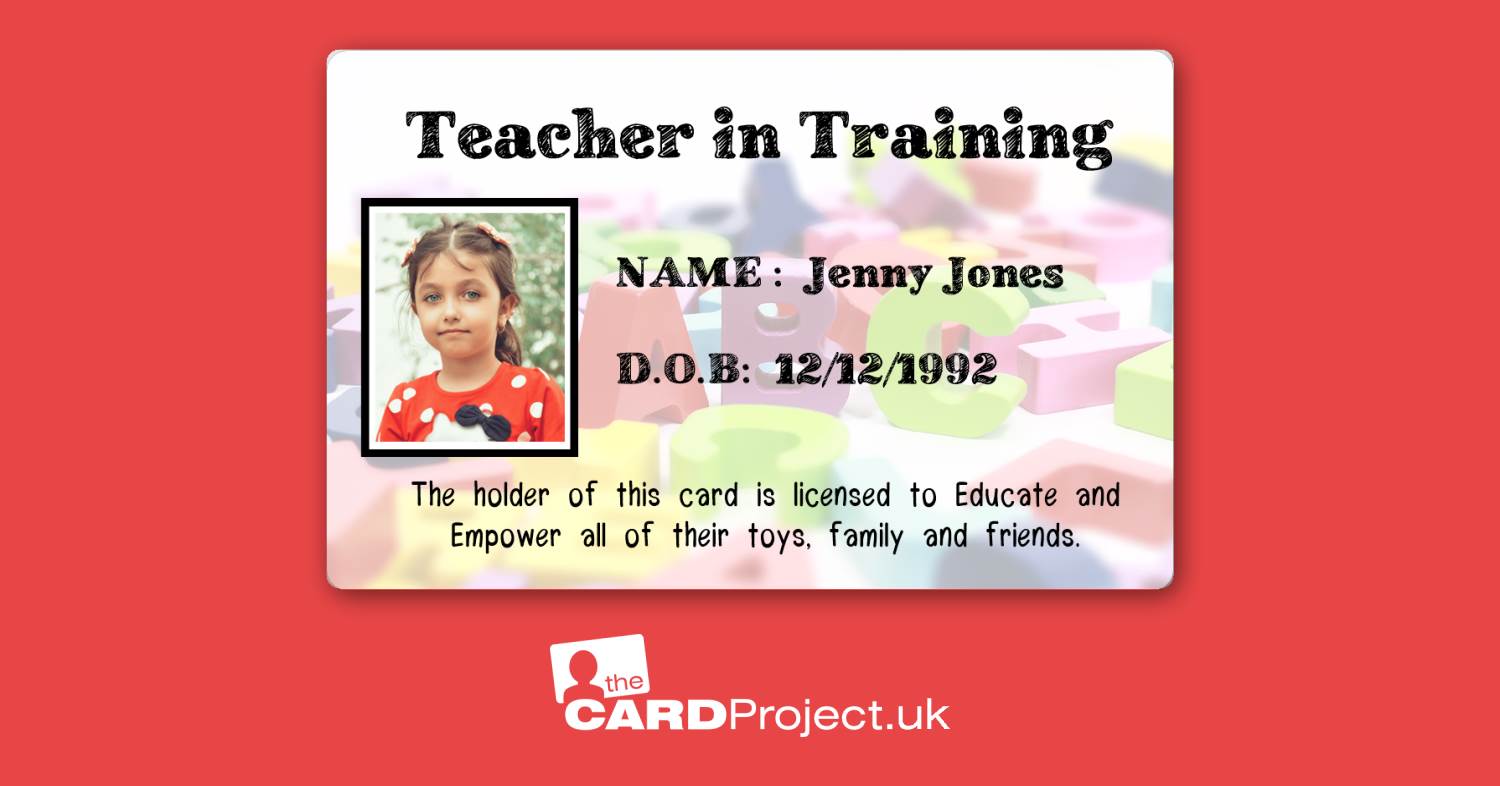
For children who love the idea of leading a classroom, a Teacher In Training ID Card adds an extra layer of excitement to imaginative play. Each card can be personalised with their photo, name, and date of birth, making it feel real and special. At £6.99 each, it’s a small investment in hours of creative learning and role-play.
A personalised ID card helps children practise planning, communication, and leadership in a fun, hands-on way. It works as a gift for birthdays, special occasions, or just to encourage their interest in teaching. By giving children a tool to explore their teaching role, you support confidence, responsibility, and social skills while keeping play engaging.
Visit thecardproject.uk to order a Teacher In Training ID Card and help your child step into the world of learning, leadership, and imagination.
© 2024 The Card Project Uk Ltd
VAT: 453 2087 06
|