Managing BPPV with Medical ID Cards from The Card Project UK
Understanding Benign Paroxysmal Positional Vertigo (BPPV)
BPPV is one of the most common causes of vertigo, but it’s often misunderstood. Knowing exactly what it is, why it happens, and what to expect can help you manage symptoms safely and reduce anxiety around episodes.
What Is BPPV and How Does It Happen?
BPPV occurs when tiny calcium crystals in the inner ear, called otoconia, become dislodged from their usual position in the utricle and move into one of the semicircular canals. These canals detect head movements and help maintain balance by sending signals to the brain. When crystals are in the wrong place, they interfere with these signals, causing the sudden spinning sensation known as vertigo.
Unlike other inner ear conditions, BPPV does not usually affect hearing, although it can cause imbalance, nausea, or a feeling of unsteadiness. Episodes are typically brief, often lasting less than a minute, but they can feel intense and unsettling.
What Are the Common Symptoms?
People with BPPV may experience:
-
Spinning or tilting sensations when changing head position
-
Brief dizziness when rolling over, looking up, or bending forward
-
Nausea or mild vomiting during episodes
-
Loss of balance, especially when standing or walking quickly
-
Occasional lingering unsteadiness even between episodes
The intensity and frequency of symptoms vary widely. Some people have a single episode and recover fully, while others may experience recurrent attacks over months or years.
How Long Can BPPV Last?
-
Individual episodes usually last a few seconds to under a minute.
-
Overall condition can persist for days, weeks, or even months.
-
Recurrence is common, and symptom-free periods can make BPPV feel unpredictable.
Understanding this pattern helps people anticipate episodes and take precautions to prevent falls or accidents.
Can BPPV Go Away on Its Own?
Yes, BPPV can sometimes resolve without treatment. Crystals may naturally move back into their proper position or dissolve over time. Recovery speed varies: some people improve within days, while others may experience recurring episodes for weeks or months. Even when symptoms resolve, recurrence is possible, so awareness and careful movement remain important.
Who Is Most at Risk?
BPPV can affect anyone, but risk increases with:
-
Age, particularly over 50
-
Head injuries or trauma
-
Prolonged bed rest or inactivity
-
Inner ear conditions or inflammation
-
Conditions affecting calcium metabolism, such as osteoporosis
Recognising risk factors can help individuals take early precautions and understand why episodes may happen.
Why Understanding BPPV Matters
Knowing what triggers BPPV, how episodes progress, and what to expect allows people to:
-
Move safely and reduce fall risk during episodes
-
Plan daily activities with confidence
-
Recognise when to seek professional help
-
Explain the condition to family, friends, or caregivers
BPPV may be common, but understanding it fully is the first step to managing it safely and maintaining control over everyday life.
Managing BPPV and Its Recurrence
Benign Paroxysmal Positional Vertigo (BPPV) can feel unpredictable. You may go weeks without symptoms, then be hit with sudden dizziness when you least expect it. Understanding how to manage the condition and reduce the likelihood of repeat episodes is important for day‑to‑day life.
Why Does BPPV Come Back?
BPPV recurs because the tiny calcium carbonate crystals in the inner ear (otoconia) can become dislodged again after they’ve been repositioned or after a period of natural recovery. Even after successful treatment, the inner ear remains vulnerable to movement‑related dislodgement. Episodes can come back weeks, months, or even years later.
Recurrence can be linked to:
-
inner ear changes with age;
-
head trauma, even minor bumps;
-
periods of inactivity (e.g., after illness or bed rest);
-
inflammation or infection in the inner ear;
-
certain movements that tend to destabilise the crystals.
Knowing your personal triggers helps you anticipate and reduce episodes over time.
What Moves or Behaviours Can Trigger a Recurrence?
People with BPPV often notice common triggers, including:
-
rolling over or sitting up in bed;
-
tilting the head back (e.g., to look up at shelves);
-
bending forward suddenly;
-
quick head turns while walking or exercising.
Some people also find stressful situations, poor sleep, or illness make them more likely to experience symptoms. Stress doesn’t cause the crystals to move, but it can make you more sensitive to imbalance and less able to recover quickly.
Can Exercises Prevent BPPV From Returning?
Yes — certain repositioning exercises can both treat and help prevent recurrence when used consistently and correctly.
-
Epley maneuver: This is the most commonly recommended exercise. It uses a sequence of head movements to guide dislodged crystals back to their proper location.
-
Semont or Liberatory maneuver: These are alternative exercises that some clinicians use depending on how the crystals are positioned.
Using these exercises regularly — especially if symptoms are recurring — can reset the balance system and reduce the likelihood of future episodes. It’s best to learn the correct techniques from a clinician to avoid doing them incorrectly, which can make symptoms worse.
When Should You See a Specialist for Repeated BPPV?
Seek professional help if:
-
vertigo attacks are happening more frequently;
-
episodes last longer or seem more severe;
-
repositioning exercises don’t help after several attempts;
-
you’re experiencing severe nausea or vomiting;
-
symptoms begin to affect your ability to work, move safely, or live independently.
A specialist can confirm the diagnosis, rule out other causes of vertigo, and tailor treatments to your specific pattern of symptoms.
Is BPPV Considered a Disability in the UK?
BPPV on its own is not typically recognised as a disability in the UK. However, if the condition has a severe and ongoing impact on your ability to carry out normal daily activities — such as work, driving, self‑care, or mobility — it may be considered a disability under the Equality Act 2010. This depends on how frequent and disruptive the symptoms are in your daily life.
For example, someone who has repeated daily episodes affecting balance, increasing fall risk, or causing ongoing anxiety around movement may qualify for adjustments at work or access to support services.
How Does BPPV Differ From Other Inner Ear Conditions?
It’s common for people to confuse BPPV with other forms of vertigo or balance disorders. Two key distinctions:
-
BPPV is triggered by specific head movements and does not usually affect hearing. Episodes are short (seconds to a minute).
-
Meniere’s disease includes spontaneous vertigo attacks with hearing loss, tinnitus (ringing), and fullness in the ear. Episodes last longer and have a different underlying cause.
Understanding these differences helps ensure you get the right treatment and avoid unnecessary or ineffective interventions.
Practical Tips for Managing Recurrence
-
Keep a symptom diary. Note what triggers an episode so you can spot patterns.
-
Learn and practise repositioning exercises under professional guidance.
-
Be cautious with sudden head movements.
-
Stand up slowly from lying or seated positions.
-
Discuss persistent or worsening symptoms with a clinician sooner rather than later.
Most people can manage BPPV and reduce recurrence with simple adjustments and proper technique. The aim isn’t just to treat episodes when they happen, but to lower their frequency and make daily life easier.
BPPV and Daily Activities
BPPV can affect everyday tasks, sometimes in subtle ways and sometimes more noticeably. Understanding how common activities interact with your condition can help you stay safe and maintain confidence in daily life.
Can I Sleep Safely with BPPV?
Sleeping can trigger vertigo for many people with BPPV, especially when rolling over or lying on the affected side. Tips for safer sleep include:
-
Keep your head neutral: Use a pillow to keep your head aligned with your spine.
-
Avoid the affected side: If you know which ear is affected, try sleeping on the opposite side.
-
Slow movements: Sit on the edge of the bed for a few seconds before standing to avoid sudden dizziness.
-
Elevate your head slightly: Some people find raising the head slightly helps reduce spinning sensations.
Small adjustments like these can prevent episodes during the night and improve overall sleep quality.
Can I Drive with BPPV?
Driving during a vertigo episode is unsafe. Sudden dizziness can disorient you and create a serious accident risk. Recommendations include:
-
Avoid driving immediately after an episode until symptoms subside.
-
Plan journeys during times of day when you are least likely to experience vertigo.
-
Discuss ongoing episodes with a healthcare professional; they can advise if it’s safe to drive regularly.
For those with frequent episodes, alternative transport or adjusting driving habits may be necessary until the condition is under control.
Can BPPV Affect Both Ears?
BPPV usually affects one ear, but in rare cases, it can be bilateral. When both ears are affected, managing symptoms can become more complex:
-
Repositioning exercises need to target the correct ear at the right time.
-
Episodes may feel more disorienting, and balance can be more consistently affected.
-
Professional guidance becomes particularly important to manage exercises safely.
How Does Air Travel Impact BPPV?
Flying doesn’t cause BPPV, but pressure changes during takeoff and landing or prolonged sitting can sometimes trigger symptoms. Practical tips for travellers include:
-
Keep your head as still as possible during ascent and descent.
-
Use a travel pillow to maintain a neutral head position.
-
Avoid sudden neck movements while getting up or moving around the cabin.
-
Inform travel companions or crew if you are prone to vertigo, so you have support if needed.
Other Daily Activities That Can Trigger BPPV
-
Exercise and bending: Rapid head movements during certain workouts can provoke episodes. Low-impact activities with controlled head movement are generally safer.
-
Household tasks: Cleaning, reaching overhead, or lifting objects may trigger vertigo. Move slowly and take breaks when needed.
-
Sudden position changes: Standing up quickly from sitting or bending forward rapidly are common triggers; try to make movements gradual.
Practical Advice for Everyday Life
-
Identify your personal triggers and adjust routines where possible.
-
Keep spaces clear of hazards to reduce the risk of falls.
-
Use support when performing tasks that involve bending or reaching overhead.
-
Maintain a diary of episodes to track patterns and share information with your healthcare provider.
By understanding how daily activities interact with BPPV, you can take proactive steps to reduce episodes, stay safe, and maintain independence in day-to-day life.
This section now provides detailed, practical guidance for everyday activities, addresses likely search questions, and gives real-life strategies for managing BPPV safely.
Next, we can rewrite the fourth section on Treatment and Lifestyle with BPPV in the same style. Do you want me to do that?
Treatment and Lifestyle with BPPV
Living with BPPV is about more than dealing with dizzy spells—it’s about managing your balance, preventing recurrence, and maintaining confidence in everyday life. Treatment, combined with practical lifestyle adjustments, can make a significant difference.
How Is BPPV Treated?
1. Canalith Repositioning Procedures
-
Epley maneuver: A sequence of head and body movements designed to guide dislodged calcium crystals back into the utricle, where they no longer cause symptoms. It usually provides rapid relief, often within a single session, but may need to be repeated.
-
Semont/Liberatory maneuver: An alternative for some patients, particularly if the crystals are located in a different semicircular canal.
-
These procedures are safe and highly effective, but professional guidance is important to ensure proper technique. Done incorrectly, they can worsen symptoms.
2. Vestibular Rehabilitation Therapy (VRT)
-
Tailored exercises help the brain adapt to abnormal signals from the inner ear.
-
Improves balance and stability over time, particularly for people with recurrent or persistent BPPV.
-
Exercises can include eye and head coordination drills, balance training, and gradual exposure to movements that previously triggered vertigo.
3. Medications
-
No medications cure BPPV directly.
-
Drugs may be used to manage nausea, vomiting, or motion sickness during an episode, helping you stay functional until repositioning procedures or exercises take effect.
4. Surgical Options
-
Reserved for rare, severe cases where symptoms persist despite all other treatments.
-
Procedures aim to block the affected semicircular canal to prevent crystal movement.
Lifestyle Adjustments That Can Make Daily Life Easier
Head Movement Awareness
-
Move slowly when standing, bending, or rolling in bed.
-
Sit on the edge of the bed for a few seconds before standing.
-
Avoid abrupt head rotations during activities like gardening, cleaning, or exercising.
Exercise and Physical Activity
-
Controlled, low-impact exercises are generally safe and can even improve balance.
-
Avoid high-impact sports or exercises involving rapid tilts, jumps, or spins until symptoms are well managed.
-
Gradual head movements during exercise help train the brain to adapt without triggering vertigo.
Home and Workplace Safety
-
Keep floors clear of tripping hazards.
-
Install handrails or grab bars in bathrooms or hallways.
-
Ensure proper lighting to prevent accidents during sudden episodes.
-
Consider a supportive chair or desk setup at work to reduce the risk of triggering symptoms.
Sleep and Daily Routine
-
Sleep with your head slightly elevated and avoid lying on the affected side if known.
-
Take extra care when getting out of bed or standing from a seated position.
-
Maintain a consistent daily routine to reduce fatigue, which can exacerbate symptoms.
Other Factors That Can Influence BPPV
-
Stress and fatigue: Can make symptoms feel worse or reduce your ability to cope with dizziness.
-
Illness or ear infections: Can trigger episodes or make crystals more unstable.
-
Diet and supplements: While no diet cures BPPV, maintaining good bone and calcium health may support inner ear function. Some clinicians recommend vitamin D supplementation in deficiency cases.
When to Seek Professional Help
-
Episodes are increasing in frequency or severity.
-
Symptoms do not improve with repositioning exercises.
-
You experience prolonged nausea, vomiting, or unsteadiness.
-
New symptoms appear, such as hearing loss, tinnitus, or balance problems that differ from typical BPPV episodes.
Practical Tips for Long-Term Management
-
Keep a symptom diary to identify patterns and triggers.
-
Work with a clinician for guidance on exercises and therapy.
-
Combine treatment with practical lifestyle adjustments to reduce recurrence and improve safety.
-
Plan activities and travel with caution, adjusting routines when needed.
By combining professional treatment, exercise, and thoughtful daily strategies, most people with BPPV can manage their symptoms effectively, reduce recurrence, and maintain independence in everyday life.
The Importance of BPPV Medical ID Cards
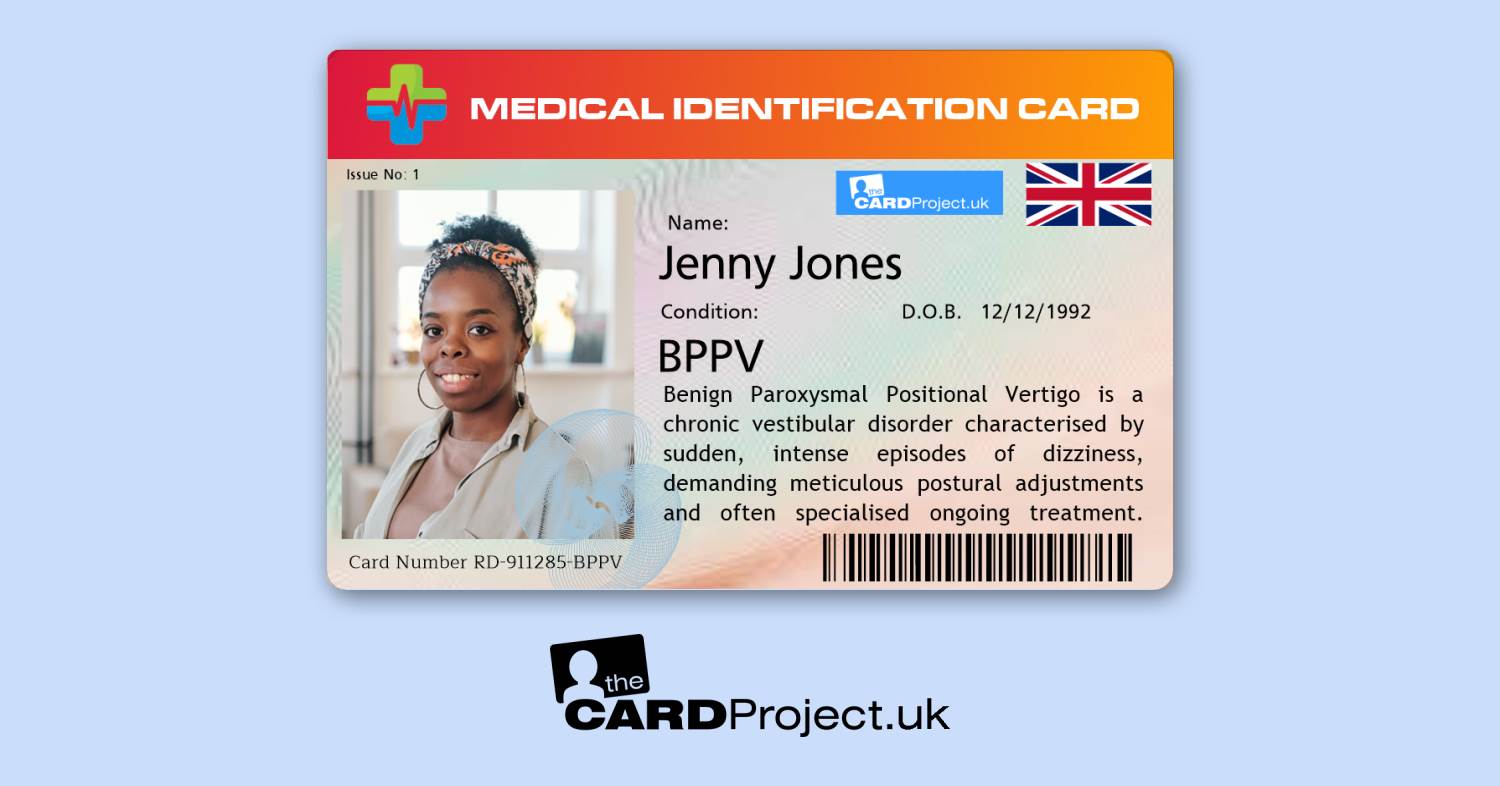
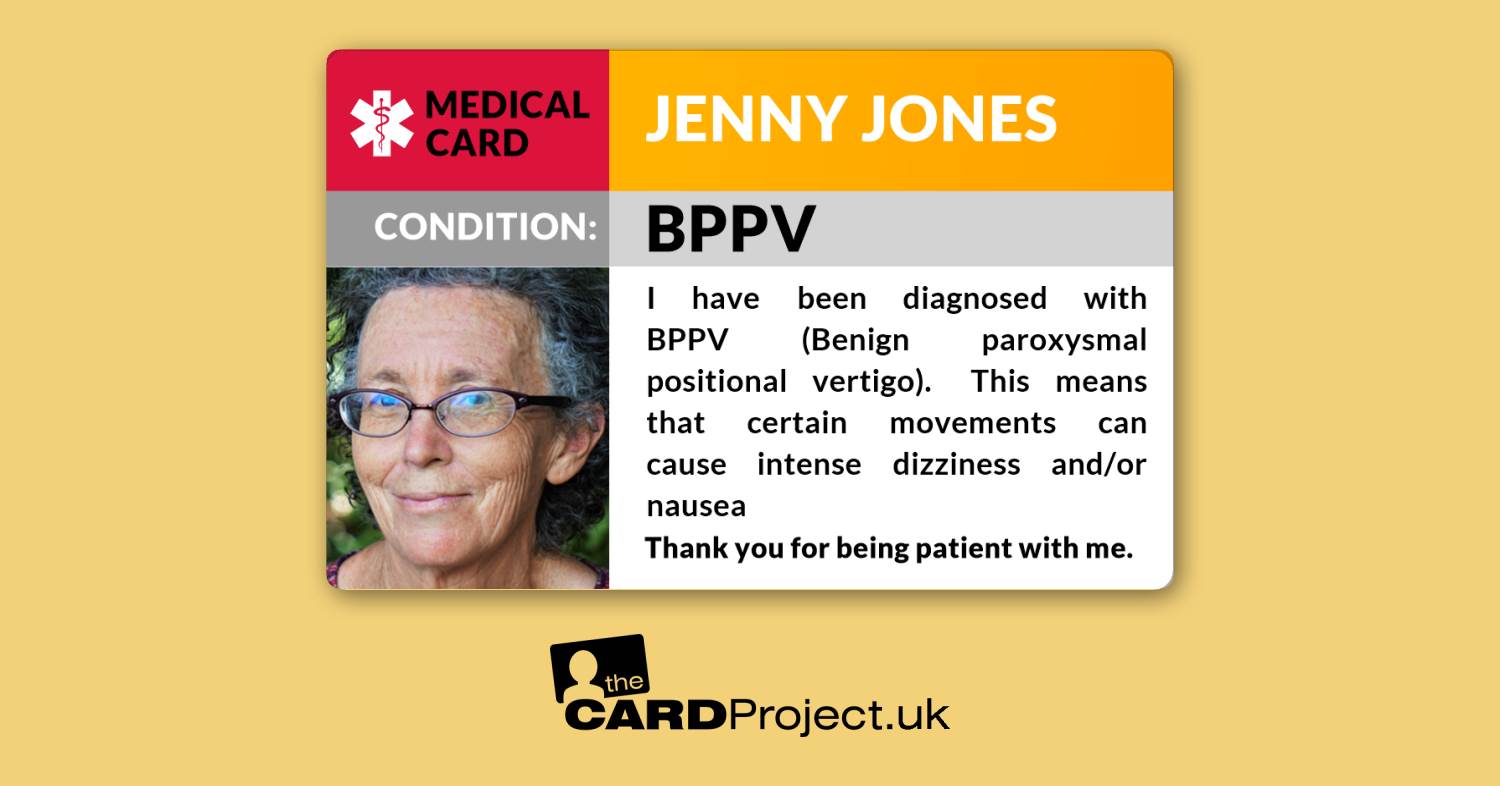
Living with BPPV means being prepared for sudden episodes of dizziness or disorientation. Even with treatment and careful management, vertigo can strike unexpectedly, leaving you unable to communicate effectively. A BPPV medical ID card from The Card Project UK provides a simple way to ensure others understand your condition in an emergency.
Carrying one of our BPPV medical ID cards can make a real difference in daily life. If you experience vertigo while alone, it lets people around you know why you are dizzy and how to respond safely. In public or while travelling, where people may not be familiar with BPPV, the card provides reassurance that responders will understand the situation immediately. At home or at work, it can alert those nearby so they can assist if you lose balance or feel disoriented.
The card also offers peace of mind. Knowing that a clear, portable form of identification is with you reduces anxiety, both for you and for those who care about you. This is especially useful when travelling or in unfamiliar environments, where sudden symptoms could otherwise leave you vulnerable.
Using a BPPV medical ID card from The Card Project UK doesn’t replace treatment or lifestyle strategies — it complements them. It adds an extra layer of safety and support, helping you maintain independence while giving confidence that, if an episode occurs, others can act appropriately.
If you think a BPPV medical ID card could help you or a loved one stay safer day to day, you can find out more and order one at thecardproject.uk.
© 2024 The Card Project Uk Ltd
VAT: 453 2087 06
|