Sesame Allergy Causes Symptoms and Management Strategies
Recognising and Understanding Sesame Allergy
How Do I Know If I Am Allergic to Sesame?
If you suspect a sesame allergy, it’s usually because you’ve noticed specific, repeatable reactions shortly after eating a food you think contained sesame. To move from suspicion to a confirmed diagnosis, you’ll need to work with an allergist.
The process typically involves:
-
Observing Symptoms: Keep track of what you ate and the reactions you experienced, which can range from skin issues like hives to digestive upset or breathing problems.
-
Allergist Consultation: A specialist will take a detailed medical history to understand your potential exposure and reaction pattern.
-
Allergy Testing: The two most common diagnostic tools are:
-
Skin Prick Test (SPT): A tiny amount of sesame protein extract is placed on your skin and gently pricked. A positive reaction is a small, raised bump (a wheal) appearing at the site.
-
Specific IgE Blood Test: This test measures the level of sesame-specific antibodies in your blood. A higher level suggests an allergy.
It’s essential for a healthcare professional to interpret these results alongside your history, as the tests alone aren't always conclusive.
What Are the Signs and Symptoms of a Sesame Allergy?
The signs of a sesame allergy can affect different parts of the body and can vary in severity. A reaction can sometimes be very mild, but it has the potential to become serious very quickly.
Mild to Moderate Symptoms often include:
-
Itching or a tingly feeling inside the mouth
-
Hives (raised, itchy welts on the skin)
-
Eczema flare-up or a general rash
-
Stomach cramps, nausea, or vomiting
-
Nasal congestion, sneezing, or a runny nose
Severe Symptoms and Anaphylaxis:A severe reaction, known as anaphylaxis, is a life-threatening medical emergency. It usually involves a combination of symptoms that appear rapidly. You should look for:
-
Swelling of the tongue or throat, leading to a tight throat or difficulty swallowing
-
Trouble breathing, wheezing, or a cough
-
A sudden drop in blood pressure, leading to dizziness, lightheadedness, or fainting
-
A sense of impending doom
Any sign of anaphylaxis requires immediate use of an epinephrine auto-injector (EpiPen) and calling for emergency medical help.
Is It Common to Be Allergic to Sesame?
Sesame allergy is a recognized food allergy, but it's generally considered less common than the "Top 9" allergens like milk, eggs, peanuts, and tree nuts. That said, its prevalence is definitely increasing in many Western countries.
Globally, the rates vary significantly because sesame is a dietary staple in some regions (like the Middle East and parts of Asia), where allergy rates tend to be higher due to constant, early-life exposure. Because sesame is used so widely in food manufacturing now—as an oil, a spice, or a hidden ingredient—it is an allergy that everyone needs to be more aware of, especially when dining out or reading labels.
Why Are People Becoming Allergic to Sesame?
The exact reasons for the rise in sesame allergy are complex and not fully understood, but scientists point to a few key factors:
-
Genetic Factors: If allergies run in your family, you’re statistically more likely to develop any kind of food allergy, including sesame.
-
Increased Exposure: Sesame is being used more often and in more products globally, sometimes in refined forms like oil. Increased overall exposure in a population can lead to an increase in sensitization.
-
Changes in Diet and Environment: Theories like the Hygiene Hypothesis suggest that our increasingly sterile modern environments and reduced exposure to diverse microbes in early childhood might be causing our immune systems to overreact to harmless proteins like those found in sesame.
-
Delayed Introduction: Changes in medical recommendations for introducing allergenic foods to infants have also been studied, but the overall picture remains complicated, with multiple environmental and lifestyle factors likely contributing to the growing numbers.
Demographics, Duration, and Variability of Sesame Allergies
Who Is Prone to Be Allergic to Sesame?
While anyone can develop an allergy to sesame, some groups are at a higher risk.
-
Children: Sesame allergy is often first diagnosed in children, similar to other common food allergies.
-
Individuals with Other Allergies: There is a strong link between having a sesame allergy and having other allergic conditions. People who already have other food allergies (especially to nuts or peanuts), or other atopic conditions like eczema (atopic dermatitis) or asthma, have an increased chance of developing a sesame allergy. This is often called the "allergic march."
-
Family History: Genetics play a part. If close family members have food allergies, you are more likely to be prone to them as well.
-
Geographical and Dietary Habits: In countries where sesame is a prominent part of traditional cuisine, individuals often have higher rates of sensitization and diagnosed allergy due to greater and earlier life exposure.
How Long Does a Sesame Allergy Last?
The prognosis for a sesame allergy is less optimistic than for some other childhood allergies, like egg or milk.
-
Persistence: Unfortunately, sesame allergy is one of the food allergies that is more likely to be lifelong. While some children do outgrow it, the rate of resolution is significantly lower compared to the rates for milk or egg allergies.
-
Monitoring: Since there is a chance of outgrowing it, particularly for younger children, regular check-ups with an allergist are crucial. They will use a combination of tracking your symptom history and repeat allergy testing (like blood or skin tests) to monitor the allergy's status.
-
Oral Food Challenge: The only definitive way to know if an allergy is gone is through a supervised oral food challenge in a clinic or hospital setting, where the allergen is safely reintroduced.
Can You Suddenly Become Allergic to Sesame Seeds?
Yes, absolutely. Allergies are not static conditions, and it is entirely possible to develop a sesame allergy at any age, even if you’ve eaten sesame your whole life without issue.
-
Adult-Onset Allergies: While many food allergies are diagnosed in childhood, adults can suddenly develop a new allergy. This happens because the immune system changes its response to the sesame protein.
-
No Clear Trigger: Sometimes this sudden onset is surprising, with no obvious change in diet or lifestyle to explain the shift. If you notice allergic symptoms after eating sesame for the first time as an adult, you should stop eating it immediately and consult an allergist.
How Do You Reverse a Sesame Allergy?
Currently, there is no widely available, guaranteed cure to reverse a sesame allergy. The gold standard for management remains strict and complete avoidance of the allergen.
However, the medical community is actively researching a process called Oral Immunotherapy (OIT).
-
How OIT Works: OIT involves giving a person with the allergy tiny, gradually increasing doses of the sesame protein over a long period. The goal is to slowly desensitize the immune system, so that accidental exposure to small amounts of sesame does not cause a severe reaction. It doesn't truly "reverse" the allergy, but it provides a measure of protection.
-
Status: OIT for sesame is an emerging and promising field, but it is not yet standard clinical practice for everyone. Because there is a serious risk of a severe reaction during the dosing process, this treatment must only be conducted by specialized allergists in a controlled medical setting.
Specifics of Sesame Allergy and its Distinctions
Why Am I Allergic to Sesame Seeds But Not Oil?
The allergy is caused by the protein in sesame seeds. Whether you react to sesame oil comes down to how that oil was made.
-
Refined Sesame Oil: Highly refined oils are processed using high heat and chemical treatments. This rigorous method typically removes the allergenic proteins, making the oil safe for most people with a sesame allergy.
-
Unrefined or Cold-Pressed Sesame Oil: This type of oil is minimally processed. Since the protein is not fully removed, it can still contain enough sesame protein residue to trigger an allergic reaction in sensitive individuals.
For safety, many allergists recommend avoiding all forms of sesame, including all sesame oil, unless you have specific guidance from your doctor that a highly refined version is safe for you. Always check labels, as the term "sesame oil" doesn't always indicate its refinement status.
When Did Sesame Become a Major Allergen?
Sesame has been a recognised allergen for a long time in cultures where it is a dietary staple, but its status as a "major" or "top" allergen that requires clear labelling has been mandated in the UK and Europe for quite some time.
-
UK/EU Regulation: Sesame is officially listed as one of the 14 major allergens that must be clearly declared on food labels across the UK and the European Union. This mandatory labelling requirement has been in force since 2003, reflecting the recognition of sesame's significance in causing allergic reactions and the need to protect consumers across the region. This legislation ensures that sesame, and products derived from it, must be highlighted clearly in the ingredients list on pre-packed foods.
Why Am I Allergic to Tahini But Not Sesame?
This question is based on a misconception: if you are allergic to sesame, you are allergic to tahini.
-
Tahini is Ground Sesame: Tahini is simply a paste made from ground sesame seeds. Since it is essentially a highly concentrated form of sesame seeds, it contains the exact same allergenic proteins that cause a reaction. If you are diagnosed with a sesame allergy, you must avoid tahini.
-
The Nuance of Reactions: The only reason someone might react to tahini and not to a sesame seed itself is if the sesame seed was a "hidden" or trace ingredient in another food. The body's reaction can sometimes be influenced by the quantity of the protein consumed. However, under no circumstances should you assume you can tolerate tahini if you have a confirmed sesame allergy.
Is a Sesame Allergy the Same As a Nut Allergy?
No, a sesame allergy is not the same as a nut allergy. They are caused by distinct proteins and are classified as separate conditions.
-
Sesame: Sesame is a seed. The reaction is to the specific proteins in the sesame seed.
-
Nut Allergy: Nut allergies are typically divided into two groups: peanut (which is a legume) and tree nuts (like walnuts, almonds, and cashews).
While they are separate, having one type of allergy (like a sesame allergy) does put you at a higher risk of also developing other allergies, including a nut allergy. This is why allergists will often test for a range of allergens at the same time. The management is the same for both: strict avoidance of the specific allergen you react to.
Avoidance Strategies and Dietary Considerations
Who Should Avoid Sesame?
The simplest answer is that anyone who has been diagnosed with a sesame allergy by an allergist must avoid sesame in all forms. This is the only way to prevent a potentially life-threatening allergic reaction.
Strict avoidance applies to:
-
All foods containing sesame seeds.
-
Tahini and halvah (which are sesame paste and sesame confectionery).
-
Sesame oil, unless explicitly advised otherwise by an allergist (due to the difference between refined and unrefined oil).
-
Any products, including baked goods, sauces, and snacks, where sesame is listed as an ingredient or where there is a clear warning about cross-contamination.
It is also highly recommended that if you have experienced symptoms that you suspect were a reaction to sesame, you should stop consuming it immediately and book an appointment with a specialist for testing and a formal diagnosis.
What Foods Contain Sesame?
Sesame is everywhere! It's used in many global cuisines and also hidden in processed foods. Avoiding it means learning to spot it in all its forms:
Obvious Sources:
-
Sesame seeds (used as a topping or baked in)
-
Tahini (sesame paste)
-
Hummus (traditional recipes use tahini)
-
Halvah (a Middle Eastern sweet made from tahini)
-
Sesame oil (in dressings, marinades, or cooking)
-
Gomasio (a sesame seed and salt condiment)
Less Obvious or Hidden Sources:
-
Baked Goods: Certain crackers, breadsticks, sweet rolls, or bagels.
-
Asian/Middle Eastern Dishes: Stir-fries, satay sauces, falafel, baba ghanoush, or sushi (often with sesame seeds on the rice).
-
Processed Foods: Some cereal bars, granola, flavourings, seasonings, or herbal supplements.
-
Fry Mixes: Some coatings for fried chicken or fish.
Because sesame must be clearly labelled in the UK, your primary defense is carefully checking the ingredients list of all pre-packaged foods.
Does Bread Contain Sesame?
It is not possible to assume that a bread is safe or unsafe without checking. Many artisan loaves, speciality rolls, baguettes, and burger buns are either topped with sesame seeds or have them mixed into the dough.
-
Always Check: You must check the label or speak directly to the baker. Even if a bread doesn't contain sesame ingredients, it could have been baked on a tray or cut with a knife that was used for a sesame product, risking cross-contamination.
-
The UK Law: Since sesame is a major UK allergen, it should be listed and highlighted on pre-packaged bread labels. When buying from a bakery counter, you should ask a member of staff for the specific allergen information for that batch.
Is There Sesame in Flour?
Regular flour—whether it's plain wheat flour, self-raising flour, or even most gluten-free alternative flours—does not inherently contain sesame. Flour is milled from its respective grain (wheat, rice, corn, etc.).
However, there is a risk of cross-contamination.
-
Risk in Processing: If a milling or packaging facility handles both flour and sesame seeds or sesame flour, trace amounts of the allergen can transfer to the flour.
-
Severe Allergy Caution: For someone with a severe sesame allergy, it may be prudent to only purchase flour that is certified or guaranteed to be processed in a facility free from major allergens, or at least one that has very strict controls in place to prevent cross-contact.
Does Hummus Have Sesame?
Traditional hummus is a paste made from chickpeas, lemon juice, garlic, and tahini. Since tahini is pure ground sesame seeds, traditional hummus does contain sesame and is not safe for someone with a sesame allergy.
-
Check the Label: Some commercial manufacturers may offer a "tahini-free" version of hummus using alternative ingredients to get the right texture, but this is the exception, not the rule.
-
Assume Unsafe: Unless the ingredient list explicitly confirms it is tahini-free, you should assume that any packaged or restaurant-prepared hummus contains sesame.
The Benefits of Carrying an "I'm Allergic to Sesame" Card
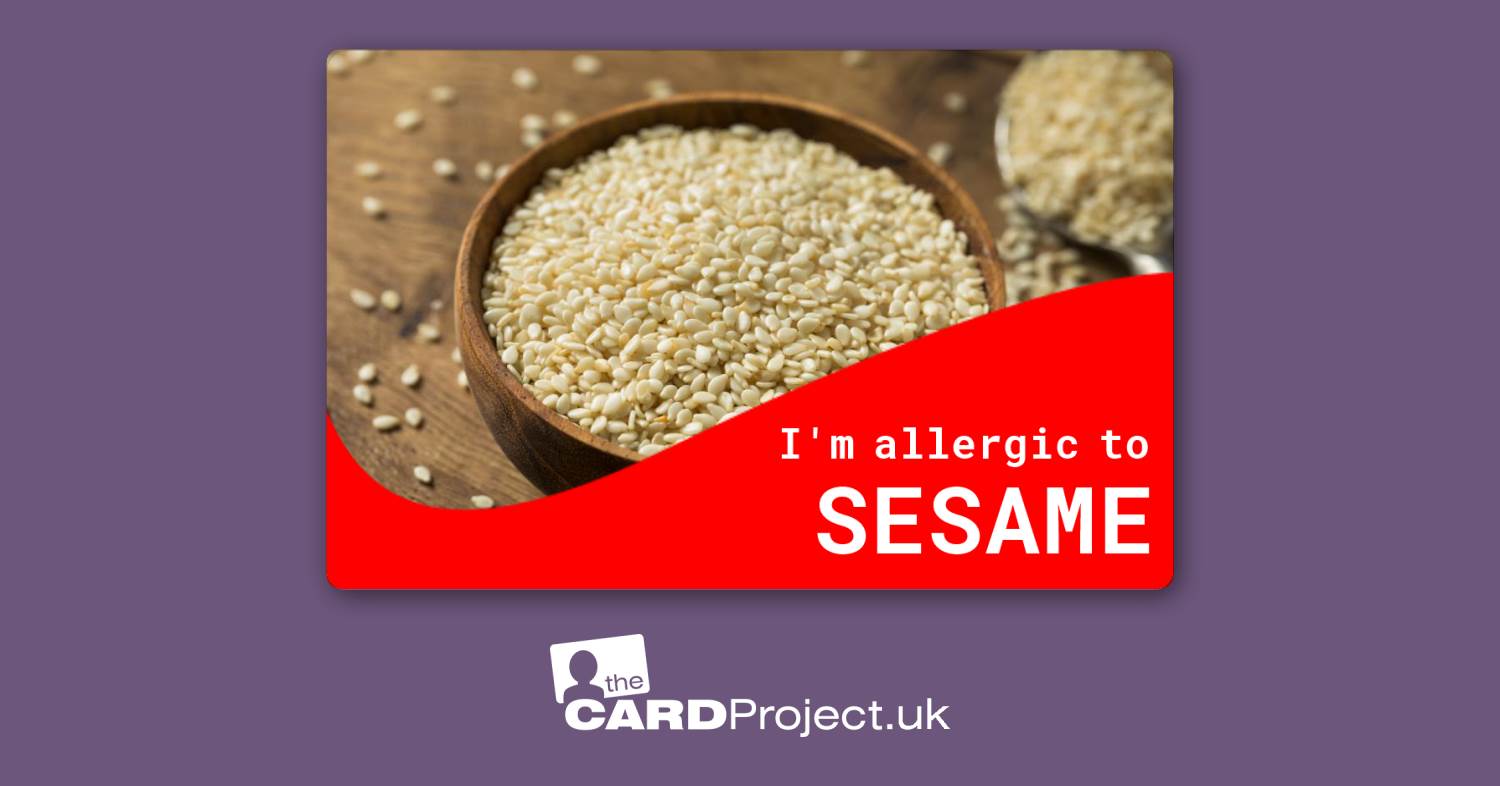
Living with a sesame allergy means being vigilant all the time, particularly when you’re eating out or buying something you haven't had before. An "I'm Allergic to Sesame" card is a simple, non-confrontational tool that helps you communicate this vital information clearly and quickly, dramatically reducing the risk of accidentally eating something that could cause a reaction. These cards are designed to be easy to read, often featuring a clear image of sesame and the text, "I'm Allergic to Sesame."
Why Carry an Allergy Card?
Clear Communication
When you’re in a restaurant, a friend’s house, or travelling, verbally explaining the severity of a food allergy can be difficult, rushed, or misinterpreted. The card removes the ambiguity. It does the talking for you, ensuring that the chef, server, or host understands your life-threatening need to avoid sesame. It’s a physical reminder that your condition is serious and requires care.
Safety in Emergencies
In the unfortunate event that you have a severe reaction and are unable to speak or are unconscious, this card becomes critical. It can immediately inform medical personnel, emergency services, or even bystanders about your sesame allergy, enabling them to facilitate prompt and appropriate treatment, such as administering an epinephrine auto-injector.
Convenience
These cards are usually sized like a standard credit card, making them incredibly easy to slip into your wallet, purse, or travel document holder without adding bulk. You can always have it with you, meaning you’re prepared whenever you need to communicate your dietary restriction, from a local coffee shop to a foreign country.
Peace of Mind
Living with an allergy often comes with a degree of anxiety, especially in new situations. Knowing you have a clear, professional way to inform others about your allergy can provide a significant sense of calm. For those managing a severe sesame allergy, this card is an essential, reassuring tool for safety and allows you to enjoy eating out with greater confidence.
Take a step towards safer living and order your card today.
© 2024 The Card Project Uk Ltd
VAT: 453 2087 06
|