The Complete Home First Aid Guide for Blood Thinner Users
When you are prescribed a blood thinner—whether your doctor calls it an anticoagulant or a "DOAC"—one of the first things you are told is to "be careful of bleeding." While this is sound advice, it can often lead to a sense of anxiety about doing everyday things like cooking, gardening, or even just walking around the house.
The reality is that accidents happen to everyone. The difference for you is simply that your body’s "repair crew" works a little more slowly than it used to. This doesn't mean you are in constant danger; it just means you need a slightly different set of tools and a more patient approach to first aid.
This guide is designed to be your comprehensive manual for handling injuries at home. We will cover how to build a specialist first-aid kit, the exact techniques for stopping different types of bleeding, and the vital signs that tell you when a minor bump needs professional medical attention.
Table of Contents
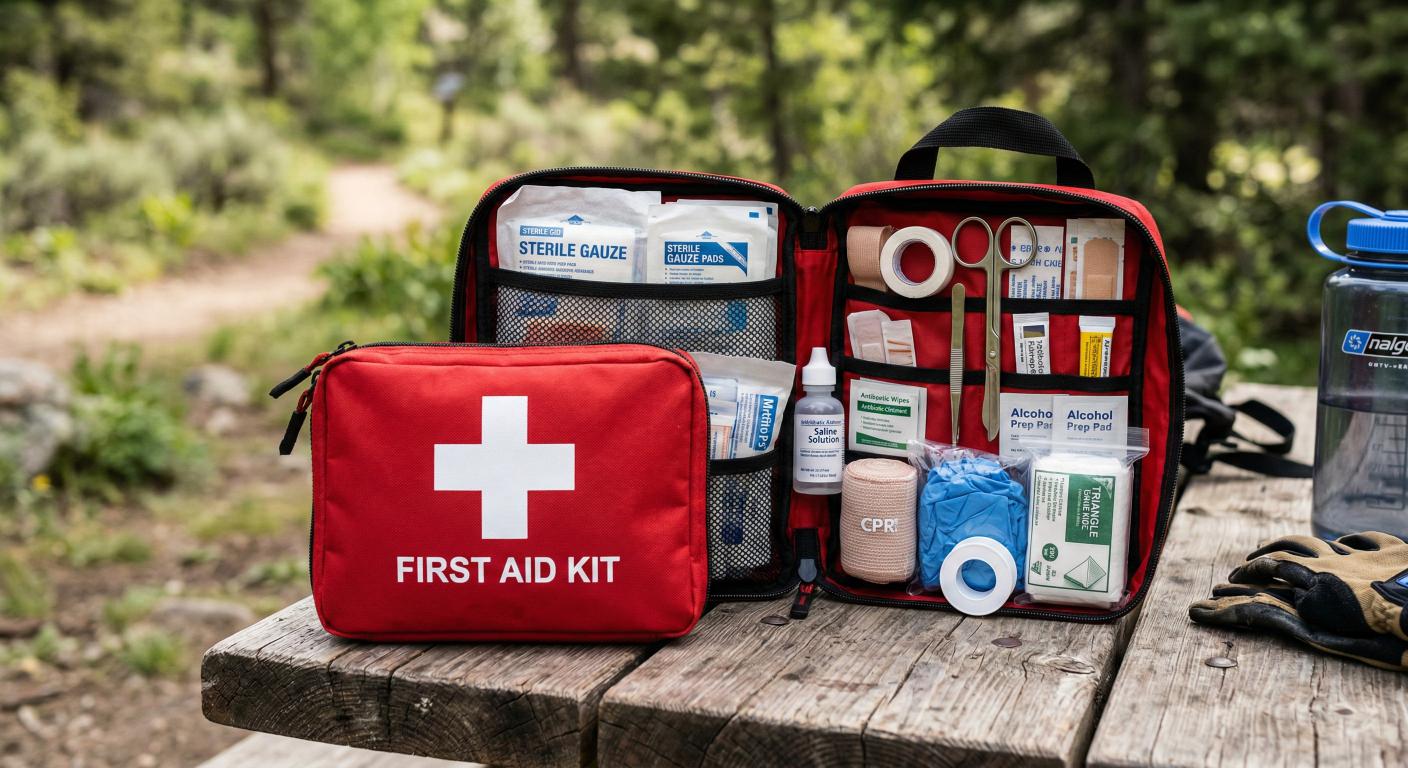
Building a Specialist Home First Aid Kit
Standard first-aid kits found in supermarkets are often too basic for someone on blood thinners. To feel truly prepared, you should put together a kit specifically designed for the way your body heals.
1. Hemostatic Dressings (Clotting Gauze)
These are perhaps the most important addition to your kit. Standard gauze just soaks up blood; hemostatic gauze is treated with special minerals or fibres that actively help the blood to clot upon contact. In the UK, you can often find these in pharmacies or online. They are a "must-have" for any deep cut.
2. Non-Stick (Adherent) Pads
Because your blood takes longer to clot, the scab that eventually forms can be quite delicate. If you use a regular "fuzzy" gauze, the scab will grow into the fibres of the gauze. When you pull the bandage off, you pull the scab off with it, and the bleeding starts all over again. Always look for "non-stick" or "low-adherent" pads.
3. Tubular Bandages and Cohesive Wrap
Instead of just using sticky plasters, which can sometimes tear delicate "parchment" skin (especially in the elderly), use cohesive wraps. These are the bandages that stick to themselves but not to your skin. They allow you to apply firm, even pressure over a wound without damaging the surrounding area.
4. A Digital Timer
This sounds simple, but in the heat of the moment, five minutes can feel like an hour. Having a dedicated timer in your kit ensures you actually hold pressure for the full 15 minutes required to let a clot form.
5. Saline Pods and Sterile Wipes
Keeping a wound clean is vital, as infections can also interfere with healing. Small pods of sterile saline are perfect for flushing out grit from a garden scrape without needing to move to the sink.
The Science of Pressure: Why You Must Not "Peek"
We have all done it: we cut ourselves, hold a tissue on it for thirty seconds, and then lift it up to see if it’s stopped. For someone on blood thinners, this "peeking" is the number one reason why minor cuts become long-term problems.
When you cut a blood vessel, your body tries to create a "plug" using platelets and proteins. This plug is very fragile at first—think of it like wet cement. Every time you lift your bandage to check the progress, you are essentially "stepping in the wet cement." You rip away the tiny, microscopic foundations of the clot, and the process has to start from zero.
The 15-Minute Rule:
-
Direct Pressure: Place your specialist gauze or a clean cloth directly over the source of the bleeding.
-
Firm Force: Use the heel of your hand or your fingers to press down firmly. It should be firm enough that it’s slightly uncomfortable.
-
The Timer: Set your timer for 15 minutes.
-
No Moving: Do not adjust your grip, do not lift the cloth, and do not let anyone else "have a look."
-
Evaluate: Only when the timer goes off should you gently lift the edge. If blood is still seeping, repeat the process for another 10 minutes.
Advanced Management of Nosebleeds
Nosebleeds (or "epistaxis") are the most common complaint for people on blood thinners. They often happen because the lining of the nose becomes dry, especially during the winter when we have the central heating on high.
Why Leaning Back is Dangerous
You may have been taught as a child to tilt your head back. For a blood thinner user, this is dangerous. It allows blood to flow down the back of your throat and into your stomach or your airway. Blood is a natural irritant to the stomach; if you swallow too much, it can cause you to vomit, which then increases the pressure in your head and makes the nosebleed even worse.
The Proper Technique
-
The "Pinch": Sit upright and lean forward. Use your thumb and forefinger to pinch the soft part of your nose—the fleshy bit just below the bone.
-
The "Ice Trick": While pinching, place a cold pack on the bridge of your nose or even suck on an ice cube. The cold causes the blood vessels in the mouth and nose to shrink (constrict), which naturally slows the flow of blood.
-
The "Check": Hold the pinch for a full 20 minutes. If it hasn't stopped, try one more 20-minute session. If it continues after 40 minutes of total pressure, it is time to call 111 or head to A&E.
Head Injuries: The "Hidden" Danger
This is the area where we must be most vigilant. Because you are on blood thinners, the danger of a head injury isn't the bump on the outside—it’s the potential for a "slow bleed" on the inside.
When a person who isn't on blood thinners hits their head, the blood clots quickly and the pressure stays stable. For you, a small vein could leak slowly over several hours or even days. This is why we insist that any significant blow to the head requires a medical check, even if you don't lose consciousness and even if you don't have a "goose egg" bump.
Signs of a "Slow Bleed" (Seek help immediately if these occur):
-
A headache that gets worse: Not a dull ache, but a pain that steadily increases and won't go away with paracetamol.
-
Changes in personality: If you feel unusually irritable, confused, or "not quite yourself."
-
Visual changes: Blurred vision, double vision, or pupils that are different sizes.
-
Drowsiness: If you find it hard to stay awake or feel extremely lethargic.
-
Vomiting: Especially if it happens suddenly and without feeling "sick" beforehand.
Managing Bumps and Internal Bruising
We often talk about "bruising like a peach," but for a blood thinner user, a bruise is actually a collection of blood trapped under the skin (a haematoma).
The R.I.C.E. Method (Adapted for you)
-
Rest: As soon as you have a knock, stop what you are doing. Increasing your heart rate by continuing to work or walk will only pump more blood into the bruise.
-
Ice: Apply cold for 10 minutes every hour. This is the most effective way to stop the internal leak.
-
Compression: Use your cohesive wrap to apply a gentle (not tight) squeeze to the area. This helps keep the "pocket" of the bruise from expanding.
-
Elevation: Keep the bruised limb above the level of your heart. If you bumped your leg, lie on the sofa with your leg up on three pillows.
When the Injury is Internal: Recognizing the Signs
Not all injuries come from a cut or a bump you remember. Sometimes, a "bleed" can happen internally, perhaps from a strain or a minor internal tear. You should be familiar with these "silent" warning signs:
-
Joint Pain: If a joint (like a knee or elbow) becomes suddenly swollen, hot, and very painful without a clear injury, it could be a bleed into the joint.
-
Abdominal Pain: Deep, persistent pain in the stomach or side can indicate internal bleeding.
-
Back Pain: Sudden, severe back pain without a "pulled muscle" feeling can sometimes be a sign of bleeding near the kidneys or spine.
In any of these cases, do not wait. A quick call to 111 can help you decide if you need to be seen by a doctor.
Aftercare: The First 48 Hours
Once you have successfully stopped a bleed or managed a bump, your job isn't quite over. The first 48 hours are the "healing window."
-
Avoid Heat: Do not take a very hot bath or use a heat pad on a new injury. Heat opens up the blood vessels (vasodilation) and can cause the bleeding to start again.
-
Check your Scab: If a scab is forming, keep it moisturised with a tiny bit of plain petroleum jelly (like Vaseline). This stops the scab from becoming brittle and cracking, which is a common cause of "re-bleeding."
-
Review your Medications: Ensure you are staying hydrated. Dehydration can make your skin more fragile and your blood vessels more prone to leaking.
-
Check the "Exit Signs": Keep an eye on your urine and stools for the next two days. If you see any signs of blood there after a big fall, it means the injury was more than just skin-deep.
Communication: Your Medical ID in Action
In every first-aid scenario, communication is your most powerful tool. If you are ever in a situation where you need medical help, the absolute first thing you must do is state clearly that you are on a blood thinner.
If you are calling 111, your GP, or 999, lead with that information: "I have had an injury and I am taking a blood thinner." This simple sentence immediately changes the clinical pathway. It alerts the triage team to the fact that your situation could be more urgent than it appears on the surface, moving you up the priority list because they understand the potential risks of internal or prolonged bleeding.
There may be situations where you are feeling too faint to talk, or perhaps you are unconscious following a fall. This is why having your medical information clearly accessible is a critical safety measure. Whether it is a note in your wallet, an app on your phone, or a physical medical alert, having that information visible ensures that paramedics can provide the correct care immediately.
-
Bleeding Management: They may choose to use more advanced dressings or apply much firmer, longer-lasting pressure than they would for a standard patient.
-
Monitoring Vital Signs: They will closely monitor your blood pressure and heart rate for any subtle changes that might suggest an internal bleed.
-
Emergency Triage: They will prioritise a trip to the hospital, knowing that you may require professional scans or specific treatments that can counteract the effects of the blood thinner if necessary.
Conclusion
Living on blood thinners does require a bit more vigilance, but it shouldn't stop you from enjoying your life. By upgrading your home first-aid kit, mastering the art of the "15-minute pressure," and knowing exactly which signs to watch out for, you are taking the power back. You aren't just waiting for an accident to happen; you are prepared to handle it like a professional.
Keep your medical information accessible, keep your first-aid kit stocked, and remember: most injuries are manageable if you stay calm and give your body the time it needs to do its work.