Why Join a Running Club in 2026? The Real Benefits Beyond the Basics
(Updated January 2026)
Running has been booming for a few years now, and in 2026 it's still going strong. More people than ever are lacing up, whether for fitness, mental health, or just to get out of the house. While many run solo with apps and playlists, joining a proper running club offers practical upsides that go far beyond what you get alone.
This guide covers the real, day-to-day benefits of membership—staying consistent, feeling safer, improving faster, and enjoying the process more. It's about making running fit into a busy life without it feeling like a chore.
Table of Contents
Staying Motivated and Consistent When Life Gets Busy
Let’s be honest: most of us start January full of good intentions, but by March the runs have dropped off because work piles up, the kids need ferrying around, or the weather is miserable and the sofa looks way more appealing. Solo running relies almost entirely on your own willpower, and willpower is a finite resource.
A running club changes that equation in a few simple but powerful ways.
-
Regular scheduled sessions act like fixed appointments. When the club has a Tuesday evening group run at 6:45 pm rain or shine, it’s a lot harder to bail than when it’s just you deciding whether to skip tonight’s 5 km. You’ve already told people you’ll be there, and that tiny bit of social commitment keeps you showing up more often than not.
-
You’re surrounded by people who are doing the same thing. Seeing other runners turn up after a long day at the office or with a cold starting to creep in normalises the idea that you don’t have to feel 100% motivated every single time. Consistency becomes the default because everyone else is doing it too.
-
Variety stops things getting stale. Solo runners often fall into the same loop—same route, same pace, same playlist. Clubs mix it up: one night might be an easy social run chatting about whatever’s going on, the next a fartlek session that feels more like a game than a workout, then a longer Sunday outing where you can go at your own pace but still have company. That change keeps your brain engaged and makes you look forward to runs instead of dreading them.
-
Small wins get noticed and celebrated. When you manage to drag yourself out on a grim February evening and finish the session, someone will probably say “well done for getting out there” or give you a quick high-five. Those little acknowledgements matter more than you’d think—they reinforce the habit and make you feel like your effort is seen, which is huge when motivation is low.
-
It fits around real life better than you expect. Good clubs understand people have jobs, families, and other commitments. Many offer multiple session times (early mornings, lunch hours, evenings), drop-in options, or even virtual check-ins for weeks when you can’t make it in person. You’re not locked into a rigid programme that falls apart the second life gets hectic.
The bottom line is that clubs don’t magically make you love running every single day, but they lower the barrier to actually doing it. You end up running more often simply because the structure and the people make it easier to keep going, even when your own head is telling you to stay in bed. Over months and years, that extra consistency adds up to real progress and a habit that actually sticks.
Building Real Social Connections and a Proper Running Crew
Running solo can feel peaceful at first, but after a while a lot of people realise they’re missing something. You finish a run, snap a quick selfie for Strava, and then… that’s it. No one to share the highs or lows with. A running club flips that on its head by giving you a built-in group of people who get what you’re doing and actually care how it went.
It’s not forced team-building or awkward small talk. The connections happen naturally because you’re doing the same hard thing together, week after week.
-
Shared experiences create fast bonds. Sweating through the same hill repeats, laughing when someone nearly trips over a pothole, or quietly slogging through the last kilometre in the rain – those moments stick. You end up with inside jokes and stories that only the group understands. Over time, that turns acquaintances into proper mates.
-
Conversations go deeper than you expect. On easy runs, people chat about everything: work stress, family stuff, what they’re watching on Netflix, injuries they’ve dealt with, or just moaning about the weather. Because you’re moving side by side and not staring at each other across a table, it feels easier to open up. Plenty of runners say they’ve made closer friends in their club than through other hobbies.
-
You’re never really running alone anymore. Even on days when you can’t make the group session, you know there’s a WhatsApp group or Strava club where people post photos, moan about sore legs, celebrate PBs, or check in on anyone who’s been quiet. That sense of belonging keeps you tied in even when life pulls you away from regular runs.
-
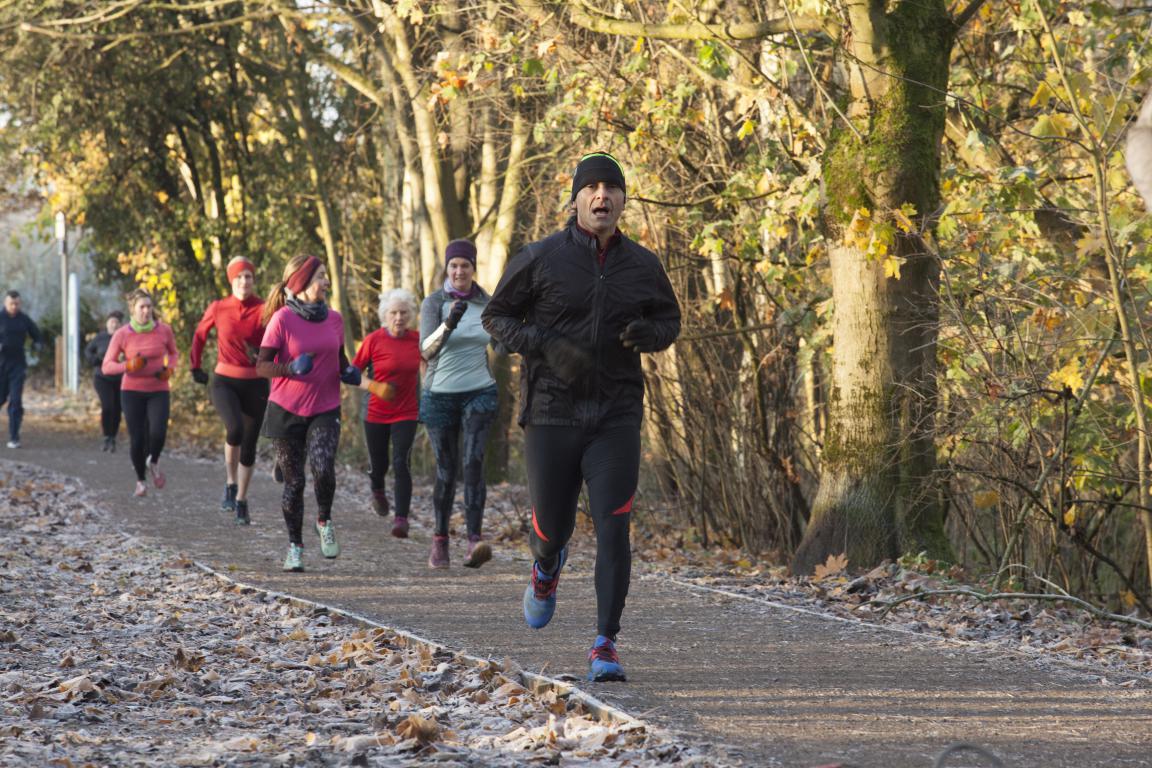
It’s inclusive in a way solo running isn’t. Clubs tend to have people at all levels – beginners who are nervous about their first group run, speedy veterans, parents squeezing in sessions before the school run, people in their 20s and people in their 60s. You quickly find your people: the quiet ones who like steady pacing, the chatty ones who make the miles fly, the ones who push you when you need it. There’s usually space for everyone.
-
Post-run hangouts seal the deal. A quick coffee, a pint, or just standing around in the car park after a session turns a run into a social event. Those extra 15–30 minutes are often where the best conversations happen and where you start looking forward to seeing everyone again next week.
The social side isn’t just nice to have – it’s one of the biggest reasons people stay in clubs long-term. When running stops being something you do alone in your headphones and becomes something you do with people you like, it stops feeling like exercise and starts feeling like part of your life. You run more because you want to see your crew, not just because you should.
Access to Structured Training and Coaching
One of the biggest differences between running solo and running with a club is that you suddenly have people who actually know what they’re doing guiding the sessions. You don’t have to guess what workout will help you improve or how to avoid burning out – someone else has already thought it through.
Most decent clubs in 2026 have at least a few structured elements, even if they’re not super formal.
-
Group sessions follow a plan. Instead of winging it every time you head out, you turn up and the session is already organised. It might be intervals on the track one week, tempo runs the next, hill reps the week after. The variety is built in, and it’s progressive – things get a bit harder over time so you improve without realising you’re being coached.
-
Coaches or experienced leaders spot the basics you miss. Solo runners often push too hard on easy days or take it too easy on hard days. A good club leader will call out pace if someone’s going off too fast, remind people to warm up properly, or suggest tweaks to form when they see you struggling with the same hill every week. It’s not intense personal coaching, but it’s free advice from someone who’s been there.
-
You get exposure to workouts you’d never try alone. Fartlek, pyramids, strides, threshold runs, long slow distance with pick-ups – these sound intimidating or boring when you’re by yourself with just an app. In a group, they feel normal because everyone’s doing them together. You end up trying things that actually move the needle on your fitness, and because it’s social it doesn’t feel like hard work.
-
Pacing becomes effortless. Running with others means you naturally settle into group paces. Want to work on easy recovery runs? Join the chatty slower group. Want to push your speed? Tag along with the quicker pack. You learn what different efforts feel like without constantly checking your watch, and you stop over- or under-doing it.
-
Beginners get a gentle on-ramp. If you’re new or coming back after a break, clubs usually have beginner-friendly sessions or “no-drop” groups where no one gets left behind. You can build confidence gradually instead of jumping straight into 10 km at race pace and wondering why you’re knackered for a week.
The real win here is that structured training stops being something you have to research, plan, and motivate yourself for. You just show up, follow along, and the improvement happens almost by accident. Over a season, that adds up to noticeable gains – better times, longer distances, less fatigue – without you having to become your own full-time coach. For most people with jobs and lives, that’s a game-changer.
Improved Performance and Faster Progress
Once you’ve got the consistency and the structure in place, the next thing most club runners notice is that they’re actually getting better – quicker, stronger, able to go further – and it happens faster than it ever did on their own.
Solo running progress tends to plateau pretty quickly. You might shave a few seconds off your 5K here and there, but without outside input it’s easy to stay stuck at the same level for months. A club shifts that because you’re training in ways that push you beyond what you’d choose for yourself.
-
You push harder without even trying. When you’re running with others, especially people who are a bit faster than you, you naturally match their pace for longer stretches. That “just keep up” feeling during a group tempo run or interval session forces you into efforts you wouldn’t hit alone. Over time those slightly-harder sessions build real speed and endurance.
-
You learn what good pacing feels like. In a club you get constant feedback on effort. Someone might say “this feels like marathon pace” or “ease off, we’re going too quick for recovery.” You start to internalise how different paces should feel in your body, so even on solo runs you’re better at hitting the right intensity instead of guessing from heart rate or watch splits.
-
Recovery runs actually stay easy. One of the biggest mistakes solo runners make is turning every run into a hard effort because there’s no one to rein them in. Clubs usually have clear “easy” or “social” sessions where the whole point is to keep it conversational. Training like that properly lets your body adapt and recover, which means the hard sessions hit harder and you improve more.
-
You tackle challenges you’d avoid. Long runs feel less daunting with company – you can share the load mentally, take turns leading, or just chat through the boring bits. Same with speed work: doing 8x400m repeats alone is grim; doing them with a group who’s counting them down with you makes it doable and even a bit fun. You end up covering more ground and hitting higher quality sessions.
-
Progress becomes visible and motivating. Club runners often do time trials, parkrun together, or enter the same races. Seeing your mates improve – or beating your own previous time in a group setting – gives you concrete proof that the training is working. That loop of effort → visible gain → more effort keeps the momentum going.
It’s not that clubs turn everyone into elite athletes overnight. Most people aren’t chasing PBs every week. But the combination of better training habits, group dynamics, and real feedback means you move the needle on fitness way more efficiently. A year in a club often sees bigger gains than two or three years of solo running, simply because you’re doing the right things more consistently and with better execution. For anyone who wants to feel stronger, faster, or just more capable on their feet, that kind of progress is one of the strongest reasons to stick around.
Safety in Numbers, Especially on Dark Evenings or Quiet Routes
Running alone is fine for many people, but there are times when it starts to feel a bit off – early mornings before it’s properly light, late evenings after work, quiet country lanes, or even urban paths where you’re the only one out there. A club takes a lot of that unease away because you’re rarely on your own.
It’s not about being paranoid; it’s just practical common sense in 2026 when more people are running at all hours.
-
Group runs mean you’re visible and audible. A pack of 8–20 runners is way harder to miss than one person with headphones in. Cars notice you sooner, other path users give you space, and if anything does feel dodgy, there are multiple people who can react or help right away. Solo, you’re relying entirely on yourself.
-
Routes get chosen with safety in mind. Club organisers usually pick well-lit streets, popular parks, or trails that are busy enough to feel secure, especially in winter when it gets dark by 4:30 pm in the UK. They know the local spots where it’s best to avoid certain shortcuts or poorly lit underpasses. You benefit from that local knowledge without having to scout everything yourself.
-
Buddy system happens naturally. On bigger runs, people often pair up or run in smaller groups within the main one. If someone needs to stop for a shoelace, a loo break, or just feels off, there’s always someone to wait with them. That takes the stress out of “what if I twist an ankle and no one’s around?”
-
Shared awareness keeps things calm. Runners in a group tend to point out hazards – “dog off lead ahead,” “icy patch coming up,” “cyclist behind” – so everyone stays alert without it feeling like constant scanning. It’s low-key but effective, especially for women or anyone who’s ever felt uneasy running alone in certain places.
-
Emergency backup is built in. Most clubs have a simple protocol: someone carries a phone, basic first aid is usually available in someone’s bag, and people know who to call if things go wrong. It’s reassuring to know you’re not completely isolated if the worst happens – a fall, a bad asthma flare, or even just getting lost on a new route.
The safety aspect isn’t the main reason most people join, but it’s often the one that makes them stay through the darker months. You keep running year-round instead of dropping off when the clocks go back, because the group makes it feel manageable and less risky. For a lot of runners in cities or suburban areas, that peace of mind is worth more than they expected.
Making Running More Sustainable Long-Term
The biggest challenge for most runners isn’t starting – it’s keeping going year after year without burning out, getting injured, or just losing interest. Clubs help turn running into something you can do for the long haul, not just a phase you go through every January.
It works because the whole setup takes pressure off you as an individual and spreads it across the group and the routine.
-
You avoid the boom-and-bust cycle. Solo runners often go too hard too soon, rack up mileage too fast, get injured, take months off, then start over. In a club the sessions are paced and balanced by design – easy days, hard days, rest built in. You’re less likely to overdo it because the group sets the tone and someone usually calls out when things are getting silly.
-
Injury risk drops with better habits. You pick up little things from being around experienced runners: proper warm-ups, cool-down stretches, listening to niggles instead of pushing through, mixing surfaces instead of pounding the same pavement every day. Coaches or longer-term members spot early signs – “your stride looks off, maybe ease up this week” – before a tweak turns into a proper problem.
-
Motivation ebbs and flows, but the group doesn’t. There will be weeks (or months) when you’re not feeling it – new job, family stuff, winter blues. The club keeps moving forward even if you miss a few. When you come back, people are glad to see you, no guilt trips, and you slot right back in. That continuity makes it easier to restart without feeling like you’ve “failed” and have to begin from scratch.
-
Running becomes part of your routine, not an extra. Because sessions are regular and social, they start to feel like a normal fixture in the week – Tuesday night run with the crew, Sunday long one if you can make it. It’s less mental effort to fit it in compared to carving out solo time that always competes with everything else. Over time it just becomes what you do, like meeting friends for coffee or going to the gym class you like.
-
You adapt as life changes. Clubs usually have options for different life stages: shorter midweek runs for parents, gentler paces for people coming back from injury or after having kids, even walking/running mixes for anyone easing in. You don’t have to quit when circumstances shift – there’s usually a way to stay involved at whatever level works right now.
In the end, sustainability is about making running low-friction and high-reward over decades, not just seasons. A club gives you the structure, the people, and the flexibility to keep showing up without it feeling like a constant battle against yourself. Most long-term runners you meet didn’t get there by sheer willpower alone – they got there because something (often a club) made it easier and more enjoyable to stick with it through the ups and downs.
Final Thoughts: Is a Club Right for You Right Now?
If you’ve made it this far, you’re probably wondering whether joining a running club actually fits where you are today. The short answer is: it depends on what you’re after, but for a lot of people in 2026 it’s one of the smartest moves they make.
Here’s a quick way to think about it.
-
You’re tired of starting and stopping. If your running history is full of enthusiastic bursts followed by long gaps, a club can break that pattern. The regular sessions, the people waiting for you, and the low-pressure way it all happens make consistency feel normal instead of heroic.
-
You want to get better without overthinking it. If you’re stuck at the same pace or distance and want to move forward, but don’t fancy becoming a training-plan nerd, the built-in structure and group dynamic do most of the heavy lifting for you.
-
Running alone is starting to feel isolating. If your post-run buzz fades fast because there’s no one to tell about it, or if you dread dark evenings on quiet paths, the social side and safety in numbers can turn running from a solo grind into something you actually look forward to sharing.
-
You’re happy solo but open to more. Even if you love your own company on runs, dipping into a club once or twice a week can add variety, better training, and a few mates without changing your whole routine.
On the flip side, clubs aren’t perfect for everyone. If you hate fixed times, prefer total flexibility, or really thrive on running in complete silence with your own thoughts, you might find the group vibe a bit much. That’s fine – plenty of people mix solo runs with occasional club sessions and get the best of both.
The easiest way to know is just to try it. Most clubs let you turn up to a few sessions as a guest before you commit. Show up once or twice, see how it feels, chat to people, and decide from there. Worst case, you get a free run or two and some fresh air. Best case, you find a crew that makes running stick in a way it never has before.
Running in 2026 is more popular than ever, but the people who stick with it longest aren’t usually the ones with the most willpower – they’re the ones who’ve found a way to make it easier and more enjoyable. For a growing number of runners, that way is a club. If any of this resonates, give it a go. You can always go back to solo if it doesn’t click. But a lot of us never do.
© 2024 The Card Project Uk Ltd
VAT: 453 2087 06
|