Blood Group AB The Universal Plasma Donor and Its Vital Role in Saving Lives
Blood Group AB: The Universal Plasma Donor
Blood types are a huge deal in medicine. They affect everything from a simple blood transfusion to major organ transplants. Think of them as a personal biological label that dictates who you can safely give blood to and receive it from.
Among all the groups, Blood Group AB is particularly fascinating. It’s the rarest of the main blood types, giving it some very unique properties when it comes to donating. This article is going to break down exactly what makes AB blood so special, what it means if you have it, and why people with this blood type are so crucial in the life-saving world of blood donation.
The Critical Role of AB Blood
1. The Superpower: Universal Plasma Donor
This is the key piece of information that makes your blood type so special. Plasma is the yellowish liquid part of your blood that carries essential proteins, clotting factors, and water—it’s crucial for stopping severe bleeding and treating shock.
Because AB plasma is completely free of any anti-A or anti-B antibodies, it’s basically "clean" and safe for anyone to receive, regardless of their own blood type. Think of it as the ultimate one-size-fits-all medical fluid.
This is a life-saving superpower in emergency situations:
-
Trauma and Emergencies: When a patient is rushed in after a severe accident, has lost a huge amount of blood, or is in surgical shock, doctors often don't have time to properly confirm their blood type. They need to infuse life-saving plasma immediately, and AB plasma is the safest, universal option to use first.
-
Massive Transfusions: It’s vital for patients receiving large blood volumes, such as those undergoing organ transplants or major surgery, as it minimises the risk of a dangerous reaction.
2. Rare and In High Demand
AB is the least common of the eight main blood types, making up only about 2% to 4% of the population. This rarity is why the need for AB donors is so constant.
Because AB plasma can be used to treat everyone, it’s the one type that hospitals rely on to keep fully stocked for those unpredictable, life-threatening emergencies. Since only a small number of people can donate it, every single AB plasma donation is incredibly precious and directly contributes to keeping that vital emergency supply shelf full.
3. The Full Picture: Receiving and Giving
Understanding AB means looking at two different sides of a blood transfusion: red blood cells and plasma.
-
You are the Universal Recipient (Red Cells): People with AB blood have a huge advantage when it comes to receiving red blood cells. Because your blood cells already carry both the A and B markers, your immune system doesn't see any other blood type as foreign. This means an individual with AB blood can safely receive red blood cells from any other blood type (A, B, AB, or O).
-
You are the Universal Donor (Plasma): While your red cells can typically only be safely given to other AB individuals, your plasma can go to absolutely anyone.
This combination of being a universal recipient for red cells and a universal donor for plasma gives the AB blood type a truly unique and critical role in transfusion medicine.
The Role of AB Individuals in Blood Donation
If you have AB blood, you have a huge opportunity to save lives, mainly by donating your plasma. Since your plasma is the universal type, every donation you make is like gold to a hospital's emergency supply.
Donating blood or plasma is one of the most direct and generous ways to help your community. It’s a simple, safe process that takes a short amount of time but provides a massive benefit to people in crisis.
Why Your Plasma is an Emergency Lifeline
Hospitals rely on a steady supply of AB plasma because it’s the default, go-to treatment when time is critical. It’s used to help:
-
Trauma Victims: People who have suffered severe accidents and are in shock or need clotting factors urgently.
-
Major Surgery Patients: Those undergoing huge procedures, like open-heart surgery or organ transplants, who need a replacement for lost plasma.
-
Cancer Patients: Many treatments for cancer can damage blood components, and plasma is often needed to help these patients recover.
By donating, you’re not just helping one person; you’re contributing to a supply that can be quickly deployed to anyone, anywhere, at any time—from a child needing a transfusion to an adult suffering a massive bleed.
Donating is Simple and Safe
The entire donation process is straightforward. It is a sterile and professional procedure run by trained staff who look after you every step of the way. If you are eligible, making a regular commitment to donate your plasma is one of the single most impactful things you can do in the healthcare system. It's a quick act that results in a profound, life-saving gift.
The Difference Between AB- and AB+
Up until now, we've only talked about the 'AB' part of your blood type, but there’s a second, equally important factor: the Rhesus (Rh) factor. This is where the plus (+) or minus (-) sign comes from, and it splits the AB group into two distinct types: AB+ and AB-.
What is the Rh Factor?
The Rh factor is another type of antigen that lives on the surface of your red blood cells. Think of it as a third flag on the cell.
-
AB Positive (AB+): If your red blood cells have the Rh factor present, you are considered Rh-Positive, or AB+. This is the more common of the two AB types.
-
AB Negative (AB-): If your red blood cells do not have the Rh factor, you are Rh-Negative, or AB-. This is an incredibly rare blood type, making up less than 1% of the population.
How the Rh Factor Changes Your Role
Adding the Rh factor changes how you can safely give and receive red blood cells, which is why the plus or minus sign is so important for transfusions:
If You Are AB+:
-
You are the TRUE Universal Recipient for red blood cells. Since your blood has the A, B, and Rh markers, your body welcomes red blood cells from literally anyone—positive or negative.
-
Your plasma is still the universal donor type and can be given to anyone.
If You Are AB-:
-
Receiving Red Cells is Tighter: You can receive red blood cells only from other negative blood types (A-, B-, AB-, O-). You must not receive Rh-Positive blood because your body will develop antibodies to fight the Rh factor, which can cause a severe reaction.
-
Your plasma is still the universal donor type and can be given to anyone.
In short, while both AB+ and AB- provide the life-saving universal plasma, the AB- blood type is especially valuable. Because it is so rare, AB- red blood cells are urgently needed for AB- patients, and your plasma is always needed for everyone.
The Importance of Awareness
Knowing your blood type is more than just a piece of trivia—it's key information for both your own health and for how you can help others.
For people with AB blood, knowing your type comes with a special privilege and a clear opportunity. You possess the universal plasma, and that makes you an indispensable part of the health care system. You have the power to help people in every major blood group, especially in the most critical of circumstances.
Your Unique Privilege
Understanding your role as the universal plasma donor is the first step toward realising your impact.
-
You can save a life in any emergency. Your donation is the one that doctors can reach for when they have no time to check a patient's blood type. This fact alone makes your regular donation one of the most powerful and generous acts of service you can perform.
-
You help keep the supply chain safe. Since AB plasma is so rare and so widely used, a consistent supply is always needed. By donating regularly, you help ensure that hospitals never run short of this vital resource.
In summary, the AB blood group is rare, but its role in transfusion medicine is huge. By simply being aware of your universal plasma status and committing to regular donation, you are making a massive, life-saving contribution to your community and to healthcare every single day.
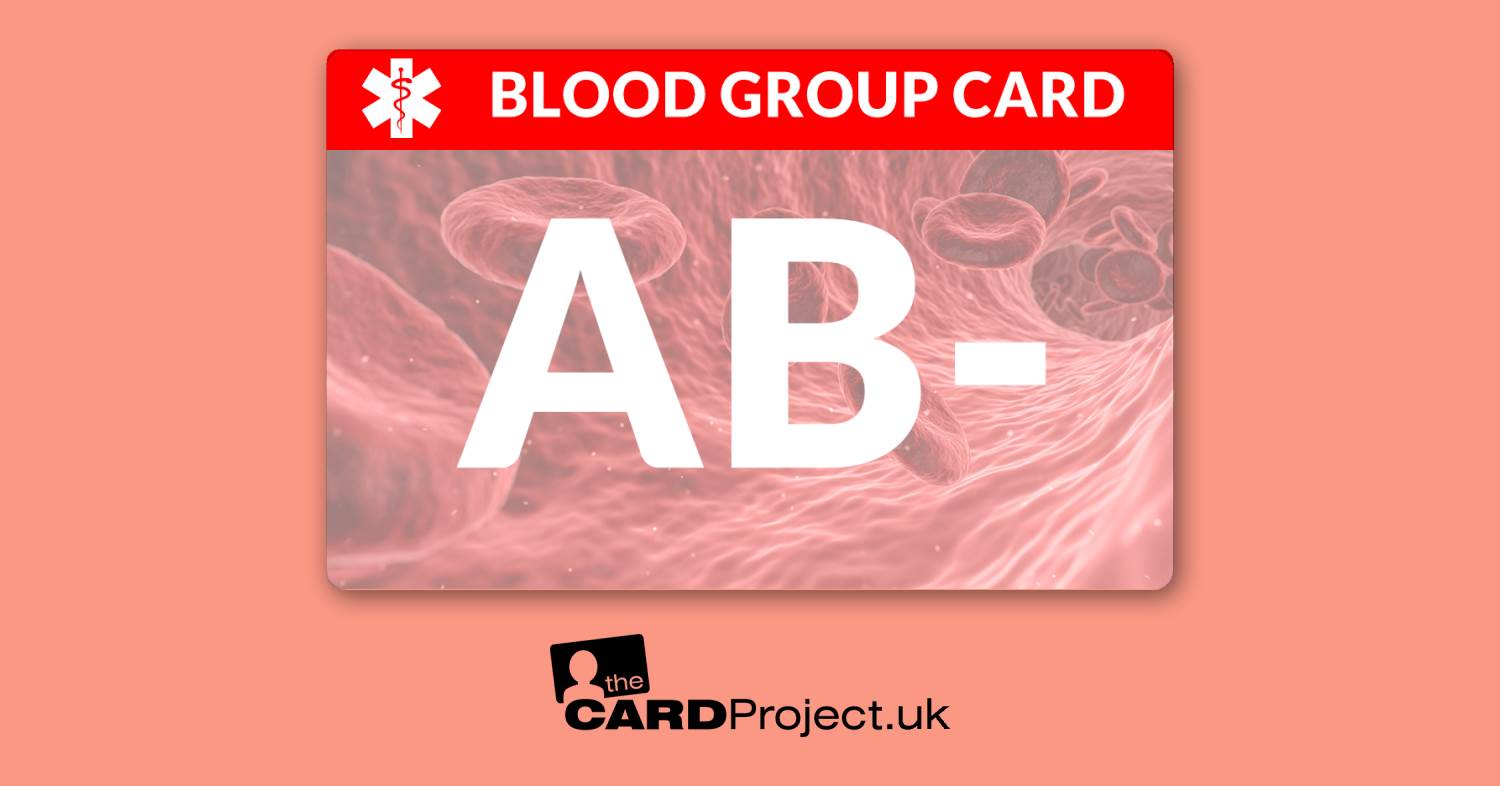
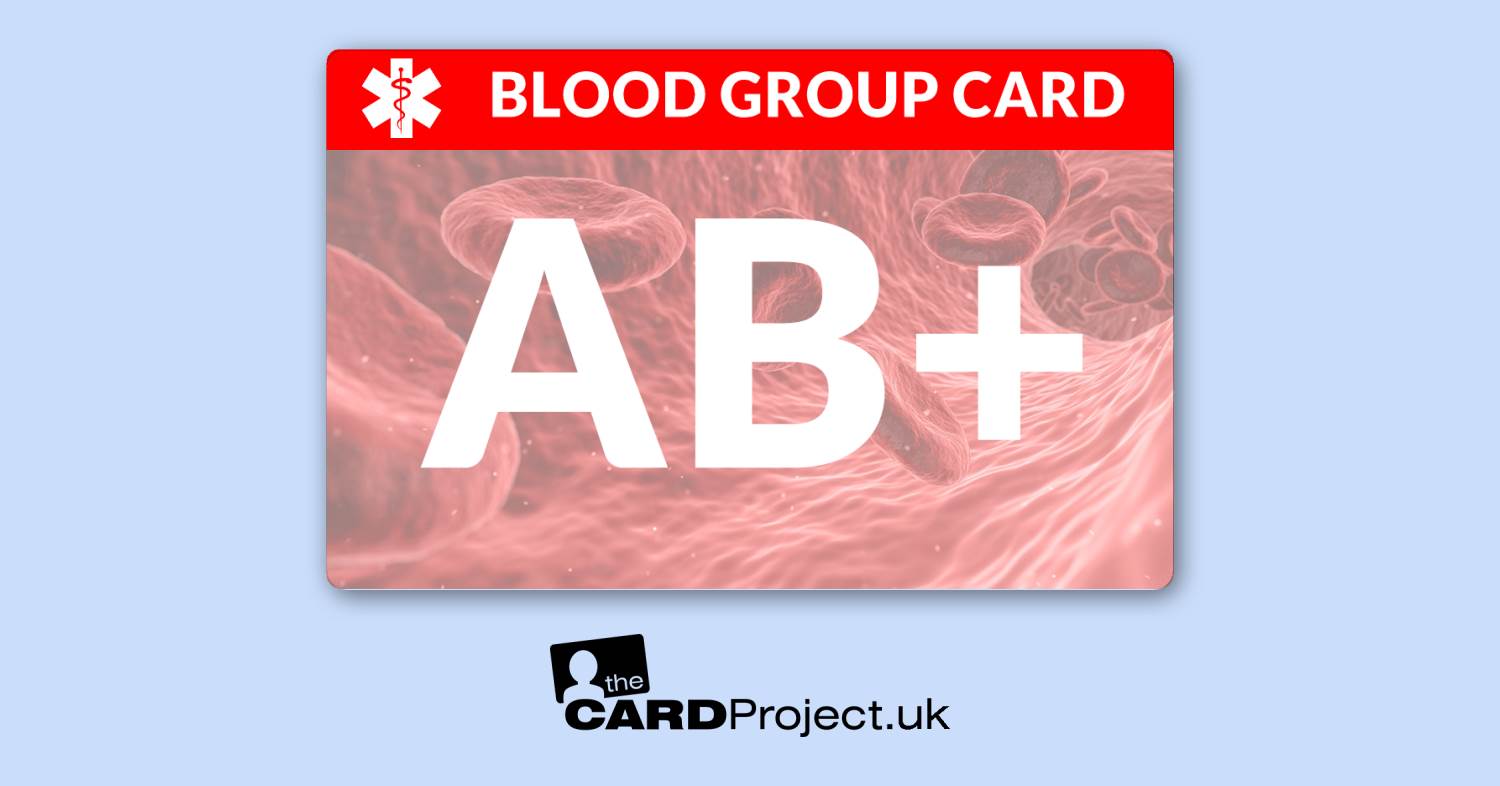
Blood Group AB Cards by The Card Project UK
Your blood type, whether AB+ or AB-, is rare and carries a critical role in saving lives. We believe that carrying that information with you is just as important as knowing it.
At The Card Project UK, we create simple, professional-looking ID cards for all major blood groups, including both AB+ and AB- (along with A, B, and O types). These aren't official medical documents, but they serve two crucial, practical purposes:
1. Clear Communication in an Emergency
In a chaotic emergency, seconds count. If you are unconscious or unable to speak, a card in your wallet that clearly states your blood type gives first responders and medical teams vital, immediate information.
-
For Red Cell Transfusion: While medical staff will always test your blood before a transfusion, knowing your type immediately helps them narrow down options, especially if you are AB- and can only receive negative blood.
-
For Quick Reference: It’s a simple, unmistakable piece of information that can guide immediate decision-making until full testing can be completed.
2. A Personal Reminder of Your Value
Carrying your AB card is a simple, daily reminder of the unique contribution you can make as a universal plasma donor. Let the card be your prompt to book your next donation.
You have one of the most in-demand blood products in the world. By having a card that states your blood group, you carry the knowledge that you are a vital part of the global medical effort, always ready to make a life-saving difference.
Visit our website today to get your AB+ or AB- blood group card. It's a quick and easy way to carry important personal information and remind yourself of the hero's role you play in the health care system.
© 2024 The Card Project Uk Ltd
VAT: 453 2087 06
|