Emergency Services Fancy Dress Ideas for Kids’ Parties & Play
Kids just don’t get bored of pretending to be the everyday heroes they see around them – police officers, firefighters, paramedics, doctors, and nurses. There’s something special about watching a child pull on a hat or clip on a badge and suddenly become the one in charge, directing everyone else or rushing off to save the day. These themes fit perfectly for birthday parties, playdates, Halloween, World Book Day at school, or even quiet afternoons at home when the dressing-up box comes out.
They’re straightforward to organise, don’t cost a fortune, and naturally get children playing together – one might be calling for backup while another puts out an imaginary fire or bandages a teddy. Parents and teachers across the UK keep coming back to these ideas because they work so well for mixed groups of boys and girls, different ages, and all kinds of occasions.
In this guide you’ll find plenty of practical suggestions for putting together costumes using things you probably already have, plus ways to add those little details like prop ID badges that make everything feel more real. We’ve included themed games that keep everyone busy, ideas for group parties where kids can mix roles, and tips on staying safe and keeping costs down. It’s all drawn from the sorts of things families, nurseries, and party organisers actually do here in the UK.
Contents
Ready to get started? Let’s look at why these themes keep coming out on top year after year.
Why Emergency Services Themes Are Always Popular
Children have a natural fascination with the people who keep us safe and help in emergencies. Whether it’s a police officer directing traffic on TV, a firefighter racing to a blaze, or a paramedic rushing someone to hospital, these are the real-life heroes kids notice early on. Dressing up lets them step straight into those roles – suddenly a three-year-old in a plastic helmet is giving orders to put out a “fire” in the living room, or a six-year-old with a toy stethoscope is calmly diagnosing why teddy feels poorly.
That shift from watcher to doer is instant and powerful. It gives children a real sense of bravery and usefulness.
What Parents Appreciate Most
-
Easy on the pocket: Basics like dark trousers, a plain top, or an old hi-vis jacket are often already at home or cheap to pick up second-hand. Charity shops and supermarkets provide simple pieces that work perfectly, and a few homemade touches keep costs low.
-
Suitable for everyone: These costumes feel natural for boys or girls without forced stereotypes. Any child can be the police officer, doctor, or firefighter.
-
Reusable: Pieces get used for school events, playdates, or everyday dressing up, so nothing goes to waste.
They Encourage Proper Team Play
Emergency services themes naturally bring children together. In a group, someone calls in the emergency, another drives the imaginary fire engine, a couple carry the stretcher, and the police arrive to sort out the scene.
There’s a role for every child, whether giving instructions or quietly bandaging “patients.” Even quieter children find their place – perhaps taking notes at the police station or organising medical supplies.
Kids often borrow ideas from shows like Fireman Sam or Peppa Pig, and before long they’re deep in their own story with minimal adult guidance.
Perfect for Mixed Groups and Different Ages
These themes work well when siblings or friends of different ages are playing together:
-
Older children love taking charge as the police sergeant or lead paramedic.
-
Younger ones are happy as junior firefighters or hospital patients.
-
Bigger kids often enjoy helping the little ones in character – “Right, Constable Lily, you guard the door while I check this injury.”
Nobody feels left out.
A Favourite for School Events
Around World Book Day, schools across the UK see children arriving as doctors, nurses, police officers, or firefighters from favourite stories. Teachers appreciate these costumes because they’re simple for families to organise quickly, and the pieces can be reused for parties or play afterwards.
These themes keep coming back because they let children feel important and capable. Watching them line up teddies for a check-up or carefully “arrest” a willing grown-up is joyful and reminds grown-ups why these roles captured our imagination when we were young.
Police Officer Costume Ideas
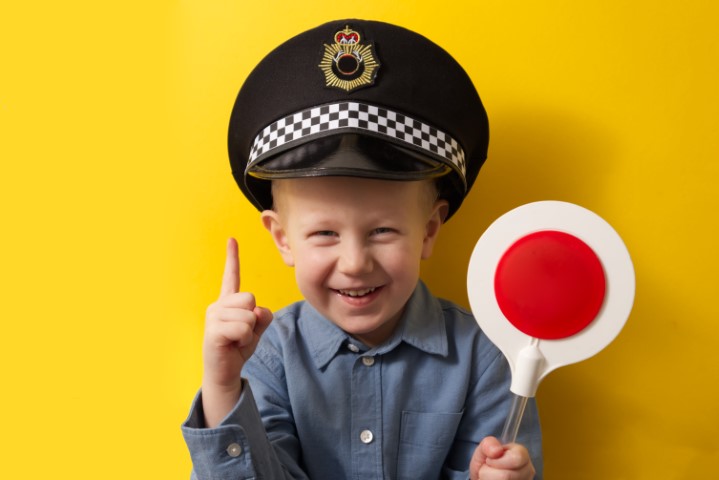
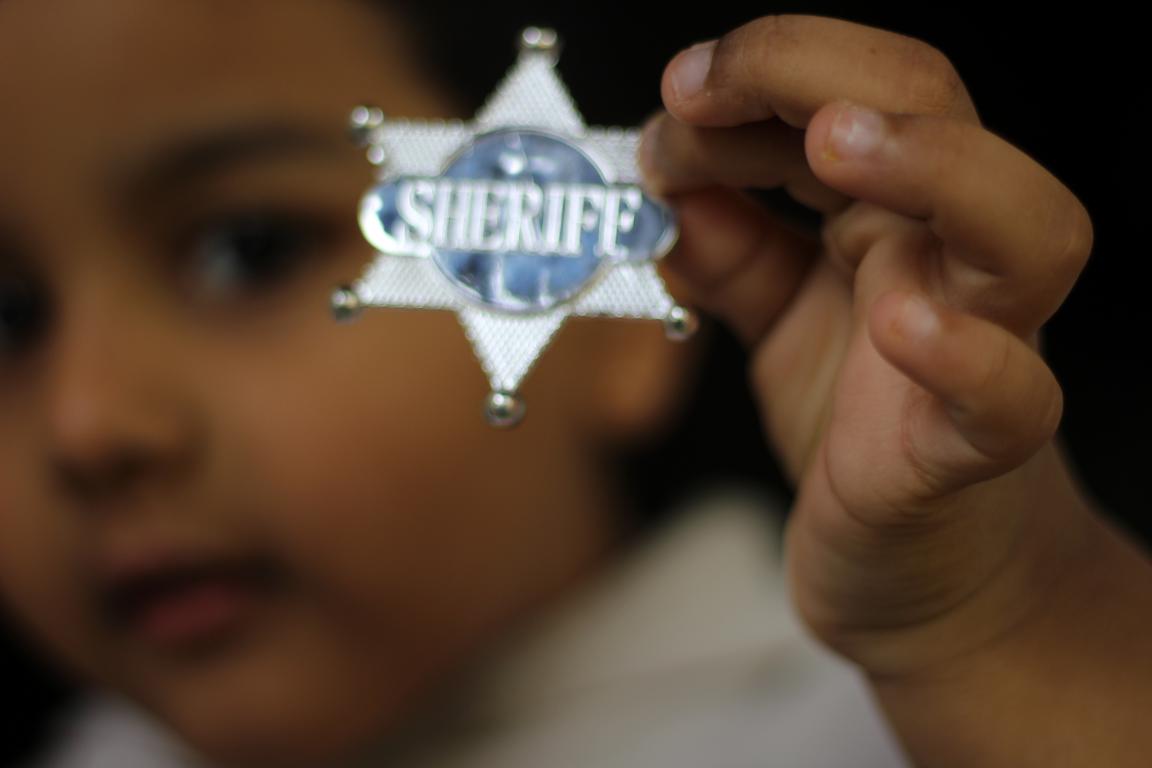
A police officer theme is one of the easiest to put together, and it’s often the one kids ask for most. There’s something about the badge and hat that turns even the shyest child into someone confidently giving instructions or organising a search for a missing toy. Most items can come straight from the wardrobe or a quick charity shop trip, and a few extras bring the outfit to life.
Starting with the Basics
-
Clothing base: Dark trousers or a skirt with a plain navy, black, or dark blue top. School joggers or leggings are comfortable for running around, and most families already have them. For a smarter look, plain black school trousers work well.
-
Shirt or jacket layer: A white shirt underneath gives a proper uniform feel. For colder days or outdoor play, add a dark jacket – nothing fancy needed.
-
Footwear: Black school shoes or trainers are simple and safe. Black wellies also work and add a bit of authority when stomping around.
Adding the Details That Make It Real
-
Hi-vis jacket or vest: Use a real one from cycling or work, or buy a child-size version. Reflective tape on a dark jacket works just as well.
-
Police belt: Make one from cardboard covered in foil or black tape, with loops for toy handcuffs or a notebook. Kids enjoy clipping things on and off.
-
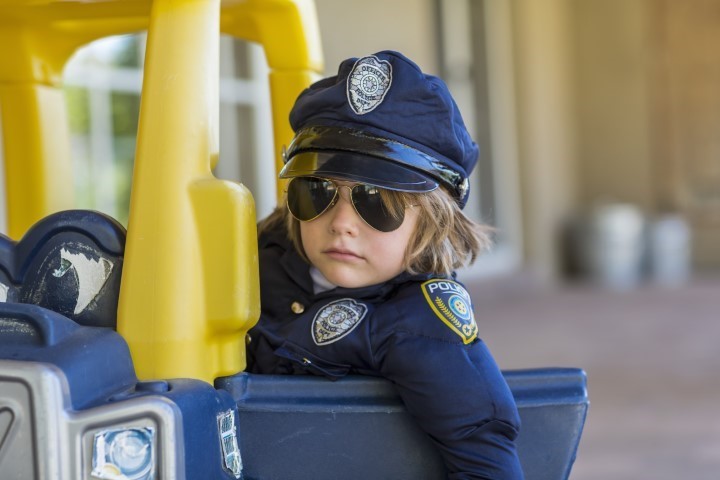
Hat: A peaked cap finishes the outfit. Plastic versions are inexpensive, or you can make one from cardboard with a printed badge.
Accessories That Bring the Role to Life
Smaller props keep the play going:
-
Toy handcuffs, a notebook and pencil for taking statements, and a toy radio or walkie-talkie.
-
Dark sunglasses for a detective vibe, ideal for older kids.
-
Clipboard with “incident report” sheets for jotting down clues.
One simple but effective addition is a warrant card or police ID badge on a lanyard or clipped to a pocket. Children love pulling it out to show who they are, which helps them stay in character.
Variations for Different Ages
-
Younger children: Keep it simple – hat, badge, and maybe soft handcuffs.
-
School-age kids: Add layers like a homemade utility belt with pouches for “evidence” (small stones or leaves). Some families include a tie or printed shoulder numbers with iron-on transfers.
Police costumes are versatile. One year it might be a community officer with a hi-vis jacket, the next a detective with sunglasses and notebook. Either way, it’s a theme children return to again and again.
Firefighter Costume Ideas
Firefighter outfits are always popular because they let kids run around with purpose, shouting about emergencies and saving the day. The bright colours make them easy to spot in photos, and the props encourage active play – dragging hoses, climbing for rescues, or lining up for roll call. Most families can put one together quickly using everyday clothes and a few standout pieces.
Getting the Core Colours Right
-
Red base layers: Red trousers or leggings with a red top or hoodie form the starting point. Plain red tracksuits or joggers are cheap and comfortable. Darker reds or maroon work for a more modern fire service look.
-
Black accents: Black boots, wellies, or trainers add contrast and sturdiness. Gloves keep hands warm and make gripping toy axes feel more realistic.
-
Jacket or overalls: Child-size overalls are ideal. Otherwise, a red jacket or an old adult fleece works. Layers help kids regulate temperature during active play.
Essential Props for the Full Effect
-
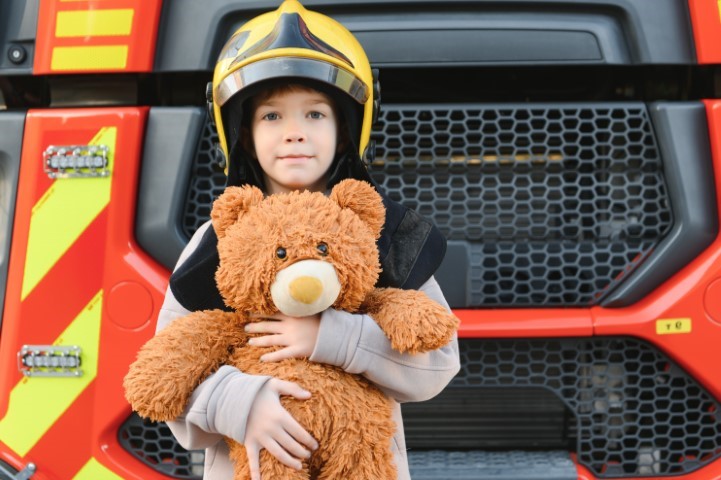
Helmet: A plastic toy helmet is key. Black cycling helmets with yellow tape stripes also work and stay secure.
-
Hose: Use an old garden hose, vacuum tube, or a long scarf indoors to avoid trips.
-
Axe or tools: Plastic toy axes or cardboard versions covered in foil. Some children carry a bucket or small backpack as their emergency kit.
Adding Realistic Touches
-
Hi-vis strips: Cut yellow reflective tape or fabric and stick it onto sleeves, trousers, or jackets. Electrical tape can be used temporarily.
-
Badges and labels: Printed fire service logos stuck to helmets or jackets add polish.
A firefighter ID badge clipped to the jacket or on a lanyard often becomes the favourite prop. Kids love showing it when arriving at the scene and it helps them organise their team – “Firefighter Max here, what’s the emergency?”
Ideas for Different Ages and Settings
-
Younger children: Focus on helmet, red clothes, and a short hose so nothing drags.
-
Older children: Add toy oxygen masks, glow sticks as emergency lights, or a cardboard ladder.
-
Outdoor play: Wellies and a real bucket for water play.
-
Indoor play: Beanbags or cushions as “flames” for dry rescues.
Firefighter costumes spark energetic play. Yelling “Stand back!” while rushing in with a hose is always a hit, and adults often end up joining in the fun too.
Paramedic and Ambulance Crew Ideas
Paramedic costumes have become very popular, especially since children see ambulance crews on TV and in real life more often. There’s something exciting about the urgency – lights flashing, rushing to help, and knowing exactly what to do. Kids love taking responsibility as the first responder, checking the patient, and calling for backup if needed. These outfits work for one child or a whole crew, and the bright colours make them stand out at parties.
Building the Main Look
-
Hi-vis jacket or vest: Green or orange are the most recognisable colours in the UK. Adult jackets can be rolled up to fit over children’s clothes, or child-size versions are inexpensive. Reflective tape on a plain jacket works too.
-
Base layers: Dark trousers (black or navy) with a plain long-sleeve top in green, blue, or white. Polo shirts give a uniform feel without discomfort.
-
Footwear: Comfortable dark joggers or leggings paired with black shoes or trainers. Wellies work well for outdoor “call-outs” in wet weather.
Medical Kit and Tools
Props make pretend play feel real:
-
Toy medical kit: Plasters, bandages, and a carry case are inexpensive and hugely popular.
-
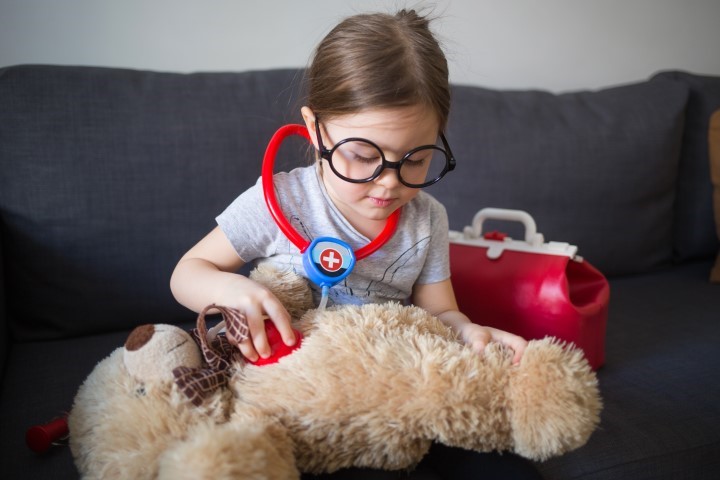
Stethoscope: Plastic versions hang around the neck and get used on teddies, dolls, and even pets.
-
Clipboard and notes: A small clipboard with printed “patient report” sheets lets kids write down symptoms or draw what’s wrong.
-
Other props: Soft toy syringes, a toy blood pressure cuff, or rolls of crepe bandage for wrapping injuries.
Turning Everyday Things into an Ambulance
-
Vehicles: Scooters or bikes become fast-response ambulances, with printed signs or blue tape for lights.
-
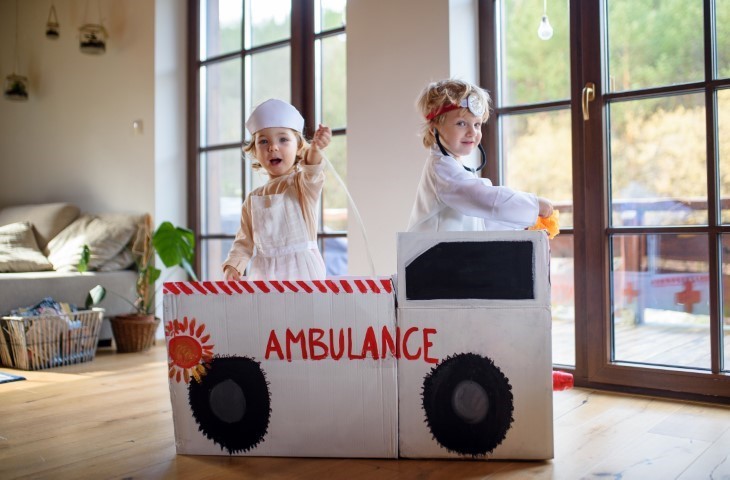
Indoor stretchers: Laundry baskets or cardboard boxes on wheels can carry “patients.”
-
Extras: Toy lights or sirens on a phone app add atmosphere.
A paramedic ID badge on a lanyard is often the finishing touch children love most. They pull it out to show who they are and organise the crew – “Paramedic Ava responding, what’s the problem?”
Variations for Solo or Team Play
-
One child: Hi-vis vest, stethoscope, badge, and a small bag for kit.
-
Multiple children: Assign different roles – one drives, one takes notes, another carries the stretcher. Walkie-talkies can add to the fun.
-
Age differences: Younger children focus on caring – bandaging and check-ups – while older ones enjoy timed responses or managing multiple “emergencies.”
Paramedic themes work well at mixed-age parties. There’s always a helper and someone to be helped, and the play can be calm or energetic depending on the group. Watching a child carefully “treat” a line of toys or rush across the room with kit is one of those moments that makes all the preparation worthwhile.
Doctor and Nurse Costume Ideas
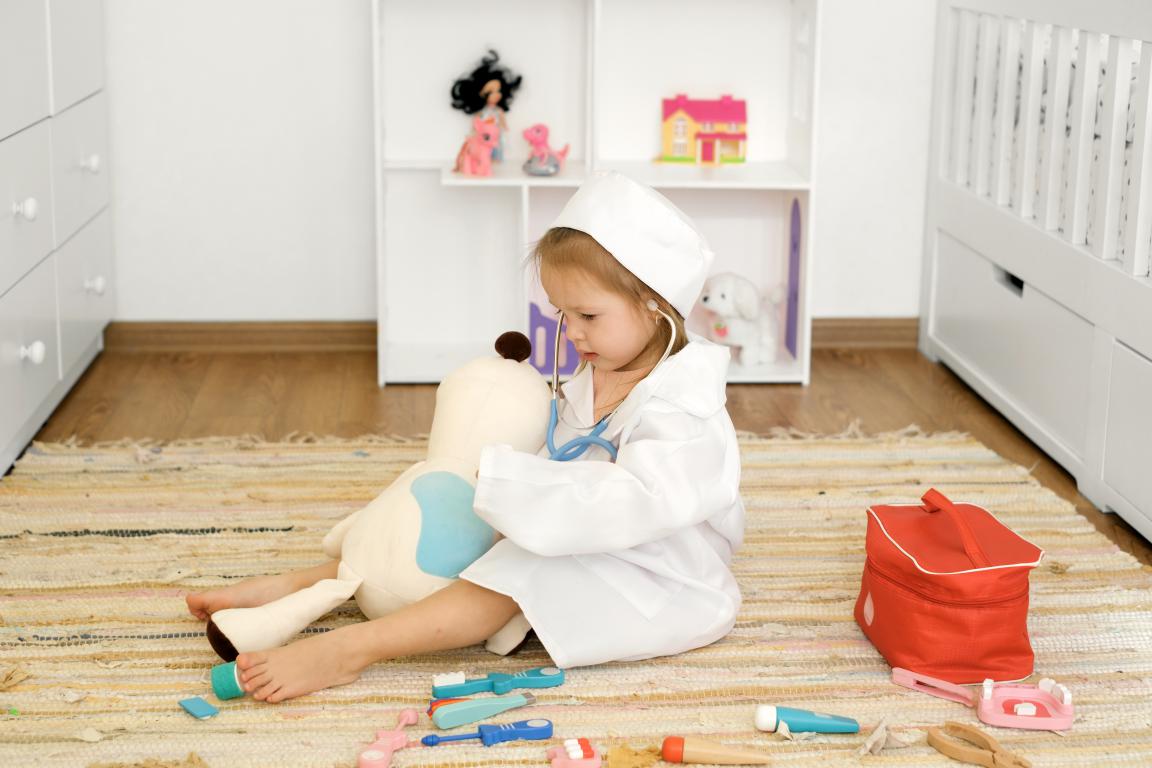
Doctor and nurse outfits are a timeless choice, especially for children in a caring mood. Setting up a small hospital corner, lining up toys for check-ups, or rushing around with a clipboard makes play feel important and organised. These costumes suit both quiet play and busy parties, and they’re easy to adapt for different ages or group sizes. Most pieces are simple, washable, and can double up for school events.
The Basic Uniform
-
White coat or shirt: An oversized adult white shirt works perfectly – roll up the sleeves and wear it over normal clothes. Lightweight child-size coats are available in toy shops and supermarkets. Nurses can wear pale blue or white tunic-style tops.
-
Trousers or skirt: Plain school trousers or leggings are comfortable for sitting on the floor and examining patients.
-
Shoes: Trainers or school shoes are fine. Crocs or clogs can add a hospital ward touch.
Key Medical Props
-
Stethoscope: A toy one is essential, inexpensive, and loved by kids. They use it on teddies, dolls, and even family members.
-
Bandages and plasters: Rolls of soft crepe bandage or pretend plasters let them wrap up arms, legs, and toy heads. Real unused plasters also work.
-
Syringe or thermometer: Soft plastic toy syringes or pretend thermometers add to the realism.
Other props include otoscopes, reflex hammers, or toy blood pressure cuffs.
Extra Details for Realism
-
Clipboard and patient charts: Homemade sheets or a small notebook allow children to write symptoms or draw X-rays.
-
Face mask and gloves: Children’s disposable masks or blue nitrile gloves add a modern hospital feel.
-
Name badge or ID: A hospital ID badge with the child’s photo and name often becomes their favourite part.
Doctor or Nurse – or Both?
-
Doctors: White coat, stethoscope, clipboard.
-
Nurses: Tunic, bandages, thermometer.
-
Children often swap roles or mix them, moving from giving “injections” to pushing a doll in a wheelchair.
For younger children, keep props soft and simple. Older children enjoy adding more kit, like a toy X-ray viewer, pretend medicine bottles, or a makeshift hospital bed from cushions.
Setting Up a Mini Hospital
Doctor and nurse play often becomes long, imaginative sessions. One child might be the consultant while others act as nurses or porters. It encourages inclusion, cooperation, and caring, making it rewarding for both children and adults.
Mixed Emergency Services Parties: Ideas for Groups, Set-Ups, and Games
Emergency services themes work brilliantly when children dress up in different roles at the same party or play session. A mix of police officers, firefighters, paramedics, doctors, and nurses gives everyone a clear job, and the play quickly turns into a shared story. Kids start coordinating naturally – calling for help, rushing to the scene, treating the injured, or investigating what happened. It’s ideal for birthdays with several guests, siblings playing together, or nursery groups.
Creating Different Roles for Everyone
Variety is key so no one feels left out.
-
Police: Dark clothes with hats and badges.
-
Firefighters: Red outfits with helmets and hoses.
-
Paramedics: Hi-vis jackets with medical kits.
-
Doctors and nurses: White coats with stethoscopes.
Mixed uniforms let every child have a specific role – one directs traffic, another puts out fires, someone bandages patients, and police take statements. Quieter children can handle tasks like answering calls or organising equipment.
If full costumes aren’t available, a hat, badge, or simple prop is usually enough to show which team a child is on.
Simple Ways to Set Up the Scene
A few stations transform a room or garden into a full emergency response area:
-
Police station: A table for taking notes, toy phone for calls, and a chair for “interviewing” suspects.
-
Fire engine: A large cardboard box decorated with red paper, a bell, or a row of chairs as seats.
-
Ambulance or hospital area: A blanket on the floor as a bed, cushions for patients, and a box of medical supplies.
Add paper signs like “Police Station”, “Fire Station”, or “A&E” to make it feel official. Outdoors, chalk can mark roads or helicopter landing spots (a hula hoop works well).
Games and Activities That Keep Things Moving
These activities fit the mixed theme and involve everyone:
-
Rescue relays: Teams carry “injured” toys from one area to another. Firefighters jump over cushions, then paramedics take over on the stretcher.
-
Put out the fire: Scatter red and orange beanbags or paper “flames.” Firefighters throw water balloons or soft balls, while police guard the area.
-
Emergency response chain: One child reports an incident, police arrive first, firefighters manage danger, and paramedics and doctors treat patients.
-
Arrest the villain: An adult or older child plays the gentle baddy. Police chase and “arrest” them with soft handcuffs while others rescue the “victims.”
-
Hospital check-ups: Line up dolls, teddies, or willing volunteers. Doctors and nurses diagnose and treat while paramedics bring in new patients.
Activities can be timed for excitement or slowed down for younger children. One game naturally leads into the next – a fire is reported, everyone responds, patients are treated, and police wrap things up.
Mixed emergency services parties usually create long, involved play sessions. Children switch roles, help each other, and continue the story long after official games end. Watching them work as a team just like real emergency services makes the party memorable and enjoyable for everyone.
Safety and Practical Tips
Keeping things safe and simple helps everyone enjoy the fun without worries. Emergency services themes often involve running around, pretending to respond to emergencies, or using props, so a few basic precautions go a long way. Parents and party organisers across the UK find that these checks make a big difference, especially with mixed ages or larger groups.
Choosing Safe Accessories and Props
Younger children need items that won’t cause trips or accidents:
-
Soft and lightweight: Plastic helmets that fit properly but aren’t heavy, soft toy handcuffs instead of metal, and fabric hoses rather than rigid ones. Avoid small parts that could be swallowed.
-
Check for sharp edges: Even toys can have rough edges. Cover cardboard edges with tape if you’re making props at home.
-
Size matters: Oversized hi-vis jackets are fine if sleeves are rolled up, but make sure they don’t drag. Lanyards for badges should be breakaway or short enough to avoid catching.
Supervising Play and Games
Active play is fun, but a little adult oversight keeps it safe:
-
Have an adult nearby for running games, chases, or water play like “putting out fires” with buckets or pistols.
-
Set clear boundaries for play areas, especially outdoors. Agree on rules such as no pushing when carrying a stretcher.
-
Monitor volume: toy sirens and shouting can get loud indoors. Suggest quieter voices for indoor hospital or police scenes.
Keeping Costs Down and Clean-Up Easy
These costumes don’t need to be expensive, and a little planning saves stress:
-
Shop smart: Charity shops, pound stores, and supermarkets are great for basics like tops, hi-vis vests, and toy medical kits. You can often find nearly-new helmets or coats cheaply.
-
Use what you have: School uniforms, old joggers, or wellies make a perfect base. Add homemade touches like tape stripes or printed badges for personality.
-
Choose washable materials: Messes are inevitable with paint, juice, or outdoor play, so stick to fabrics that can go in the machine. Avoid delicate or dry-clean-only items.
Extra Tips for Different Settings
-
Indoors: Clear space for stations and keep props in boxes to prevent trips.
-
Outdoors: Check for hazards on the ground and have spare dry clothes if water games are included.
-
Sensory needs: Offer quieter roles like taking notes at the police station or organising hospital supplies.
A few minutes spent planning makes the focus stay on the fun – children rushing about, working together, and feeling like real-life heroes. Those relaxed, happy sessions are the ones everyone remembers most.
Extra Accessories to Bring the Costumes to Life
Little extras like badges, radios, or reflective tape can turn a simple outfit into something children really believe in. They enjoy clipping items on, showing them off, or using them during play – it helps them stay in character and adds to the storytelling. Most of these accessories are inexpensive and easy to find but make a noticeable difference to how involved the play becomes.
Popular Accessories That Children Love
-
Toy radios or walkie-talkies: Even basic plastic versions let them call for backup or report incidents. The buttons and sounds keep them engaged and coordinating with the team.
-
Reflective tape strips: Sticky yellow or silver tape from a DIY shop adds authentic hi-vis stripes to sleeves, jackets, or helmets. It’s cheap, peels off easily, and catches the light during indoor or evening play.
-
Notebooks and clipboards: Small ones for taking statements, patient notes, or incident reports feel official. A pencil on a string helps prevent it from getting lost.
-
Prop ID badges or cards: A badge with a name and title (like “Firefighter Jones” or “Dr Patel”) is often the favourite. Children enjoy pulling it out to show who they are, and it works across all emergency roles.
Simple Ways to Make or Add Them
-
Print badges or logos at home on card, laminate if you have pouches, or stick them directly onto hats and jackets.
-
Use old lanyards from school or work to hang cards around the neck, or make one from ribbon and a safety pin.
-
Turn cardboard tubes into megaphones for police announcements or firefighter commands.
These small extras are often the details children notice most, sparking imaginative play long after the main costume is put away.
Where to Find the Bits You Need for your Emergency Services Costume
Most of the basics for these costumes are easy to find without spending much. Here are some of the best places to look:
-
Charity shops: Great for plain dark trousers, white shirts, hi-vis jackets, and even nearly-new toy helmets or doctor coats. Real bargains can often be found here.
-
Pound stores and The Works: Often stock toy medical kits, stethoscopes, reflective tape, and soft handcuffs. Perfect for smaller props that finish off a costume.
-
Supermarkets: Tesco, Sainsbury’s, and Asda usually carry child-size hi-vis vests, wellies, and simple dress-up accessories, especially around Halloween or World Book Day.
-
Online retailers: Amazon, eBay, and Smyths Toys have a wider selection if you need something specific, like a plastic firefighter helmet or full medical set.
-
The Card Project UK: Yep, it's us! We're perfect for personalised prop ID badges that kids love to flash around! Printed on biodegradable plastic with a child’s photo and name, we have designs for police, firefighters, paramedics, doctors, or nurses plus more in our Cosplay Range
A quick check of your own cupboards or garage often turns up half the outfit anyway – those old school joggers, a plain white shirt tucked away, or a spare hi-vis jacket from a cycling phase that’s just gathering dust.
It’s surprising how much you can pull together without buying anything new, and mixing in a few shop finds or online bits usually does the rest. With an hour or two of hunting or ordering, you’ll have everything ready for the next emergency call-out. These ideas should give you plenty of inspiration for a party, playdate, or dressing-up session. Watching children get lost in their own rescue stories, working together, and feeling like proper heroes for the afternoon is priceless.
We hope these ideas give you plenty of inspiration for your next birthday party, playdate, or just a rainy afternoon of dressing up at home. There’s nothing quite like watching the children get completely lost in their own rescue stories – working as a team, rushing to help each other, and feeling like proper heroes for the day.
Have fun putting it all together, stay safe during the games, and enjoy seeing them save the day!
© 2024 The Card Project Uk Ltd
VAT: 453 2087 06
|