Demystifying the INR Test: Mastering Your Warfarin Numbers
Published 26 June 2026
If you are taking Warfarin, there is one acronym you are going to hear constantly: INR. You will find yourself talking about it with your doctor, discussing it with your pharmacist, and perhaps even tracking it on a calendar at home.
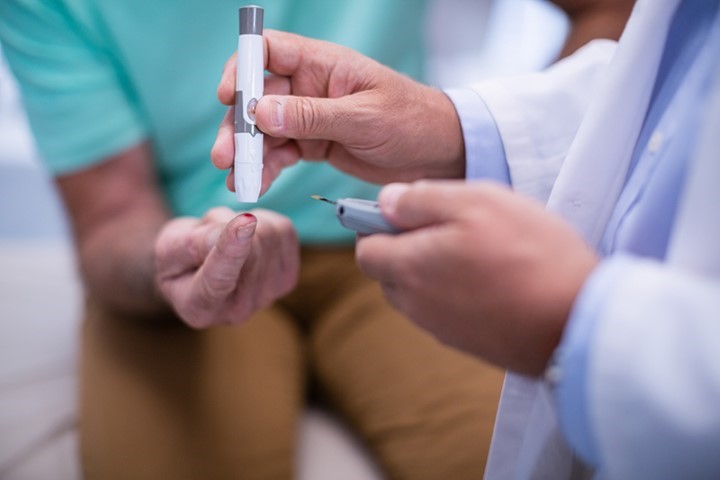
In the beginning, these three letters can feel like a dark cloud hanging over your schedule. The regular blood draws or finger-prick tests can feel tedious, and waiting for the results can bring a wave of school-exam-style anxiety. You might find yourself wondering: Why does a tiny drop of blood hold so much power over my daily routine?
It is time to take the mystery and fear out of this process. Once you understand what your INR actually represents, you will stop seeing the test as an annoying chore or a weekly judgment on your health. Instead, you will see it for what it truly is: a highly advanced, personalized safety shield designed to let you live your life with absolute peace of mind.
What Exactly is an INR?
INR stands for International Normalized Ratio. While that sounds like a dry piece of medical jargon, the concept is incredibly simple and highly elegant.
Before the INR system was created, different laboratories around the world used different methods to test how fast blood clotted. A result at one clinic might mean something completely different at a hospital down the road, causing massive confusion for patients who traveled. The medical community realized they needed a universal language. The INR is simply a standardized, global scale that allows any doctor, anywhere on Earth, to understand exactly how your blood is behaving.
Think of your INR as a multiplier for time.
-
If you are not taking Warfarin, your baseline INR is roughly 1.0. This means your blood clots at a normal, standard speed.
-
If your INR is 2.0, it means it takes your blood twice as long to form a clot compared to your baseline.
-
If your INR is 3.0, it takes three times as long.
By measuring this time, your healthcare team knows exactly how active your clotting "construction workers" are at any given moment.
The Target Zone: Your Personal Sweet Spot
When you are prescribed Warfarin, your doctor will give you a "target range." For the vast majority of people, this target is between 2.0 and 3.0 (though if you have a mechanical heart valve, your target range will likely be slightly higher, between 2.5 and 3.5).
To understand why this range is so important, imagine a simple household thermostat:
-
Below 2.0 (Too Cold): If your INR dips below this number, your blood is clotting too quickly. The Warfarin isn't quite doing enough to protect you, meaning your risk of forming an unwanted clot in your blood vessels is higher than it should be.
-
Above 3.0 (Too Hot): If your INR rises above this number, your blood is taking a very long time to clot. While you are highly protected against clots, your risk of experiencing minor bleeding (like nosebleeds or easy bruising) starts to go up.
-
The Sweet Spot (2.0 to 3.0): This is the perfect climate. Your blood is slow enough to prevent dangerous clots, but fast enough to protect you from unexpected bleeding if you preventatively stub your toe or get a paper cut.
It is vital to understand one key truth: Your INR is not a grade on a school test. If you get a result that is just slightly outside your zone (like 1.8 or 3.3), you have not "failed." You did not do anything wrong. Your body is a living, breathing, dynamic system, not a static machine. An out-of-range number is simply a quiet signal to your doctor to gently tweak your daily Warfarin dose—turning the thermostat up or down a notch—to bring you comfortably back into your sweet spot.
Note: If your INR is significantly high (usually above 5.0), this is a more urgent matter. An extremely elevated INR carries a much higher risk of spontaneous internal bleeding and cannot be managed by a simple dose change. Your clinic will give you specific, immediate instructions to bring it down safely—which might include skipping a dose, temporarily holding your medication, or taking a small dose of oral Vitamin K to quickly reset your system.
The Rollercoaster: Why Your Numbers Bounce Around
One of the most frustrating parts of starting Warfarin is watching your INR numbers fluctuate. You might have a perfect 2.5 on Tuesday, only to find yourself at 1.9 the following Monday, even though you took your pills exactly on time.
This is completely normal. Your liver is the factory that processes Warfarin and manages your blood's clotting factors, and its daily productivity is influenced by many subtle things in your life. Here are the most common reasons your numbers might drift:
1. The Vitamin K Dance
As we explored in our first week, Vitamin K helps your blood clot, acting as the natural brake to Warfarin. If you suddenly eat a large portion of leafy greens, your Vitamin K levels rise, which can temporarily cause your INR number to drop. Conversely, if you get stomach flu and can't eat anything for two days, your Vitamin K intake drops, which can cause your INR to rise.
2. Minor Illnesses
When your body is fighting off a common cold, a mild flu, or a seasonal bug, your metabolism changes. Your liver is busy dealing with the immune response, which can alter how quickly it processes your Warfarin. A fever or a bout of dehydration can cause your INR to climb unexpectedly.
3. Stress and Routine Changes
Severe physical or emotional stress releases hormones that can subtly impact your liver function. Similarly, traveling across time zones or majorly changing your sleep patterns can temporarily throw your body’s internal clock out of alignment, causing minor fluctuations in your tests.
4. New Medications or Supplements
Your liver is the sorting office for everything you swallow. If you start a new prescription (like an antibiotic for an infection) or even a seemingly harmless herbal supplement, your liver might prioritize processing the new item, leaving the Warfarin to linger in your system longer than usual. This is why you must always tell your coagulation clinic about any change to your medications.
5. Alcohol Consumption
Alcohol has a swift, direct impact on your liver. A sudden night of heavy drinking can slow down how your liver processes Warfarin, causing your INR numbers to spike dangerously. Consistency is key—if you choose to drink, keep it moderate and steady.
What to Expect: The Testing Schedule
When you first begin your Warfarin routine, you will feel like a regular guest at your doctor's office or lab. You may need to have your blood checked every two or three days.
This frequent testing is not a sign of danger. It is simply the "stabilization phase." Because Warfarin takes several days to fully reflect in your blood, your clinic has to move slowly, making small adjustments and waiting to see how your body reacts.
As your body finds its rhythm and your numbers settle into the target zone, the gap between tests will widen. Soon, you will only need a check-up once a week, then once every two weeks, and eventually, most stable patients only require a quick test once a month.
How to Prepare for Your Test Day
To get the most accurate, consistent results from your INR tests, try to keep your test days as structured as possible. Use this simple checklist:
-
Keep your timing consistent: Try to have your blood drawn at roughly the same time of day for each test. Most clinics prefer morning tests.
-
Take your Warfarin at night: Taking your pill in the evening (around 6:00 PM to 8:00 PM) is highly recommended. This way, if you have an INR test in the morning and your clinic calls you with a dose change in the afternoon, you can seamlessly start your new dose that very evening.
-
No fasting required: You do not need to skip breakfast or avoid water before an INR test, unlike other routine blood tests. Eat and drink normally.
-
Bring your tracking log: Always carry a small notebook, a tracking card, or a dedicated app showing your recent doses and past INR results. This is incredibly helpful for the clinician reviewing your numbers.
For Friends and Family: Tracking and Reassurance
If you are supporting a loved one on Warfarin, you can play an invaluable role in removing the stress from INR test days.
First, help them keep an organized record of their numbers. Create a simple calendar on the fridge or a shared spreadsheet where you can log the date, the INR result, and the prescribed daily dose. Seeing the numbers written down visually can help demystify the "rollercoaster" and show that, over time, the trend is stable and safe.
Second, be the voice of calm. If their INR comes back slightly out of range, remind them that this is incredibly common and easily fixed. Help them understand that finding a fluctuation is a victory for the system—it means the test worked exactly as intended, catching a minor change before it could ever become a physical problem.
The Big Picture: Your Safety Net
It is easy to view the INR test as a restriction on your freedom. But try to flip that perspective.
For many other medications, patients take a standard dose and simply hope for the best, with no way of knowing if it is working too much or too little. With Warfarin, your healthcare team has a highly precise window directly into your bloodstream. They can see exactly how protected you are, adjusting your care in real-time to keep you perfectly safe.
The INR test isn't a chore designed to interrupt your life. It is the quiet, reliable radar system keeping you safely on course so you can focus on the things that truly matter.
More Reading To Help You With Warfarin
Blood Thinner or Anticoagulant: Why Does My Medicine Have Two Names? Ever wondered if your doctor and pharmacist are speaking different languages when talking about your heart meds? Here is the simple story behind "blood thinners" versus "anticoagulants.
Starting Warfarin: What to Expect in Your First Week – Starting a new medication can feel daunting, but it doesn’t have to disrupt your life. Discover what actually happens inside your body during those first seven days, why the common myths are wrong, and how to navigate this new routine with total peace of mind.
The Warfarin Diet Myth: Why You Don't Have to Skip the Salad - You might have heard that green vegetables are completely off-limits now, but that is a mistake. Find out how the simple secret of food consistency lets you enjoy your favorite meals while keeping your medication working perfectly.
Safety Note: Because Warfarin affects how your body heals, healthcare professionals highly recommend carrying emergency identification. View our Warfarin Medical Cards.
Medical Disclaimer: The information provided in this article is intended for general informational and educational purposes only. It is not a substitute for professional medical advice, diagnosis, or treatment. Never disregard professional medical advice or delay seeking it because of something you have read on this website.