How to Support a Child Who Becomes Overwhelmed in Public Places
Introduction
If you're a parent or carer noticing that your child sometimes feels too much in busy spots like shops, parks, or crowds, you're not alone. It's tough seeing them get upset or shut down when things get overwhelming, and it can make everyday outings feel like a big challenge. This guide is here to help you understand what's going on and give you practical ways to make things easier. We'll cover spotting those early signs of sensory overload or anxiety, getting ready for trips out, setting up calmer spaces, and teaching your child ways to feel more in control. By the end, you'll have tools to build confidence for both of you, turning those tricky moments into smoother ones.
Table of Contents
Understanding Why Children Get Overwhelmed in Public
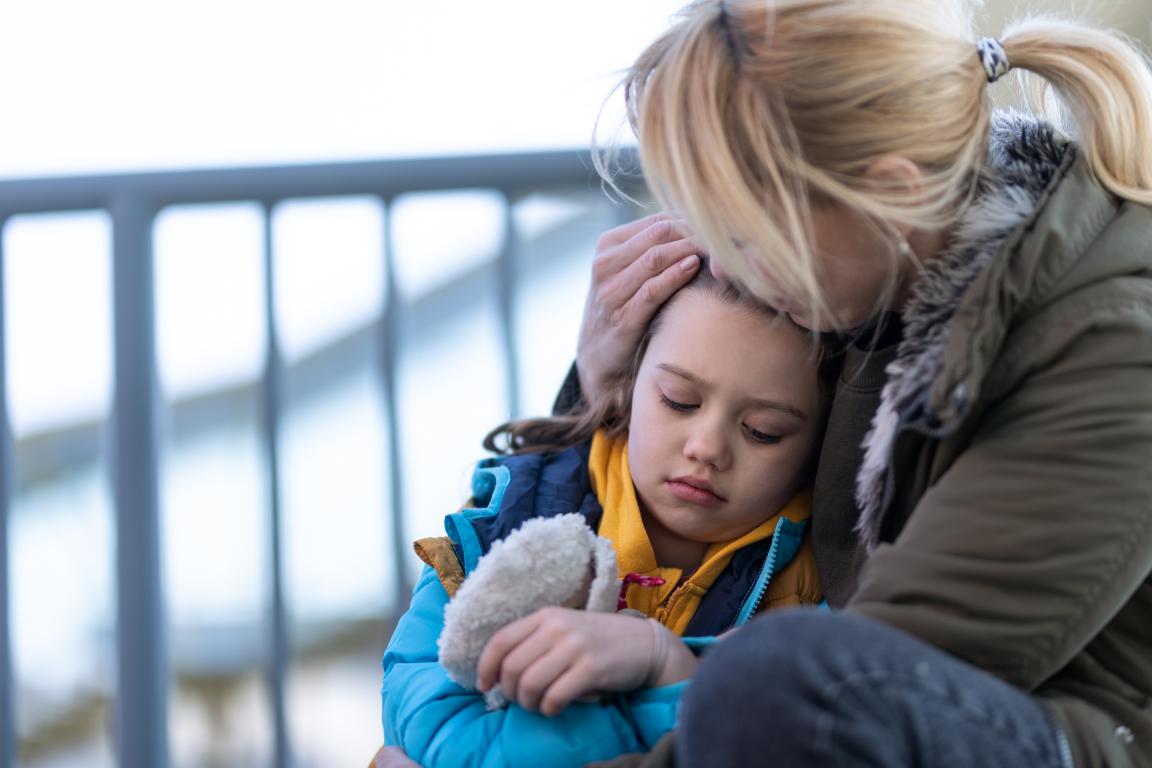
Public places can be full of sights, sounds, and smells that hit all at once, and for some children, this feels like too much to handle. It's like their senses are on high alert, and the brain can't keep up with all the information coming in. This isn't about being naughty or difficult – it's often linked to how their body processes things around them.
Children might feel this way because of sensory sensitivities, where everyday things like bright lights or loud chatter feel extra intense. Or it could be anxiety building up in unfamiliar spots, making them worry about what might happen next. For kids who are neurodivergent, like those with autism or ADHD, this can happen more often because their brains wire things differently. But remember, every child is unique, and it's not always tied to a specific label.
Think about a busy supermarket: the beeping tills, chatting shoppers, and colourful shelves might excite some kids, but for others, it's exhausting. Their body might react with a racing heart or a need to escape. Understanding this helps you see it's not their fault – it's just how they're experiencing the world right now.
As a parent, knowing this can shift how you respond. Instead of feeling frustrated, you can step in with empathy, saying something like, "I see this is a lot for you right now." This builds trust and shows them you're on their side.
Common Triggers in Public Spaces
-
Noise: Crowds talking, announcements over speakers, or traffic sounds can pile up quickly.
-
Lights and Visuals: Flickering shop lights or busy patterns on floors and walls might distract or irritate.
-
Crowds and Touch: Being bumped or standing too close to strangers can feel invasive.
-
Smells and Temperatures: Strong food odours or stuffy air can add to the mix.
-
Unpredictability: Not knowing what's next, like sudden changes in plans, heightens worry.
By spotting these, you can start planning around them. It's about making small tweaks that add up to big differences.
Recognising the Early Signs
The sooner you spot the little warning lights, the easier it is to turn the car around before you’re in full meltdown traffic. Children very rarely go from “completely fine” to “total shutdown” with no notice. There’s almost always a chain of quiet signals – if you know your child, you can learn to read them like a book.
The tricky part? Those signals are often tiny, easily missed, or look like “normal” toddler or grumpy-teen behaviour to everyone else. But to you, they become the difference between a lovely morning out and a dash to the car park in tears.
Why Early Signs Matter So Much
When a child’s nervous system starts to overload, their body goes into fight-flight-freeze mode. The earlier you catch it, the more chance their thinking brain has to stay online. Step in at the first flicker and you might only need a quick cuddle or a pair of headphones. Leave it until the red zone and you’re into damage-limitation rather than prevention.
The Most Common Early Clues
Every child has their own unique “tell”, but these are the ones parents mention again and again:
Body Language Changes
-
Fidgeting ramps up – wriggling, leg-bouncing, picking at skin or clothes, twirling hair non-stop.
-
Hands to ears or eyes – even lightly, not dramatically covering them.
-
Rocking, toe-walking, or flapping that’s more intense than their usual happy stims.
-
Suddenly freezing – standing completely still in the middle of an aisle, staring into space.
-
Clinging to you like a limpet or hiding behind your legs.
Facial and Physical Signals
-
Flushed cheeks or unusually pale face.
-
Rapid, shallow breathing (sometimes you can see their little chest going fast).
-
Yawning a lot (a classic sign of the body trying to calm itself down).
-
Complaining that clothes, shoes, or socks “feel funny” all of a sudden.
-
Rubbing eyes or face even when they’re not tired.
Mood and Behaviour Shifts
-
Irritability over tiny things – “Don’t TOUCH me!”, “I said NO juice!”
-
Going unusually quiet and withdrawn, not answering when spoken to.
-
Repeatedly asking “Are we going home yet?” or “When are we leaving?”
-
Wanting to be carried (even if they’re normally very independent).
-
Sudden whininess or baby-talk in a child who’s normally past that stage.
How the Signs Look in Different Places
In Shops and Supermarkets
-
Pulling at clothing labels or waistbands (tags suddenly become unbearable).
-
Walking on tiptoes or sticking very close to the trolley.
-
Staring at the floor to avoid bright overhead lights or busy shelving.
-
Asking for snacks or drinks every two minutes (oral input is soothing).
-
Starting to whine about “my legs are tired” five minutes in.
At Playgrounds and Parks
-
Hovering at the edge instead of running straight in.
-
Covering ears when another child screams with excitement.
-
Getting upset about sand on hands or wind in their face.
-
Watching other children but not joining in – “parallel observing”.
-
Suddenly wanting to leave just as they’ve finally started playing.
At Busy Events (fêtes, soft play, Christmas markets)
-
Gripping your hand so tightly it hurts.
-
Walking slower and slower until they practically stop.
-
Complaining of a headache or tummy ache with no obvious cause.
-
Asking to sit down or be lifted up “so I can see”.
-
Trying to crawl under tables or into corners.
Make It Personal – Your Child’s Unique Pattern
No two children show exactly the same sequence. One might always rub their arms when noise is building; another might start humming loudly to block the world out.
Keep a tiny note on your phone for a couple of weeks:
After three or four outings you’ll usually see the same two or three signs appearing in the same order. That becomes your early-warning system.
A Gentle Reminder for You
At the beginning, you’ll probably only notice the signs in hindsight (“Ohhh, that’s why he started pulling his hood over his face”). That’s completely normal. You’re not failing – you’re learning a new language together. Give yourself the same grace you give your child.
The more you watch without judgement, the quicker those subtle clues jump out at you. And one day you’ll be in the middle of a busy café, see the first tiny flicker, take your little one for a quiet wander outside… and come back in ten minutes later smiling. That moment – when you realise you just prevented a storm before it started – feels like pure magic.
Preparing for Outings in Advance
A little planning turns an outing from “please don’t let this go wrong” into “we’ve got this”. When children know what’s coming and feel they have some tools in their pocket, the world suddenly feels less unpredictable – and that alone can cut overwhelm in half.
Think of preparation as building a safety net together. The more solid the net, the braver they (and you) feel about jumping.
Talk It Through – The Social Story Mini-Version
Even a two-minute chat the night before or in the car can work wonders.
Use calm, positive, honest words:
-
“Tomorrow we’re popping to Tesco. It might be a bit noisy, but we’re only getting milk and bread, then straight home for toast and telly.”
-
“The park will have other children. If it feels too loud we’ll find the quiet tree we like and have our snack there.”
For children who love visuals:
-
Draw a three-box comic strip on the back of an envelope: car → shop door → treats aisle → home.
-
Use photos on your phone: “This is where we park, this is the quiet café next door if we need it.”
-
Apps like “Choiceworks” or free printable visual schedules are brilliant, but paper and pen work just as well.
Pack the Magic “Calm Kit” Together
Let your child choose the bag (backpack, bum-bag, or even a pencil case). Seeing it as their kit gives instant ownership.
Typical winning items (mix and match):
-
Noise-reducing headphones or ear defenders (Loop or Calmer earplugs are great for older kids)
-
Sunglasses or a peaked cap for bright lights
-
A small fidget toy or stress ball
-
Chewy tube, chewellery, or crunchy snacks (chewing is naturally regulating)
-
A comfort item – tiny teddy, worry stone, or even a photo of the family pet
-
Water bottle with a straw (sucking is calming)
-
A laminated card that says “I’m okay, I just need a quiet moment” (in case you need to show staff)
Keep the kit in the car or by the front door so it’s always ready. Children love the ritual of checking it together.
Choose the Right Time and Place
Timing is everything:
-
Shops: straight after opening or just before closing
-
Parks: weekday mornings or late afternoons in term-time
-
Cafés: avoid 12–2 pm rush
-
Soft play: look for “quiet sessions” – many now offer them
Start tiny. A successful 15-minute trip is far more valuable than a failed hour-long one.
Step-by-Step Preparation Routine Most Families Swear By
The Night-Before Chat
Quick rundown of tomorrow’s plan while brushing teeth – keeps it casual.
Morning Visual Checklist
Tick off pictures together: shoes → calm kit → keys → go.
Role-Play the Tricky Bits
Pretend you’re in the loud shop queue. Practise saying the signal word or putting headphones on.
Agree the Secret Signal
Popular ones: tugging your sleeve twice, saying “banana”, holding upturned palm, or showing a red card from the calm kit. Practise it at home so it feels natural.
Plan the Escape Route
Literally say out loud: “If it’s too much we’ll go and sit in the car / the library corner / Nanny’s house – no questions asked.”
Involve Them in Decisions
“Shall we take the blue headphones or the black ones today?” Tiny choices = big feelings of control.
Reward Built In
Something small and immediate: sticker, 10 minutes of tablet in the car on the way home, choosing dinner. Rewards work – don’t let anyone tell you otherwise.
Practise Calming Tools When Everyone Is Happy
Never wait until they’re spiralling to teach deep breathing. Make it a game at home:
-
Blow dandelion clocks in the garden
-
“Hot chocolate breathing” – pretend to smell hot chocolate (slow inhale), cool it down (long exhale)
-
5-4-3-2-1 grounding: name 5 things you see, 4 you can touch, etc.
Do it daily for a week and it becomes muscle memory.
Strategies for Creating a Calm Environment
You can’t turn a busy supermarket into a library, but you can carve out little pockets of calm wherever you are. These small, deliberate moves act like a volume knob on the world – you’re turning the sensory noise down just enough for your child to stay regulated.
Become a Human Shield (Literally)
Your body is the best calming tool you own.
-
Stand so you block the brightest lights or the rush of people.
-
Walk on the crowd-side of the pavement so your child is next to the wall or hedge.
-
In queues, let them stand in front of you facing your legs – it creates an instant cosy corner.
-
If they’re in a pushchair or trolley, angle it away from the busiest direction.
Children feel safer when they can see only you and not 50 strangers at once.
Use the Environment Like a Pro
Train yourself to scan every new place in ten seconds and spot the “safe zones”:
In Shops
-
Head straight for the quietest aisle first (pet food or cleaning products are usually dead ends and much calmer).
-
Use the trolley as a mobile den: child sits inside facing you, sides act as barriers.
-
Frozen-food aisles are often cooler, dimly lit, and almost empty – a secret favourite for many families.
In Parks and Outdoor Spaces
-
Choose the bench furthest from the play equipment or the gate everyone uses.
-
Lay down a picnic rug or pop-up tent as an instant “home base” they can retreat to.
-
Face swings away from the sun if bright light is a trigger.
On Buses/Trains or at Events
-
Board last and head straight for corner seats or the quiet carriage.
-
Stand near the doors so you can hop off quickly if needed.
-
Use a lightweight muslin or scarf draped over the pushchair as a portable sensory shield.
Built-In Mini Breaks
Treat outings like interval training: short burst of activity, short burst of recovery.
Every 10–20 minutes (set a silent phone alarm if it helps):
-
Find a bench, step into a side street, or just pause by the car.
-
Offer water through a straw, a crunchy snack, or a quick shoulder squeeze.
-
Do 30 seconds of “hot-chocolate breathing” together.
-
Play a silent game: “How many red things can we spot?” or squeeze hands three times for “I love you”.
These micro-pauses reset the nervous system before it hits overload.
Tried-and-Tested Tricks for Specific Places
Shops & Supermarkets
-
Click-and-collect or “scan-as-you-shop” apps to cut time inside.
-
Use self-checkouts – quieter and no eye contact with a cashier.
-
Ask for the disabled changing room if you need a five-minute quiet space (most big stores are happy to help).
-
Put sunglasses on your child as soon as you walk in – instant light filter.
Playgrounds & Parks
-
Arrive with a “first job” (e.g., feed the ducks, collect five sticks) so there’s a clear purpose instead of overwhelming open play.
-
Bring a pop-up sun shelter or even a big golf umbrella for instant shaded den.
-
Have a “home tree” or bench you always return to.
Cafés & Restaurants
-
Book the corner table or ask to sit outside.
-
Request the music be turned down – most places will do it if you explain quietly.
-
Bring a small “table kit” (colouring, wiki-stix, fidget) so waiting feels safer.
Public Transport & Big Events
-
Travel one stop further to a quieter station if it means avoiding rush hour.
-
Use over-ear headphones with their favourite calming playlist ready to go.
-
Carry a lightweight foldable camping stool – instant seat anywhere.
The One Rule That Changes Everything
Give your child permission to leave at any moment, and mean it. Say it out loud before you even get out of the car:
-
“If it ever feels too much, we go. No explaining, no finishing the shopping, we just leave. That’s the deal.”
When children know the exit door is always open, they’re far more willing to walk through the entrance door in the first place.
You’re not aiming for a perfect day out. You’re aiming for a day out where your child feels seen, safe, and in control. Every little calm corner you create tells them: “I’ve got you, and I understand.” That message alone is worth more than any amount of sticking it out.
Teaching Self-Regulation Techniques
The most powerful gift you can give your child is the quiet voice inside their head that says, “I’ve got this” when the world feels too big. Self-regulation isn’t about stopping big feelings – it’s about learning to ride them like waves instead of being pulled under.
The magic happens when you teach these skills at home while everyone is calm. That way, when they’re in the middle of a noisy soft-play or a flashing supermarket aisle, the tools are already familiar and ready to use.
Start with Naming Feelings – The Foundation of Everything
Children can’t control what they can’t name.
Make it part of everyday chat:
Use simple feeling words early: happy, sad, worried, cross, tired, overwhelmed, safe.
Get playful:
When children can say (or point to) “I’m overwhelmed” instead of melting down, you’ve already won half the battle.
Breathing Tricks That Actually Work (and Children Love)
Forget complicated counts at first. Try these instead:
For little ones (2–6 years)
-
Bubble breaths – pretend to blow huge bubbles (long slow exhale).
-
Teddy breathing – lie down with a teddy on their tummy, make teddy go up and down.
-
Smell the flower, blow out the candle – one hand pretend flower, one hand candle.
For bigger kids (6+)
-
4-7-8 breathing (in for 4, hold for 7, out for 8) – feels grown-up.
-
Box breathing – trace a square in the air while counting.
-
“Dragon breath” – breathe in through nose, out through mouth with a gentle roar.
Do it daily for 60 seconds – after teeth-brushing, in the car, before bed. Make it silly and fun. If they giggle, it’s working.
Sensory Tools That Calm the Body Fast
Different children calm in different ways – experiment together:
Touch/pressure seekers
-
Squish a stress ball or theraputty
-
Weighted lap pad or blanket (even a heavy book on the lap for 5 minutes)
-
Bear hugs, wall push-ups, or “sandwich” (gently squash between two cushions)
Movement seekers
Oral seekers
-
Crunchy snacks (apple slices, carrot sticks)
-
Chewy tube or chewellery necklace
-
Drinking thick milkshake through a straw
Find the winners and keep tiny versions in the calm kit.
Age-Friendly Toolkit
Under 7s – Keep It Playful
-
Magic bracelet – blow on it three times to make worries fly away.
-
Calm-down bottle – glitter jar they shake then watch settle.
-
Favourite song on your phone (same one every time becomes a reset button).
-
Cuddle corner at home with beanbag, fairy lights, and books.
7–11s – Give Them Ownership
-
Make a personal “calm menu” on a laminated card:
→ Deep breaths → Fidget toy → 10 star jumps → Drink water → Ask for hug
They choose which one they want in the moment.
-
Worry box – write or draw the worry, pop it in the box, close the lid.
-
5-minute sand timer – “We’ll leave/reassess when the sand runs out.”
Teens
-
Apps like Calm, Headspace for Kids, or Breathe2Relax.
-
Simple journaling: “What happened → What my body felt → What helped.”
-
Text code with you (e.g., send 🟥 for “I need to leave now”).
Celebrate Every Tiny Try
Praise the effort, not the outcome:
-
“You remembered to squeeze your fidget when it got loud – that was brilliant!”
-
“You asked for a break instead of shouting – I’m so proud of you.”
-
Sticker chart, marble jar, extra bedtime story – whatever motivates them.
Real-Life Progression Most Families See
-
Week 1–4: You remind and help every time.
-
Month 2–3: They start asking for the tool themselves (“Can I have my headphones?”).
-
Month 4–6: They reach for it without prompting.
-
Year 1–2: You’re in a busy café and realise they just did three bubble breaths all by themselves and carried on colouring.
That moment – when the skill moves from your hands into theirs – is pure parenting gold.
You’re not just helping them survive public places today. You’re handing them lifelong skills to manage anxiety, anger, and overload wherever they go. And every single time you practise together, you’re telling them: “Your feelings make sense, and you are strong enough to handle them.”
Handling a Meltdown in the Moment
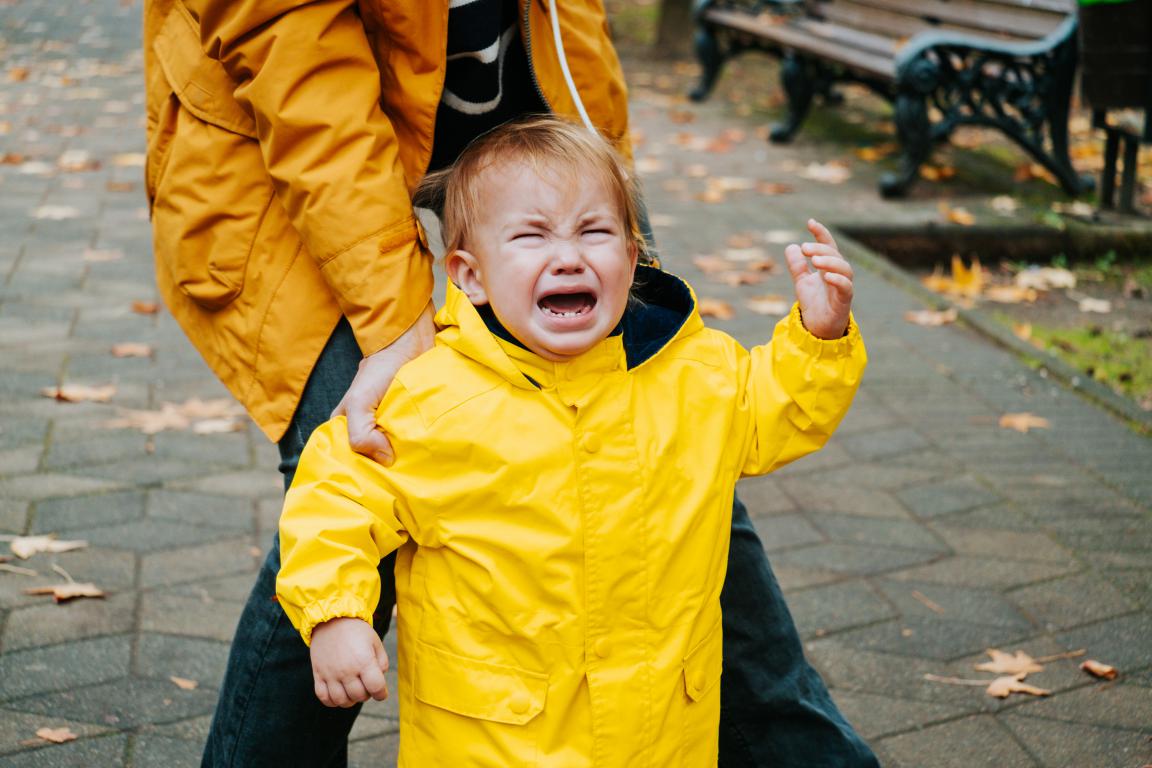
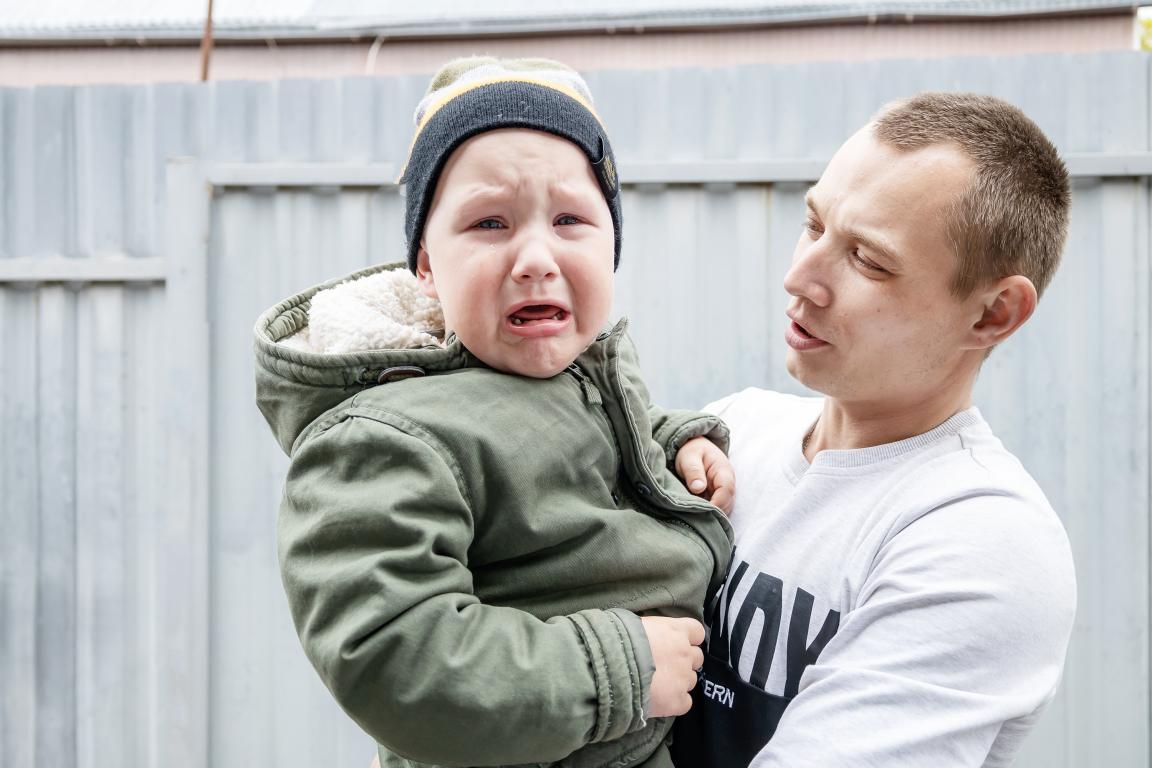
When it actually happens – the crying, the shouting, the shutting-down, the running away – everything inside you wants to fix it instantly. The truth is you can’t stop the wave once it’s crashed, but you can keep both of you safe until it passes. These minutes feel endless, but they always end. And how you handle them teaches your child more about trust and safety than a hundred perfect days ever could.
First 10 Seconds – Your Job Is to Stay Steady
Your nervous system is their regulator. If you panic, their body thinks the danger is even bigger.
Step-by-Step: The Calm-in-the-Storm Plan Most Families Rely On
Safety First – Always
If they’re about to bolt into a car park or lash out, gently hold or move them to safety. Everything else can wait.
Get to a Quieter Spot (Even a Tiny One)
-
Step outside the shop door
-
Duck into an empty aisle or disabled toilet
-
Sit on the floor behind a clothes rail (seriously – it works)
-
Car is usually the ultimate safe cave – head there if nothing else is possible
Name It, Don’t Fix It
Short, calm phrases on repeat:
Avoid questions like “What’s wrong?” or “Can you calm down?” – their thinking brain is offline.
Offer Body-Based Comfort (Only If They Want It)
-
Open arms for a hug or chest-to-chest squeeze (deep pressure is magic for many).
-
Hand to hold or gentle stroke on the back
-
Or simply sit nearby giving them space – some kids need distance to feel safe
-
Read their cues: if they push you away, respect it and stay close without touching.
Bring the Body Back Online
Once the peak has passed a little:
-
Hand them their chewy, fidget, or water bottle with straw
-
Model slow breathing (exaggerate your own so they copy without thinking)
-
Hand-over-hand help them squeeze a stress ball
-
Rub their back in slow circles or gently rock side to side
Leave Gracefully – No Shame Ever
Abandon the trolley, skip the rest of the list, walk out mid-meal if needed.
A calm exit today is an investment in bravery tomorrow.
After the Storm – Gentle Debrief When Everyone Is Ready
Wait until home, snack in hand, snuggled on the sofa. Then:
-
“That was a big one, wasn’t it? I felt wobbly too.”
-
“What helped you feel a tiny bit better?”
-
“Shall we add something new to the calm kit for next time?”
Keep it short, warm, and blame-free.
Quick-Reference Cheat Sheet to Keep in Your Phone or Wallet
Move → Name → Hold or give space → Regulate body → Leave if needed → Love later
Real Moments Parents Have Shared (No Names, Just Truth)
-
One mum sat on the supermarket floor stroking her son’s hair while he screamed under the coat – ten minutes later he stood up and said “I’m ready now” and finished the shop.
-
Dad carried his 9-year-old out of a Christmas market over his shoulder like a sack of potatoes – they laughed about it together that evening and went back the next weekend with headphones and a better plan.
-
5-year-old girl hid under a café table sobbing; her mum crawled under too, offered a glitter jar, and they watched the sparkles settle together until she was ready to come out.
Every single one of those parents felt like they were failing in the moment. Every single one of them was actually teaching their child: “The world can be big, but I will never leave you in it alone.”
A Reminder You Need to Hear
-
You are not causing the meltdown by bringing them out.
-
You are not a bad parent for having to leave a half-full trolley.
-
You are not embarrassing – you are loving your child exactly the way they need in that moment.
These moments pass. The tears dry, the heart rate slows, and one day you’ll look back and realise they’re getting shorter, quieter, and further apart. Because every time you stay-with-you calm response is another brick in their belief that they are safe and understood.
You’re already the safe place they run to. That’s everything.
Building Long-Term Resilience
Turning those overwhelming outings into something your child can cope with – and even enjoy – doesn’t happen overnight, but it absolutely can happen. The secret is steady, gentle progress rather than pushing too hard too soon. Think of it as slowly turning up the volume on a song instead of blasting it from the start.
Keep Going Out – But Keep It Manageable
Short, regular trips work far better than rare, marathon outings. Ten calm minutes in a quiet café today is worth more than an hour-long battle in a busy soft-play centre next month.
-
Start with places you already know are lower-risk (a small local shop, a familiar park early in the morning, or the library).
-
Gradually stretch the time or add one new element (a slightly busier hour, one extra aisle, sitting on a different bench).
-
If a trip goes wrong, that’s still useful information – shorten the next time and try again. Progress isn’t a straight line.
Many families find a simple “outing ladder” helps:
-
Walk to the end of the street and back
-
Quick pop into the corner shop
-
Ten minutes in the supermarket with the trolley as a safe base
-
Twenty minutes in the same supermarket
-
A new shop or a short café visit
Celebrate every rung you climb together.
Grow Social Confidence in Low-Pressure Settings
Public overwhelm often feels worse when other people are watching. Helping your child practise being around others in calm environments builds a buffer for busier times.
-
Arrange playdates with just one familiar friend in your garden or theirs.
-
Look for small, structured groups (many libraries and children’s centres run tiny toddler sessions or sensory-friendly hours).
-
Some areas have parent-led neurodivergent meet-ups or “chill and chat” sessions in community halls – these can feel like a lifeline because everyone truly understands.
Keep a Simple Progress Diary
You don’t need anything fancy – a note on your phone or a page in a notebook works perfectly.
Jot down:
After a few weeks you’ll start seeing patterns and real improvement. Children love looking back and saying, “Remember when the post office felt too loud and now I can post a letter by myself?” Those moments are gold for their self-belief.
Celebrate the wins – stickers, extra bedtime story, hot chocolate on the way home, whatever feels special to them. Positive reinforcement sticks far better than pressure.
Know When (and How) to Ask for Extra Help
If outings are still very difficult after several months of gentle practise, or if anxiety is spreading into home or school life, reaching out isn’t “giving up” – it’s giving your child the best possible chance.
-
Speak to your GP – they can refer to paediatric services, occupational therapy, or local Child and Adolescent Mental Health Services (CAMHS).
-
Many schools have SENDCos (Special Educational Needs Coordinators) who are brilliant at practical strategies and can observe your child in different settings.
-
Occupational therapists who specialise in sensory integration can offer tailored advice and sometimes even “sensory diets” (daily activities that help regulate the nervous system).
Asking for support is one of the strongest things a parent can do. It shows your child you’re fighting for them, not against them.
A Little Reassurance for You
Some days will still be hard. There will be times you have to leave a trolley half-full or carry a crying child out of a café, and that’s okay. Every single parent reading this has been there. What matters is that you keep showing up with love and patience.
Over weeks, months, and sometimes years, those small consistent steps add up. One day you’ll be walking through town and realise your child is skipping along beside you, chatting about what they can see, instead of clinging to your leg. And when that day comes, you’ll know every tough moment was worth it.
You’re already building that future – just by caring enough to read this far. Keep going. You’ve got this.
Frequently Asked Questions
What are the early signs of sensory overload in my child?
Early signs can include fidgeting, covering ears or eyes, becoming quiet or irritable, or complaining of physical discomfort like a headache or tummy ache. Watch for changes in behaviour that happen in busy environments – these are clues that their senses are getting too much input.
How can I prepare my child for a trip to the shops?
Start by talking about the plan in simple terms, using pictures or a list to show what will happen. Pack comforting items like headphones or a favourite toy, and choose a quieter time to go. Practise at home with role-play to make it feel familiar and less scary.
What should I do if my child has a meltdown in public?
Stay calm and move to a quieter spot if you can. Acknowledge their feelings without lots of questions, and use breathing or a comfort item to help them settle. It's okay to leave early – focus on safety and support rather than pushing through.
How can I help my child learn to self-regulate?
Teach simple techniques like deep breathing or squeezing a stress toy, starting at home when they're calm. Name emotions to help them understand what's happening, and praise their efforts. Over time, encourage them to use these tools on their own during outings.
Is sensory overload linked to autism or ADHD?
Yes, it can be more common in children with autism, ADHD, or other neurodivergent traits because of how they process sensory information. But it can happen to any child, especially if they're tired or anxious. If it's frequent, talking to a professional can provide more insight.
Where can I find professional help for my child's anxiety?
Start with your GP, who can refer you to child mental health services or specialists. Schools often have support teams too. Look for organisations focused on child wellbeing for advice tailored to your area.
Further Reading And Helpful Resources
Parents often find that a handful of trusted UK resources can make all the difference on tougher days. Below are some of the most practical, up-to-date guides from respected organisations. Each one has been chosen because it offers clear, evidence-based advice without overwhelming jargon.
-
NHS – Anxiety in children
Straightforward, parent-friendly page on spotting anxiety early, everyday coping strategies, and when to seek a GP referral.
-
GOV.UK – Identifying and supporting children and young people with sensory and/or physical needs
A concise evidence review with practical recommendations for recognising sensory difficulties and creating supportive environments.
-
British Psychological Society – Rethinking child neurodiversity
Thoughtful overview of neurodiversity-affirming approaches and how sensory differences affect day-to-day life.
-
The Open University – Introduction to child psychology
Free, bite-sized modules explaining emotional and sensory development – ideal for parents wanting to understand the “why” behind the behaviours.
-
Skills for Health – Core capabilities frameworks for supporting autistic people
Clear frameworks showing the key skills needed to support neurodivergent children effectively, useful for parents and schools alike.
-
Ambitious about Autism – Sensory overload and autism: a guide for parents
Practical strategies written specifically for families, including tips for outings and meltdown recovery.
How a Simple Card Can Help
Many families find that carrying a small, professionally designed card can take a huge amount of pressure off in overwhelming moments. These child-friendly neurodivergent cards quietly explain to shop staff, security, or members of the public that the child may need a little extra time, space, or understanding. Handing over a card removes the need for lengthy explanations when emotions are already running high, and it often invites kindness rather than judgement.
It helps everyone feel safer and more in control during outings. More information about the Kids Neurodivergent Cards designed for this purpose is available on the dedicated page.
© 2024 The Card Project Uk Ltd
VAT: 453 2087 06
|