|
Nonverbal Autism Medical ID Cards
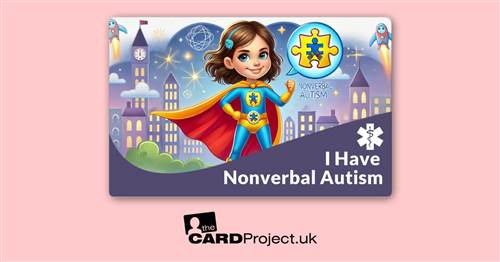
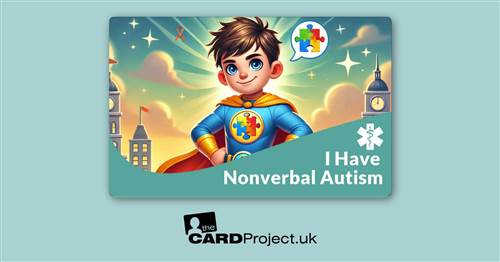
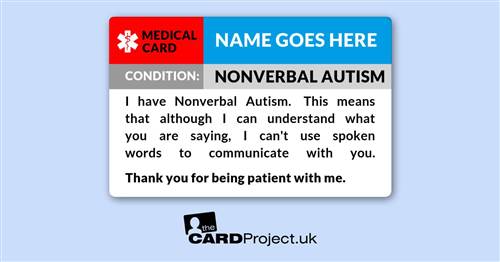
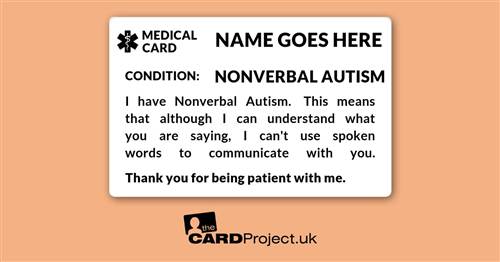
Non-Verbal Autism: Safety, Communication and SupportNon-verbal autism is a term used when an autistic person does not speak, or uses very few spoken words. It is a common part of the autism spectrum. Not being able to speak does not mean a person cannot understand what is happening around them. This page provides clear information about non-verbal autism. It explains how people communicate without speech, the safety challenges they face in daily life, and how you can support them. It also introduces the different identification cards we make to help in daily life and emergency situations. What is non-verbal autism?Autism is a developmental condition that affects how people see the world and interact with others. Non-verbal autism is not a separate medical diagnosis. It is simply a term used to describe autistic individuals who do not use spoken language to communicate. Estimates suggest that around one in three autistic people are non-verbal or have very limited speech. Speech is different from understandingIt is common for people to assume that if someone cannot speak, they do not understand. This is incorrect. Speech is the physical act of making vocal sounds to form words. Language is the ability to understand words, meanings and sentences. Many non-verbal autistic people have a strong understanding of language. They know exactly what is being said to them, but their brain struggles to send the signals needed to make their mouth, tongue and vocal cords produce speech. How non-verbal people communicateA lack of spoken words does not mean a lack of communication. Non-verbal individuals find other ways to let people know what they need, want or feel. These methods include:
Communication and safety challenges in daily lifeGoing out into public places can be stressful for non-verbal individuals and their families. When a person cannot speak, simple daily situations can quickly become difficult or dangerous. Interactions with the publicMost people in shops, parks or public transport expect others to speak to them. If a shop assistant asks a non-verbal person a question, the lack of reply can sometimes be mistaken for rudeness or ignoring them. This can lead to awkward moments or pressure on the individual, which can cause anxiety or sensory overload. Unexpected emergenciesIf an accident happens, or if a caregiver suddenly becomes ill and cannot help, a non-verbal person is left in a vulnerable position. They cannot tell emergency workers:
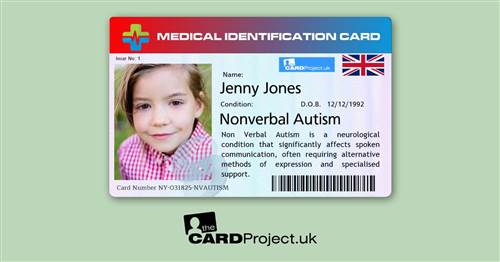
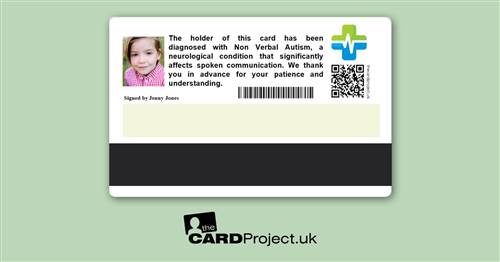
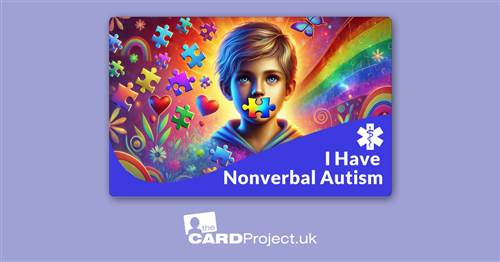
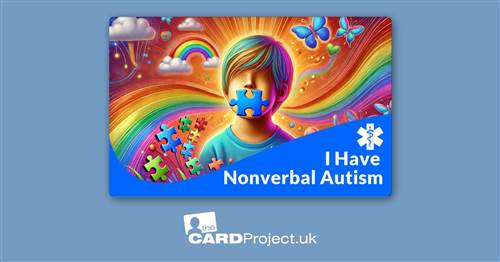
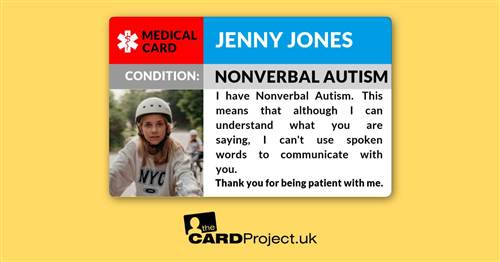
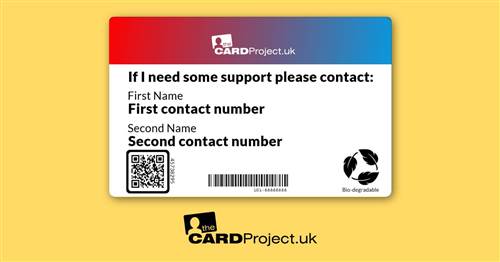
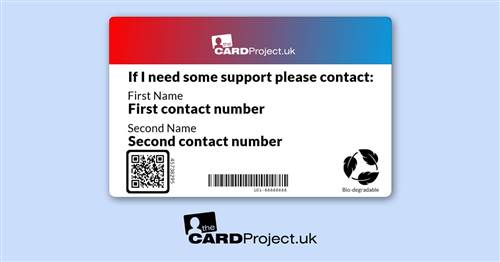
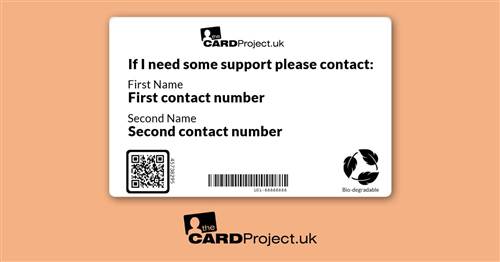
Without this information, paramedics or police officers may struggle to help them quickly or safely. Becoming lost or wanderingSome autistic people tend to wander away from safe places. This is sometimes called elopement. If a non-verbal person gets lost in a busy area, they cannot ask a passer-by for directions or tell a police officer that they are lost. They may also have a reduced awareness of danger, such as crossing busy roads or walking near water. Police and security encountersIn tense situations, police officers or security guards may give verbal instructions, such as "stop" or "show me your hands." A non-verbal autistic person might not understand the instruction immediately, or they might freeze due to fear. Because they cannot explain that they are autistic and cannot speak, their behaviour can sometimes be misinterpreted as suspicious or non-compliant. Our non-verbal autism ID cards and awareness cardsWe make simple plastic cards to help solve some of these communication and safety problems. You can see and select these products using the clickable image links at the top of this page. We make two main types of cards: personalised cards and simple awareness cards. Personalised ID cardsThese cards are designed to carry specific details about the cardholder. They are useful for everyday travel, trips out, and emergencies. Because they contain private information, they are usually kept in a wallet, pocket, or on a lanyard around the neck. These cards can include:
If the person is lost or in difficulty, they or a helper can show this card to a member of staff, a police officer, or a medical professional. This gives the helper immediate access to emergency contact numbers so the family can be reached. Simple awareness cardsSometimes, you do not want to share personal details like names, photos or phone numbers. You may simply want a quick way to ask for patience in a busy or stressful situation. Our simple awareness cards are not personalised. They feature basic, easy-to-read text such as "I have autism" or "I am non-verbal." These cards are useful for:
Both types of cards are the size of a standard bank card, making them easy to carry at all times. Our information guides for friends and familyUnderstanding non-verbal autism can be difficult, especially for extended family members, neighbours, and friends who do not live with the person every day. We have written a selection of simple information guides to help. These guides are designed to introduce the daily realities of non-verbal autism to the people in your life. They explain the basic ways the condition affects communication and behaviour, using plain language that is easy for anyone to read. The aim of these guides is to help your friends and family members feel more confident when spending time with your loved one, ensuring they understand how to react and support them without feeling overwhelmed. What Does Non-Verbal Autism Actually Mean? - They might not use spoken words, but they are communicating with you all day long—here is how to start spotting the clues and understanding exactly what they need. Beyond Words: Ways to Communicate with Someone Who Has Non-Verbal Autism - Communication is a two-way street that doesn't actually require speech—here are the practical, everyday tools you can start using to understand each other today. Meltdown or Tantrum? Understanding Emotional Overwhelm in Non-Verbal Autism - A meltdown is not a temper tantrum—find out exactly what is happening in the brain of someone with non-verbal autism when they get overwhelmed, and how you can help them through it. Seeing the World Differently: Sensory Needs and Non-Verbal Autism - Sights, sounds, and textures can feel completely different to someone with non-verbal autism—here is how to spot their sensory triggers and make your home a calmer, safer space. Connecting Without Conversation: How to Bond with a Loved One Who Has Non-Verbal Autism - Connecting with a non-verbal loved one doesn't have to feel like a puzzle—here are the simple, everyday ways to build a strong bond without saying a single word. The Power of Routine: Why Structure Helps with Non-Verbal Autism - When spoken words aren't an option, knowing what to expect is everything—learn how a simple daily routine can completely change how your loved one handles their day. How friends and family can support a non-verbal personIf you have a relative or friend who is non-verbal, there are simple things you can do to make communication easier and less stressful for them. 1. Give them more time to process informationIt can take longer for an autistic brain to process spoken words. When you ask a question or give an instruction, do not expect an immediate answer.
2. Use visual communicationSpoken words disappear as soon as they are said. Visual information stays in place, which makes it much easier to understand.
3. Watch their behaviour and body languageSince they do not use words, you must learn to read their other forms of communication.
4. Do not shoutA non-verbal person does not have a hearing impairment unless they have been diagnosed with one. Speaking louder will not help them understand you any better. Keep your voice at a normal, calm volume. Shouting can cause anxiety and make communication even harder. 5. Talk directly to themNever talk about a non-verbal person as if they are not in the room. Even if they cannot answer you, they are likely listening and understanding what you are saying. Always speak directly to them, use their name, and include them in conversations where possible. Common questions about non-verbal autismCan non-verbal autistic people understand speech?Yes, many non-verbal autistic people understand spoken language very well. They may understand full sentences, complex instructions, and the tone of your voice, even if they cannot speak a single word in reply. You should always assume that they can hear and understand what you are saying. Will a non-verbal autistic child ever speak?Some children who are non-verbal in their early years do go on to develop spoken language later in childhood or during their teenage years. Others may remain non-verbal for their entire lives. There is no simple way to predict this. However, speech therapy and using other forms of communication (like pictures or devices) can help encourage speech development rather than stop it. What is the difference between non-verbal and minimally verbal?Non-verbal means a person does not use any spoken words at all. Minimally verbal means the person can use a few single words or short phrases, but they cannot use them consistently to have a conversation or express all their needs. The support and communication methods needed for both are very similar. How do I stop a non-verbal person from wandering?Wandering is a common safety concern. You can improve safety by:
What should I do if a non-verbal person is having a meltdown?A meltdown is not a tantrum; it is an involuntary reaction to feeling completely overwhelmed.
© 2024 The Card Project Uk Ltd
VAT: 453 2087 06
|